Showing posts with label Petitions. Show all posts

Monday, November 26, 2012

Proposed petition to Scottish Parliament calls on Judiciary, tribunal panel members to declare memberships of secret societies, race-hate or sectarian groups

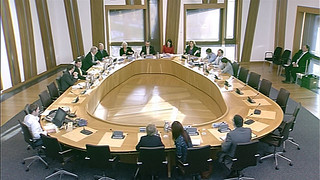
SP Petitions CommitteeScottish Parliament Petitions Committee to consider petition requiring judges to declare membership of societies. A PROPOSED PETITION to the Scottish Parliament calling for members of the judiciary such as sheriffs, judges, members of courtroom juries and tribunal members to be required declare their membership of organisations & secret societies such as Freemasonry is to be considered by Petition Committee clerks at Holyrood.

The petition, presented to the Scottish Parliament by Fife transparency campaigner Mr Thomas Minogue “Calling on the Scottish Parliament to urge the Scottish Government to amend the law or codes of practice to make it compulsory for decision makers such as sheriffs, judges, and juries at their courts, arbiters, tribunal panel members (income-tax, social security, employment, industrial etc) to declare if they have ever been members of organisations, such as the Masons, that demand fraternal preference to their brethren over non-brethren, or organisations which have constitutions or aims that are biased against any particular sect, religion or race.”

Mr Minogue also asks “That a register of such membership is held by the various bodies that supervise such judicial and quasi-judicial tribunals and that access to these registers is given on demand to the defendant, litigant, or plaintiff wishing to exercise their rights to a fair hearing in accordance with Article 6 of the ECHR.”

In documents seen by Scottish Law Reporter, Mr Minogue wrote with reference to the petition’s background “In 2000 I petitioned the Scottish Parliament with PE 306 which was in a similar vein to this petition. Then, after having been under consideration for over three years with the parliament the petition was dismissed and the last two meetings at which my submissions were heard in regard to PE 306 of 4th and 18 March 2004 have been removed from the public record for that public petition.”

“These meetings were not insignificant and in fact at the meeting of the 4th March the Justice Minister Jim Wallace was questioned by the committee on my submissions regarding membership of the Speculative Society of Edinburgh and the Masons among the judiciary.”

“Furthermore despite the fact that the committee had asked me to provide examples of cases where there was a perception that freemasonry had influenced a court or tribunal the committee did not publish the submissions I made in this regard. “

“I believe that this censorship was draconian given that details of own case, Stott v Minogue 2000 SLT (Sh Ct) 25, & GWD 36-1386, - which spawned the petition – and the decision by the Social Security Commissioner, Ref: CS1/136/02. are in part matters of public record, or have been reported widely in the press and legal journals and are the two most important Scottish cases that deal with the influence of freemasonry in the justice system.”

“Having sought to determine my rights to challenge the existing law which allows non-disclosure of (secret) membership of fraternal organisations by decision makers by the courts, my elected representatives, and the previous government (which subverted the public petitions process), I am now attempting to resolve this anomaly with a new government, which claims to be open and accountable to the people of Scotland.”

“This public petition is similar to my Petition 306 but it’s terms have been broadened to encompass more of the decision makers whose roles may affect our lives. These now include jurors as since my original petition there have been some very high profile cases where there has been a perception among many, including high profile members of the legal profession, that the interests of justice have not been served and there is a need to know more about the background of those called for jury duty.”

“However the general terms are similar to PE 306, which had its genesis in a court case held at Dunfermline Sheriff Court between 1999 and 2000. The case is now known as Stott v Minogue. At a preliminary hearing before Sheriff Stuart Forbes I addressed him with my concerns that the charges of housebreaking and theft that were brought against me were motivated out of malice by a competitor who had used Masonic influence to have me charged in what was nothing more than a commercial dispute.”

“The sheriff after initially refusing to hear my submission that I wished a declaration of Masonic membership/status from the judge who would hear my case relented and after hearing me allocated this issue to another sheriff at a later date.”

“In another preliminary hearing convened to settle the question of my objection to a Mason hearing my case the Sheriff, Isobella McColl, at her discretion gave me the assurances I had sought, but said that the principle of the question of whether or not such assurances should be given on demand from a litigant was one for the Scottish Parliament.”

“This satisfied my immediate concerns as to my rights, but left the principle involved undetermined. With this in mind and so that others may not have to go through what I had to I decided to take the sheriff’s advice and before the outcome of my trial – which resulted in me being found not guilty of any offence – I petitioned the Parliament with my public petition PE 306.As my trial was still ongoing I did not give details of the case but dealt instead with the principles involved.”

The Public Petitions Committee website shows a brief synopsis of the main events in the life of PE 306 between 19 Dec 2000 and 28 Jan 2003.

Campaigner Mr Minogue’s website features a link HERE containing copies of the official transcript of all the meetings at which PE 306 was considered between 19 Dec 2000 and 18 Mar 2004 (that is including the last two censored meetings).

Mr Minogue told Scottish Law Reporter earlier today his petition is aimed at a court or tribunal user having the right to know if the person deciding their rights - or innocence or guilt – is a member of an organisation that has a sworn obligation to prefer their brethren over non-brethren, if such membership might be seen by a reasonable observer as possibly having an impact on the result of the court or tribunal.

Speaking this afternoon to Scottish Law Reporter, a senior legal figure said he agreed with the aims of Mr Minogue’s petition, saying “it is time such declarations were required of judges and juries given the lack of transparency of Scotland’s justice system.”

paul mcbrideThe late, highly respected QC Paul McBride called for tests, declarations from jurors. It is also worth noting the highly respected QC, the late Paul McBride called for similar declarations regarding jurors last year after the not proven verdict in the case of the assault on Celtic manager Neil Lennon. Mr McBride’s remarks and calls for disclosure were reported widely in the media Top QC calls for jury reform and on Scots law blogs such as Diary of Injustice HERE.

The Herald newspaper reported that Paul McBride said potential jurors should be interviewed to establish they can “read, write and speak English” and are not “riven with prejudice”.

Mr McBride believes potential jurors should be forced to disclose their occupation and whether they have been a victim of crime. He said Scotland’s jury system, in which 15 people can reach a decision on a majority of 8-7, made reform even more important.

His intervention follows a jury’s not proven verdict in the case of Hearts fan John Wilson, who was cleared of assaulting Celtic manager Neil Lennon during a match earlier this year. Wilson was accused of a sectarian attack on Lennon, but he was acquitted.

The verdict came despite Wilson admitting in court he had lunged at the Celtic manager and struck him.

Mr McBride said: “The question is, ‘can we improve our jury system?’ and the answer is undoubtedly yes.This is an area that lawyers have been discussing for some time. Judges and lawyers undergo a high standard of training. The only area where there is no scrutiny at all on the people who actually make the decision, which is baffling.”

“You don’t have to be able to read or write or speak English.We have got 15 people deciding whether a person is guilty and we know nothing about them.”

“In Scotland, unlike any other country on the planet, a person can be convicted by one vote. Following the Lennon verdict a lot of people, and newspapers were asking about the selection process for juries.”

“In every other country there is some kind of jury selection process to determine whether they have got the basic skills and whether they have committed a crime. A lot of trials are conducted by police statements. If a member of the jury can’t read or speak English that’s a bit of a disadvantage.”

Wednesday, November 07, 2012

Abuse Fix-it by MSPs : Allegations of abuse at Queen Victoria School, Dunblane ‘were censored from Holyrood record’, claims transparency campaigner

In light of continuing revelations connected to allegations of historical abuse at children's care homes & schools implicating senior political & public figures including celebrities, a well known Justice & transparency campaigner from Dunfermline, Fife, has recently spoken to Scottish Law Reporter of his efforts to report similar goings-on to Scottish MSPs, in connection with a public petition to the Scottish Parliament which was heard by msps more than a decade ago.

In 2001, campaigner Mr Thomas Minogue launched a public petition at Holyrood requiring that judges and sheriffs declare their links & membership of secret societies such as Masons and the Speculative Society, a little publicised group well connected to Scotland's judges & establishment figures.

At the time of the petition, Mr Minogue was asked by the Justice 2 Committee to provide examples of cases where judges undeclared membership of societies may have interfered with the justice system.

In response to msps requests, evidence given by the petitioner to the Scottish Parliament recounted how one particular case put to the committee was that of the Queen Victoria School of Dunblane where a Housemaster had tried without success to alert the authorities to the presence of suspicious visitors to the school, visitors which included Thomas Hamilton, the man responsible for the Dunblane massacre. Throughout evidence given by the Housemaster to authorities, it was alleged that membership of secret groups including freemasonry, impeded all whistleblowing attempts by insiders at the Queen Victoria.

Mr Minogue’s report of how he was rebuffed by no less than three Secretaries of State for Scotland, The Lord Advocate, The Solicitor General, The Lord Justice Clerk, and the then Secretary General of Nato, who, it is alleged, had Mr Minogiue investigated by the Chief Constable of Central Scotland Police is an interesting one, parituclarly in the light of revelations in the current calls for reinvestigations into how the Police & prosecutors handled previous allegations of a similar nature against ex BBC star Jimmy Savile and more recently, the naming of top Conservative politicians linked to the abuse of children at care homes in other parts of the UK.

It is worth noting that after all of the above was reported in a paper to the Justice 2 Committee by the petitioner, the submission in support of Mr Minogue's Petition PE 306, and the last two meetings of MSPs that took place to discuss this at Holyrood were censored from the record of the Scottish Parliament, a matter now under scrutiny by those who point to continuing cover ups by institutions who fear a widening investigation into historical allegations of abuse involving well known public figures in Scotland and the rest of the UK.

Campaigner Mr Minogue has written about the allegations and his experiences with MSPS on his web blog, Sir Fixed it for Jim. Mr Minogue poses some interesting questions on the unreported allegations of an abuse scandal at the Queen Victoria School, allegations which have stark similarities between what we now hear about those who tried to bring Jimmy Savile’s activities to the attention of the authorities and ran up against a brick wall built by Savile’s friends in authority.       


Friday, October 12, 2007

Petition PE1073 - Petitions Committee Report on disproportionate levels of Catholics in Scottish prisons

Following is the report from the Scottish Parliament Petitions Committee on their consideration of Petition PE1073 by Tom Minogue, calling for the Scottish Parliament to investigate and establish the reasons for the apparently disproportionate number of Catholics in Scottish prisons & poor housing.

Scottish Prison Population (Catholics) (PE1073)

The Convener: The next petition for consideration is PE1073, from Tom Minogue, which calls on the Scottish Parliament to investigate and establish the reasons for the apparently disproportionate number of Catholics in Scottish prisons. Before the petition was formally lodged, it was hosted on the e-petition system between 28 November 2006 and 15 June 2007, where it gathered 131 signatures. Do members have views on how the petition should be taken forward?

Robin Harper: The figures that the petitioner cites seem anomalous, but they should inspire a piece of sophisticated social research. It does not strike me that the anomaly has anything to do with religious persecution. If the figures that have been cited are accurate, a sophisticated piece of social research should be commissioned.

The Convener: As someone of that persuasion I am nervous about dealing with the petition, on the basis that I might find myself in jail. There is concern about the fact that the number of Catholics in prison is disproportionate. Some would argue that there are powerful sociological, class and economic reasons for that, but the discussion on the e-petitions system indicates that

Col 169

some people are still strongly of the view that the figures should be investigated. It is obvious that there is not much information on the issue, so we should explore it further. How do members think we can get to the bottom of the matter, so that we can reassure people that the judicial process is fair and not discriminatory, as we would be concerned if there were evidence of discrimination? We should send out a strong message that we are tracking the phenomenon and that we will deal with it appropriately, where possible.

John Wilson: I suggest that we widen the discussion. The petition suggests that the number of Catholics in prison is out of kilter with the percentage of Catholics in the population, but the figures that are before us show clearly that the same is true of other ethnic groups. If we are to make approaches to anyone, we need to seek responses that address the wider issues that relate to those categories of prisoners and to investigate why the differences that have been identified exist. The Muslim population of Scotland is 0.8 per cent of the total, but Muslims make up 1.7 per cent of the prison population. Clearly, the number of Muslims in prison is out of kilter with the percentage of Muslims in the general population. Instead of confining the discussion to one religious group, we should widen it out and ask whether any research into the issue has been done, what its findings were and what impact the phenomenon has on society in general.

Rhoda Grant: I am happy with what has been suggested.

Robin Harper: When I proposed that there should be sophisticated research, I meant that it should be wide ranging—as John Wilson has suggested—and that there should be statistical analysis of the entire prison population to establish the commonalities that exist. Something else may be behind apparent commonalities that have been identified.

The Convener: As for how best to respond to the issues that have been raised in the petition and in the committee's discussion, one option is to write to ask the justice department what information it has. Some statistical research or academic work could be useful. I am wondering off the top of my head who would be best to call for that. We may well see a gap or an anomaly. Could we ask the Government whether, in its research models or its commissioning of research to influence policy frameworks and development, it has considered religious affiliation in examining where the numbers in the prison population are coming from? Much work is done on the social class and the economics of the prison population. Is religious affiliation considered in relation to the prison population and sentencing policy? Are like-for-like comparisons made between ethnic groups

Col 170

and religious groups in relation to sentencing policy?

The process has two stages. We will initially ask the justice department for its views. After we have that response, we need to determine whether it is adequate or whether we require further explanation.

Sunday, September 30, 2007

High numbers of Catholics in prisons & poorest housing to be examined by Scottish Parliament

The Scottish Parliament will this week examine a petition to investigate the high numbers of Catholics in Scotland's prisons and in the poorest housing.

The Public Petitions Committee of the Parliament, has broke from usual procedure where the petitioner has a few minutes to speak on the issue, and has denied Mr Thomas Minogue, the author of the petition a chance to speak.

Here follows the Sunday Herald report on the matter, along with a Press Release from Mr Minogue sent to media outlets.

The Sunday Herald reports (print edition, without online link)

Sunday Herald 30 Sept 2007

JUSTICE: PETITION

RC prison numbers to be examined

By Marcello Mega

QUESTIONS about the high numbers of Catholics in Scotland's jails and in Scotland's poorest housing will be faced by the public petitions committee of the Scottish parliament on Tuesday.

But the retired Fife businessman who raised the petition has been denied the chance to address the committee by its convener, Frank McAveety.

Tom Minogue is asking that the Scottish government keeps promises,made six years ago by then justice min-ister Jim Wallace, to examine the social issues behind the disproportionate numbers of Catholics in jail and in the most deprived housing.

His petition has been signed by Alex Mosson, former lord provost of Glasgow, the composer James MacMillan and several academics and clergymen.

In 2001, a study of Scotland's prison population showed that Catholics were 66 more likely than their fellow Scots to end up in jail. By 2004, that figure had risen to 100, with Catholics making up only 13 of the Scottish population but 26 of the jail population.

Petitioners commonly have three minutes to address' the committee, but Minogue has been told that McAveety would not allow him to speak.

A spokesman for the committee said Minogue had submitted a detailed petition and it had not been considerednecessary for him to expand on it.

Press Release from the petitioner Mr Thomas Minogue :

Press release in lieu of 3-minute address in support of Public Petition to the Scottish Parliament PE 1073, to be considered by the Public Petitions Committee of the Parliament on Tuesday 2nd October 2007 at 2pm in Committee Room 1.

Broadcast live on the Internet at http://www.holyrood.tv/committee.asp

Release 29/09/2007 09:05

Submission: In June 2005 I Googled “Donald Findlay, Q.C.” as part of my research in connection with a complaint I had lodged with the Faculty of Advocates that Mr. Findlay had acted in a racist and bigoted manner and brought the Faculty into disprepute1.

Of the many controversial articles thrown up by Google about our best-known senior counsel one in particular struck me as unbelievable. It was an article from the Sunday Times of January 21st 2001, relating to the disproportionate number of RCs in Scottish Prisons which were said to be: “ almost double the percentage of Catholics in the population as a whole.”

The article entitled: “High Catholic prison numbers spark probe”, reported how Pauline McNeill MSP had raised the question of the disproportionate number of RCs in Scottish Prisons with the then Justice Minister, Jim Wallace who—after denying any discrimination in the legal system—stated: “The most puzzling issue to emerge from the statistics is why Catholics should be represented in prison at twice the level they are in society. These figures merit further investigation.”

The Times reporter sought the view of the legal establishment from Donald Findlay, Q.C. Mr Findlay explained the anomalous disproportion by stating “I would guess any distortion has less to do with religion than with the strong presence in the west of Scotland of people with Irish roots.”

Being predominately Irish descended, and nominally RC, I had a personal interest, and also a general concern in this shocking statement, as well as the statistics that elicited it. Consequently I wrote to the Scottish Prison Service (SPS) to see if this disproportion still existed. To my surprise I was told by the SPS that the disparity had got worse, the “almost double” had increased to “double”! So I wrote to the First Minister Jack McConnell to ask: Did he know about this? Care about it? Could he explain it?

For almost a year I attempted to get a response from the First Minister but after much correspondence in this period I eventually gave up and lodged Petition 1073 with the Public Petitions Committee (PPC). The nearest I had got to an answer—which I was promised—to my three questions from Mr. McConnell, was a statement from an official purportedly speaking on his behalf, which explained the disproportion away by stating that more RCs lived in slums in the West of Scotland. A statement that there was no bias in the justice system accompanied this explanation. As in the case of the statement for the Justice Minister in 2001, this defence was of an accusation that had not been made.

Since lodging my e-petition there has been a fairly brisk discussion on the PPC website about the petition and possible explanations for the facts that spawned it. Many of the comments linked Catholicism and Irishness and many of these were derogatory towards the Irish and Catholics and had to be removed. It was also apparent that many critical contributions in the discussion of the petition were anti-Irish and anti-Catholic and blamed Catholic schools and the Catholic religion for criminality.

Of the more reasonable contributions, one contributor argued that sectarian or tribal bias exists in social provision or judicial process and must be expunged, another contributor argued that the possible cause could be freemasonry which is “greatly present” in the criminal justice system, and because freemasonry and the Catholic religion were opposed to each other there might be a bias by those dispensing justice against non-masons. Another maintained that freemasonry wasn’t anti-Catholic.

Two contributors in particular impressed me. The first a former Lord Provost of Glasgow simply stated that he agreed that there was prejudice in society against Catholics, and the second, from a prison inspector living in England, who perceived that the disproportionate number of Catholics in past years in goals in England was now being replaced by a Muslim predomination. This contributor also had a perception that anti-Irish and anti-Catholic residual prejudice was still present in Scotland.

This latter perception is supported by the fact that as recently as 2002 the Church of Scotland, (to their credit)—after over 100-years of preaching, or condoning by silence, anti-Irish racism and anti-Catholic bigotry—frankly and unreservedly apologized for their long history of anti-Irish racist preaching, which they described as being akin to Enoch Powell’s “rivers of blood” speech.

The March 2007 case2 of a Procurator Fiscal in Greenock who resigned after using the word Fenian (derogatory reference to Irish/Irish descended Catholics) in an offensive manner when drunk suggests that residual anti-Irish/Catholic bigotry is alive and well in the legal establishment. I am inclined to think that the disproportionate number of RCs in Scottish prisons is in some way linked to such residual anti-Irish and anti-Catholic prejudice as well as the influence of the predominately non-Catholic freemasons whose members are present if not prevalent in the police and the legal establishment.

It is my perception, based on personal experience that there is a degree of anti-Irish and anti-Catholic prejudice entrenched in Scottish society. This is hardly surprising and is only to be expected when it was part of the established view for so long. Perhaps this proposition is what Mr. Findlay was alluding to in a cryptic way when he appeared to simply blame the disproportionate number of RCs in prison on the Irish.

It is hard to tell what Mr. Findlay means as he has two roles in life, one as an advocate and one as a comedian/entertainer. Assuming it was the barrister and not the buffoon that spoke to the Times reporter I can only guess that Mr. Findlay was blaming residual anti-Irish anti-Catholic prejudice for the disproportionate RC prison numbers—any other interpretation of his remarks would surely be racist and if such overt racism existed in the ranks of our senior barristers then we are in trouble.

Regardless of my perceptions, I trust that the PPC will ensure that the new Scottish Government does not allow this unexplained stain on the Scottish criminal justice system to remain ignored or simply swept under the carpet as in the past. I would urge the PPC to recommend a full and far-reaching investigation into this matter with no preconceptions or limit of remit. And as a first step to ask the Justice Secretary in the new Scottish Government for his comments on this issue.

Yours sincerely, Tom Minogue. Petitioner.

Note. 1 On 14th December 2005 a Faculty of Advocates Complaints Committee consisting of 2 senior Q.C. and 2 Scottish Executive Lay-members found Mr. Findlay guilty of bringing the Faculty into disrepute in relation to my complaint.

Note. 2 Link to article: http://www.sundaymail.co.uk/news/tm_headline=i-plead-guilty&method=full&objectid=18805261&siteid=64736-name_page.html

NB. A recital of this release was timed at just under the 3-minutes that I would have taken to deliver it, had the Convener of the PPC not refused me permission to speak to the petition.