Showing posts with label Police Scotland. Show all posts

Thursday, October 20, 2016

Police raid on Edinburgh law firm halted by judge - Lord Brodie hits out at Crown search warrant tactics against Clyde & Co over historic sex crimes investigation

Lord Brodie – Prosecutors lied to obtain warrant. A SENIOR JUDGE has claimed the Edinburgh offices of a law firm employing members of the judiciary - were hit with “oppressive” conduct by the Crown Office & Procurator Fiscal Service during prosecutors attempts to secure documents in relation to historical sex crime allegations.

The ruling, by Lord Brodie – issued three months after the incident - comes after the Edinburgh offices of law firm Clyde & Co – formerly Simpson & Marwick - faced a day long stand off with Detectives from Police Scotland in July of this year when Police Officers attempted to serve search warrants in order to obtain communications between a client and the law firm.

The stand off between Police Scotland and lawyers at Clyde & Co only ended when Lord Brodie suspended the search warrant.

Lord Brodie said fiscals had provided “inaccurate and misleading” information to obtain a court order to raid the Edinburgh offices of UK law firm Clyde & Co.

Prosecutors had sought the warrant as they supported police in carrying out the investigation into what are understood to be historic sex crime allegations

Police had wanted to see documents relating to the suspect, a client of Clyde & Co who had been defending a civil action in respect of the same allegations.

However, Lord Brodie said that they had failed to see the risks such actions could have on the rights of the suspect to private communications with his lawyer.

This week - three months after the aborted raid – the Scottish Courts & Tribunals Service finally made public Lord Brodie’s critical note about his decision.

The judge said that fiscals had simply accepted a police understanding of the case, which was that Clyde & Co was withholding evidence, in its petition for the warrant.

He ruled: "I consider that the actions of the [Crown] in applying for the search warrant on the basis of his petition to have been oppressive. The petition was misleading, if not simply inaccurate.

The judge added: "The very highest standards are always expected of the Crown. Here the requisite standards were not met. If it be the case that the [Crown] proceeded on a police report which simply reflected the detective constable’s understanding of the issues, that was not good enough.

"The [Crown] was aware that he was seeking to recover clients’ files held by solicitors and therefore was on notice that privilege as well as confidentiality was likely to be in issue."

Simpson & Marwick – now Clyde & Co are known to have acted as agents for the Law Society of Scotland’s Master Insurance Policy.

The firm has acted for insurers defending numerous claims against lawyers accused of ripping off their clients. Simpson & Marwick are also known to have represented numerous Scottish local authorities in expensive and long running litigation cases.

With connections between the judiciary and law firms now in the news and of a public interest nature, records also show Clyde & Co, who merged with Simpson & Marwick – has among it’s partners a serving judge – Sheriff Peter Anderson.

Sheriff Anderson’s biography on the Clyde & Co website states the following: Peter has over 40 years experience starting in general insurance work, specialising in complex and high value personal injury claims. He deals with all aspects of EL, PL and motor cases plus in depth experience for professional negligence claims and aviation disputes. Peter is a Solicitor Advocate.

As Sheriff he has presided over a range of civil cases preparing judgments and decisions in family law disputes; personal injuries litigation; land title disputes and commercial contracts as well as presiding over a large number of criminal trials.He was recently appointed Chair of the pro bono legal service organisers, LawWorks Scotland. 

The Clyde & Co website states their Edinburgh office has over 50 lawyers and fee earners across the core sectors of insurance, professional liability, healthcare, employment and property.

The law firm claims the heart of their practice is defending personal injury claims.

The full opinion of Lord Brodie:

HIGH COURT OF JUSTICIARY [2016] HCJAC 93 HCA/2016-24/XJ

NOTE BY LORD BRODIE in BILL OF SUSPENSION by CLYDE AND CO (SCOTLAND) LLP Complainers;

against THE PROCURATOR FISCAL, EDINBURGH Respondent:

Complainers:  Smith QC; Clyde & Co

Respondent:  No appearance

22 July 2016

[1]        The complainers in this bill of suspension are a limited liability partnership, being solicitors with a place of business at Albany House, 58 Albany Street, Edinburgh. The respondent is the Procurator Fiscal, Edinburgh. The complainers seek suspension of a search warrant granted by the sheriff at Edinburgh on the application of the respondent, dated 21 July 2016 and timed at 1537 hours (“the search warrant”). The application which came before me, on 22 July 2016 not long before 1700 hours in chambers, was for interim suspension of the warrant. As at that time the bill had not been warranted for service. Having heard Mr  Smith on behalf of the complainers, I adjourned in order to allow my clerk to advise Crown Office that the application had been presented and to invite the attendance of an advocate depute to represent the respondent. That invitation was made by telephone at a little after 1700 hours. It was not taken up. Having heard Mr Smith further, I suspended the search warrant ad interim, granted warrant for service of the bill and continued the matter to a date to be fixed.

[2]        The circumstances in which that application was made, as I understood them from what appeared in the bill, in two telephone attendance notes and the explanation provided by Mr Andrew Smith QC, who was accompanied and instructed by Mr Graeme Watson, Solicitor Advocate, a partner in the complainers, are as follows.

[3]        A client of the complainers is S.  The complainers have acted for S in relation to claims for damages against it by individuals on the basis of its vicarious liability for alleged acts which occurred at a particular location, L.  These claims have been discontinued on account of an acceptance that any claims were time-barred. It is averred by the complainers that in course of taking instructions from representatives of S these representatives “disclosed certain matters and were provided with advice... which advice and information being disclosed was privileged.” As I understood matters, the complainers retain in their possession documents and files, both paper and digital, generated in the course of acting for S which include information and advice in respect of which S, whose specific instructions have been taken on the point, asserts legal privilege.

[4]        On 7 July 2016 Detective Constable Nicola Gow contacted the complainers by telephone. She spoke to Mr Watson. There were at least three telephone calls between DC Gow and Mr Watson on that day. I was shown copies of Mr Watson’s telephone attendance notes. DC Gow indicated that she was aware that the complainers held certain information in their client files for S that might be relevant to a criminal inquiry which was currently being undertaken.  She already had copies of some documents but wished to obtain originals of these (including what she described as “originals” of unsigned statements held digitally), the litigation files and such other documents which were in the possession of the complainers. Mr Watson advised that the complainers would check what information they had access to with a view to establishing its whereabouts and what might be capable of being produced. Mr Watson indicated that the client files were privileged and confidential. Mr Watson advised that in the event of him receiving instructions to do so, he was willing to excise from the file certain material in order to assist the police inquiry. DC Gow suggested that they might arrange a time to look at the files together. Mr Watson said that he would need to take instructions on that proposal but that a provisional date for such a joint consideration of the files could be arranged. DC Gow indicated that she would discuss matters with her superior officer but that a search warrant might be sought.

[5]        On 11 July 2016, in anticipation that an application for a warrant might be made, Mr Watson, on behalf of S wrote to the Sheriff Clerk in Edinburgh requesting that the Sheriff Clerk contact the complainers in the event of any application to the sheriff with a view to S being represented at any hearing before the sheriff. Mr Watson explained in that letter that the complainers and S had provided such assistance to Police Scotland as they could within the confines of the Data Protection Act 1998, confidentiality and agent-client privilege. The letter included the sentence: “In our submission it would be oppressive and prejudicial for a warrant to be granted without first hearing from [S].” No reply has been received to that letter.

[6]        Subsequent to the conversations between Mr Watson and DC Gow and prior to 22 July 2016 neither the police, the respondent nor any other representative of the Crown contacted the complainers in relation to recovery of documents held by the complainers.

[7]        At about 1000 hours on 22 July 2016 two police officers attended at the offices of the complainers at 58 Albany Street, Edinburgh, claiming to be in possession of the search warrant which they proposed to execute. Initially they were reluctant to allow Mr Watson to read the search warrant and then they were reluctant to allow him to copy it. Once Mr Watson had succeeded in persuading the police officers to allow him to read and copy the search warrant he was able to ascertain that it had been granted at common law in terms of the crave of a petition at the instance of the respondent in these terms:

“to any Constable of Police Service of Scotland and/or members of staff from the Scottish Police Authority or any other Officer of Law with such assistance as they may deem necessary, to enter and search the offices, out buildings and storage facilities of Clyde & Co, Albany House, 58 Albany Street, Edinburgh and to be at liberty to secure and take possession of any papers relating to L whether in electronic or paper format, and any other evidence which may be material to the investigation into the alleged abuse at L held by said Clyde & Co, whether in a computer system or otherwise.”

Insofar as material to the issues raised in the bill, the averments in the petition were as follows:

“[S] have provided copies of documents referring to a code of conduct for staff … a punishment book, lists … statements, including what purports to be a statement taken from [a named person] and signed by her …

[S] have indicated that the originals of these documents are held by their legal representatives, Clyde & Co, Albany House, 58 Albany Street, Edinburgh. A request has been made to have these documents released to Police Scotland, however, the solicitor has refused to release these documents, citing reasons of client confidentiality.

The solicitor has indicated that they will provide the originals of the documents already provided in copy format only.

“There are reasonable grounds for believing that evidence material to the investigation … is found within the documents being withheld by the solicitor.  The solicitor has indicated to an officer of Police Scotland that there are two boxes of papers and electronic records relating to [L].”

As Mr Smith explained, these averments were inaccurate in certain respects or at least framed in terms that were likely to mislead the sheriff when considering the petition. The tenor of the averments is such as to suggest that what is sought to be recovered are the originals of the specified documents (ie the code of conduct etc) which have already been provided by S (albeit that the crave of the warrant is in much wider terms) and that was because the complainers were only prepared to provide copies. Moreover, while there is reference to “reasons of client confidentiality” (which makes no sense if it is the respondent’s position that the police already have copies of the documents) there is no reference to the separate assertion of legal privilege by S..

[8]        The assertion of legal privilege in the face of a search warrant has recently been considered by the court in its opinion, dated 5 February 2016, in the bill of suspension at the instance of parties whom I will refer to as H Complainers. This opinion has not been published because the proceedings to which it relates have not been concluded but will have been issued to parties, one of whom is the Lord Advocate. I had been unaware of this opinion until Mr Smith brought it to my attention and the sheriff who granted the search warrant is also unlikely to have been aware of it. On the other hand, I would expect the respondent, as a representative of the Crown, which in the person of the Lord Advocate was party to H Complainers, to have been aware of the decision and the terms of the opinion of the court and particularly those parts of that opinion which prescribe what ought to be done when the Crown applies for and then has executed a warrant for search and seizure of material in respect of which legal privilege may be asserted.

[9]        H Complainers does not innovate upon the existing law but clearly states it and highlights the consequences for practice. It is prescriptive as to what should be done by the Crown when seeking to recover clients’ files from solicitors. It is convenient to quote the following paragraphs from the opinion of the court, as delivered by the Lord Justice‑General:

“[26]    A police officer seeking a warrant from a sheriff must not provide information which he knows to be inaccurate or misleading.  He should provide all the relevant information.  The reference to “full disclosure” in McDonagh v Pattison 2008 JC 125 (at paras [11] and [12]) should be understood in that context.  The duty includes one to disclose the fact that the havers are a firm of solicitors who are maintaining a plea of legal privilege.  It was submitted that the information in the petition and given by the police officer on oath to the sheriff, in particular in relation to the likely application of legal privilege, had been inaccurate.  This contention was not contained in the original Bill, upon which alone the sheriff has reported.  It is a reasonable one, in so far as it is based upon the sheriff’s first report.  That report states that there was no suggestion that legal privilege should apply.  However, it appears to be contradicted by the second report.

[27]      The court will proceed on the basis that the sheriff was aware of the claim of legal privilege.  He certainly ought to have been so aware, given that the havers were a firm of solicitors. …

[28]      What is important to note is that the warrant was obtained for material over which there was an ongoing dispute about legal privilege.  That dispute was taking place between the Crown, notably the advocate depute, and a firm of … solicitors, namely the first complainers.  There is no suggestion that the first complainers were involved in any form of illegality.  There was no averment that, in the context of the ongoing dispute, the first complainers would be likely to destroy, or conceal, the relevant material.  Indeed the existence of this material had been flagged up in the two chronological bundles …  In these circumstances, an application to a sheriff for a warrant to search the first complainers’ premises to recover this material, without intimation, was oppressive.  If the course selected by the Crown were to have validity, it was incumbent upon them to have intimated the application for a warrant to the first (and/or second) complainers, so that they could make representations to the sheriff about legal privilege.  The sheriff could then have made such appropriate orders, as he deemed fit, to secure proper compliance with the law of privilege in respect of the recovery of the solicitors’ files.

[29]      The courts must be careful to protect the important right of legal privilege which generally attaches to communications between a client and his solicitor (Narden Services v Inverness Retail and Business Park 2008 SLT 621 at para [11]).  It is essential therefore that due caution is observed when a court is granting an order for the recovery of solicitors’ files.  The need for such caution is even greater when a warrant is being granted with a view to its endorsation for execution outwith Scotland.

[30]      There is no reason for a warrant to state expressly that materials, ostensibly covered by its terms, are excluded where legal privilege exists.  Such privilege may or may not be asserted.  If it is capable of being asserted, however, the seizure process must have within it clear, detailed rules on how that assertion can effectively be raised and determined.  That is a matter which was stressed in the mid-nineteenth century Scottish cases cited (Bell v Black (1865) 5 Irv 57, LJC (Inglis) at 64; Nelson v Black & Morrison (1866) 4 M 328, LP (McNeill) and Lord Deas at 331, Lord Ardmillan at 332; Lord Wood at 237).  It is now reflected in the European jurisprudence (Sallinen v Finland (2007) 44 EHRR 18 at paras 90 and 92; Niemietz v Germany (1992) 16 EHRR 97 at para 37).  In a case, such as this one, where it is clear that what is to be searched is a solicitors’ office and that legal privilege is being asserted, any warrant ought either to have provided for independent supervision of the police search by a Commissioner appointed by the court or to have contained a requirement that any material seized should be sealed unread and delivered to the court to enable the sheriff to adjudicate upon the issue (see Wieser v Austria (2008) 46 EHRR 54 at para 57).  The ability to raise a Bill in the High Court of Justiciary, designed to suspend the warrant itself, is a procedure for review by an appellate court which, whilst competent, is not straightforward.  It does not supply the necessary effective remedy at first instance.  If this necessitates a change of practice in connection with the recovery of solicitors’ files, such a change requires to take place.”

[10]      As will be apparent, what was done by the respondent in the present case failed in a number of respects to comply with what the Lord Justice-General prescribed in H Complainers. The complainers do not aver bad faith or an attempt to mislead on the part of the police and I see no basis upon which that could be inferred. The averments in the respondent’s petition may reflect DC Gow’s understanding of matters but these are the respondent’s averments and by presenting them to the court in a petition signed by one of his deputes the respondent took responsibility for their accuracy insofar as the accuracy of averments can reasonably be ascertained. As I have indicated, the averments were not accurate. They were not comprehensive. They were misleading. There was no urgency in the matter, as the passage of time between 7 and 21 July 2016 demonstrates. There was no averment in the petition that the complainers would be likely to destroy or conceal the relevant material or that they were in any way involved in wrongdoing. The respondent chose not to contact the complainers to confirm the facts prior to preparing his petition, although, as the Lord Justice-General observes at para [27] of H Complainers in relation to the sheriff, the respondent ought to have been aware that issues of legal privilege would arise where he was seeking to seize documents generated in the course of solicitors acting for clients faced with the prospect of litigation.  There is nothing in the crave of the warrant to restrict its execution to circumstances where there is independent supervision of police officers or requiring any material in respect of which privilege is claimed to be sealed unread and delivered to the court. The respondent chose not to intimate the application for the search warrant to the complainers and so give the complainers the opportunity to make representations to the sheriff about legal privilege.

[11]      Having read and copied the search warrant Mr Watson requested the police officers who were seeking to execute it not to do so before he was able to consider further action. The police officers agreed to delay in executing the warrant. They remained in or about the complainers’ office during the course of the day and were only to leave it at about 1730 hours following communications between my clerk and representatives of the respondent, to which I will refer later in this note. Mr Watson consulted with Mr Smith who telephoned Crown Office with a view to discussing matters with an advocate depute. He spoke to an advocate depute who advised him that this was a matter under the direction of the National Sexual Crimes Unit and referred Mr Smith accordingly. At about 1347 hours Mr Smith had a telephone conversation with a named official of the Unit. He attempted to convey his concern that an application for the warrant had been made without intimating the intention to do so to the complainers and to contrast this with what had been said by the Lord Justice-General in H Complainers. The official was unsympathetic to Mr Smith’s representations and disinclined to enter into discussion. She indicated that she was aware of the decision in H Complainers but, although she had not read it, she considered it particular to its facts which included the involvement of English solicitors and English procedures. She stated “I have been doing it this way for 20 years”, from which Mr Smith understood that she did not propose to allow what was said in H Complainers to inform her established practice. Mr Watson also spoke with the official. She described the efforts on the part of the complainers to protect their clients’ legal privilege as a “serious matter of obstructing justice”. In the face of what Mr Smith characterised to me in submission as “this intransigence”, the bill of suspension was drafted and presented.

[12]      As I have already explained, Mr Smith and Mr Watson came before me in chambers, at little before 1700 hours on 22 July 2016. I was assisted by Mr MacPherson DCJ. Having regard to the criticisms levelled by Mr Smith against the respondent and those acting in his name I adjourned the hearing in order that Mr MacPherson might alert Crown Office of what was taking place and to invite representation of the respondent if so advised. Mr MacPherson was able to speak to a member of staff of the Crown Office and Procurator Fiscal Service who involved others including the official with whom Mr Smith had spoken. By this time it was after 1700 hours on what was a Friday evening. The offer to hear any representations through an advocate depute was not taken up but Mr MacPherson was led to understand that a “guarantee” had been given “to stand down the police”.

[13]      What Mr MacPherson had learned was reported to me in the presence of Mr Smith and Mr Watson and the hearing resumed. Mr Smith renewed his motion for interim suspension of the search warrant. While perhaps explicable by reason of the lateness of the hour, the shortness of notice and the absence of necessary personnel, the respondent had not availed himself of the opportunity to be represented, to make any explanation or to put forward any undertaking or other proposal in precise terms. While the “guarantee” reported by Mr MacPherson could be interpreted as an undertaking not to execute the search warrant that day it was unclear whether it went beyond that. It was also unclear who it was who was giving the undertaking. Mr Smith’s conversation with the named official, whom he understood to be responsible for this investigation, had not given him confidence that she understood the importance of legal privilege or what the Lord Justice-General had recently said about the need to put in place procedural mechanisms effectively to protect it.

[14]      I was not addressed (I had not asked to be addressed) on the competency of a single judge of the High Court of Justiciary suspending a warrant. I would suppose that it would not be competent for him to do so, suspension being a matter for a quorum of the Court: cf Stewart v Harvie 2016 SCCR 1 at para 3. However, I would see granting an application for interim suspension at the stage of first orders to be different. It is of the nature of remedies for preserving the status quo in the face of a threatened wrong that they be available quickly and on summary application. As here there will be circumstances where a complainer seeks suspension of a warrant before it is executed on the grounds that execution would be wrongful and damaging to the interests of the complainer. In practical terms, if interim suspension cannot be granted by a single judge then a remedy will not be available. Moreover, I observe that in Morton v Mcleod 1981 SCCR 159 Lord Cameron, sitting alone, entertained an application for interim suspension of sheriff court summary proceedings, albeit that he concluded that suspension was not competent before trial.

[15]      Of course, having a power and being justified in exercising it are very different things. Suspension of a warrant, even ad interim, is not something to be done lightly. What is being sought to be set aside is a decision of the sheriff who has primary jurisdiction and whose duty it is to grant a warrant only when he is satisfied that it is lawful to do so.

The importance of that duty and its conscientious performance was stressed by Lord Justice‑General Rodger in Birse v MacNeill 2000 JC 503 at 507A by quoting what had been said by Lord Justice-General Clyde in Hay v HMA 1968 JC 40 at 46:

“Although the accused is not present nor legally represented at the hearing where the magistrate grants the warrant to examine or to search, the interposition of an independent judicial officer affords the basis for a fair reconciliation of the interests of the public in the suppression of crime and of the individual, who is entitled not to have the liberty of his person or his premises unduly jeopardised. A warrant of this limited kind will, however, only be granted in special circumstances. The hearing before the magistrate is by no means a formality, and he must be satisfied that the circumstances justify the taking of this unusual course, and that the warrant asked for is not too wide or oppressive. For he is the safeguard against the grant of too general a warrant.”

However, in determining whether a warrant should be suspended this court is not only concerned with the decision-making of the sheriff or other magistrate; it is also concerned with the actions of the party (here the respondent) who has applied for the warrant. Where these actions are oppressive the warrant will be suspended.

[16]      I consider that the actions of the respondent in applying for the search warrant on the basis of his petition to have been oppressive. As I have attempted to explain, the petition was misleading, if not simply inaccurate. High standards of accuracy are always required of a party seeking a remedy ex parte. Separately from that, the very highest standards are always expected of the Crown. Were it otherwise our criminal practice would be different. Here the requisite standards were not met. If it be the case that the respondent proceeded on a police report which simply reflected the detective constable’s understanding of the issues, that was not good enough. The respondent was obliged to ensure the accuracy of his averments insofar as that was practical. There was no question of urgency. The respondent was aware that he was seeking to recover clients’ files held by solicitors and therefore was on notice that privilege as well as confidentiality was likely to be in issue. There was no reason to believe that the complainers would act improperly. An obvious and easy step would have been to contact them directly in order to discover what was in fact in issue. It is true that it might have been better had the complainers’ letter of 11 July 2016 been addressed to the respondent rather than to the Sheriff Clerk, but the onus was on the respondent who as a public authority was proposing to interfere with article 8 rights as well as rights which have been explicitly and repeatedly recognised in Scotland for more than two hundred years (Executors of Lady Bath v Johnston Fac Coll 12 November 1811, noted by Lord Wood in McCowan v Wright (1852) 15 D 229 at 237) to make sure of his facts.

[17]      Not only is what is averred in the respondent’s petition inaccurate, it does not support the very wide terms of the crave for a warrant which extend, without any limitation of time whatsoever, to “any other evidence which may be material to the investigation into the alleged abuse at [L] held by said Clyde & Co, whether in a computer system or otherwise”. It will be recollected that the averments relate only to supposed originals (presumably in paper) of documents already provided as copies. Moreover, in disobedience to what is prescribed by the Lord Justice-General at paragraph [30] in H Complainers, no provision is made in the petition for either independent supervision of the police search by a commissioner appointed by the court or the inclusion of a requirement that any material seized should be sealed unread and delivered to the court to enable the sheriff to adjudicate upon the issue.

[18]      The oppressive conduct of the respondent was not limited to the presentation of an inaccurate and misleading petition, the averments in which bore little or no relationship to the crave and which omitted provision for the independent supervision of any police search. He failed to give intimation of his intention to apply for the search warrant. Again that is in direct disobedience to what the Lord Justice-General prescribed at paragraph [28] of H Complainers. On the basis of this failure alone I consider that it was oppressive to apply for the search warrant, but the various culpable deficiencies in the petition put the matter beyond doubt. I have accordingly been satisfied that the complainers have put forward a sufficient basis for suspension ad interim, subject only to consideration of what is to be made of the “guarantee” given to Mr MacPherson.

[19]      Before turning to the “guarantee”, I should indicate that had it been necessary to do so I would have held that sufficient had been put before me to suggest that the sheriff had erred in granting the warrant in the terms he did to such an extent as to render the warrant unlawful. It is true that the petition did not provide the sheriff with the assistance that he was entitled to expect from the respondent, but there was enough that should have been regarded as anomalous in this application to have put the sheriff on notice that further inquiry was required before granting the warrant. I have already mentioned these points when considering the respondent’s actions but in summary they are as follows: (1) the averment of refusal to release documents on reasons of client confidentiality when copies of the documents have already been provided to the police is so illogical as to require explanation; (2) the width of the crave which is not supported by averments and therefore had no basis upon which it could properly be granted; (3) the mere fact that the havers of the documents were solicitors should have been enough to make a sheriff aware that legal privilege was a likely issue (H Complainers at para 27) and required to be protected; and (4) the failure to intimate the application to the complainers and the giving to them of an opportunity to be heard in the absence of averments of (i) urgency, (ii) risk of destruction or concealment or (iii) any wrongful or improper behaviour whatsoever on the part of the complainers. In my opinion by granting the search warrant in the terms that he did it can only be inferred that the sheriff, for whatever reason, failed to give the petition the degree of scrutiny required of an application for search and seizure, as explained in Hay v HMA.

[20]      I return to the question of the “guarantee”. Suspension is a discretionary remedy and in deciding whether to suspend ad interim regard is to be had to the interests of justice and with them the practicalities of the matter. The question of necessity comes into that. It might be said that there is no need to suspend a warrant if it is not intended to enforce it. The “guarantee” reported by Mr MacPherson suggested that there was no current intention on the part of the respondent or those acting in his name to enforce the search warrant. However, in the absence of any representative of the respondent before me with the authority to give a precise undertaking I was left in doubt as to precisely what was being “guaranteed” and who, and with what authority, was giving the guarantee. The history of the matter, at least as presented ex parte, did not suggest that the respondent had a very secure understanding of his obligation to give accurate and complete information to the court, to follow the guidance provided by H Complainers or otherwise to protect individual rights. An expression of willingness to negotiate on the part of the official from the Sexual Crime Unit earlier in the afternoon might have put a different complexion on matters. There was something unsatisfactory in the apparent immediate collapse of the position taken on behalf of the respondent when an opportunity was given to defend the warrant, albeit that the lateness of the hour may have contributed to that. Then there is the question of accountability. I heard what I consider to be quite serious criticisms of representatives of the Crown but I did not hear from the respondent in reply. It is appropriate that the respondent is given the opportunity, which a further hearing would afford, to explain, provide any other relevant information and to correct any misapprehensions or errors in fact or law on my part. I accordingly decided to suspend the search warrant ad interim, to grant warrant for service and to continue matters to a hearing to be fixed. A copy of this note will be provided to the respondent as well as to the complainers.

[21]      By way of post script I would add that subsequent to the issue to parties of a Note in terms of the previous 20 paragraphs, I have had the opportunity of considering a report prepared by the sheriff who granted the warrant.  The sheriff prepared that report in light of what is averred in the Bill of Suspension.  The sheriff’s report is dated 1 August 2016.  It gives no indication that the sheriff has had sight of my Note as issued to parties.

[22]      The sheriff reports that the warrant was granted by him on 21 July 2016 on what was a second application, the Crown having originally sought a warrant in wider terms which the sheriff had not been prepared to grant.  The sheriff further reports that he was informed by the respondent’s depute that the complainers had refused to release documents, other than originals of the documents already seen by the police.  I would observe that while this may be what the respondent meant by the averment: “The solicitor has indicated that they will provide the originals of the documents already provided in copy format only”, that would appear to be contradicted by the immediately preceding averment: “[S] have indicated that the originals of [previously provided documents] are held by their legal representatives, Clyde & Co …the solicitor has refused to release these documents, citing reasons of client confidentiality.”  The sheriff goes on to report that he was not informed that the complainers had made any offer to cooperate, or that they had written to the court to request such notification.  The sheriff explains that had he known of any willingness to release selected new material, he would have continued the application pending voluntary production by the complainer, to ascertain whether production could take place without the need for a warrant.  Had he known of any written request such as that which the complainers had directed to the Sheriff Clerk, the sheriff explains that he would have continued the application for a hearing at which the complainers could be represented.

Monday, October 26, 2015

Revealed: The ex Lord Advocate appointed to review deaths in Police custody, and the £56K public cash link to the suspended Sheriff advising cops involved in Sheku Bayoh custody death

Custody deaths review role for ex Lord Advocate linked to lawyer advising Police in Sheku Bayoh custody death. A FORMER Lord Advocate with links to a suspended judge who is now representing Scottish Police Officers in a controversial custody death case - has been appointed by the Home Secretary to chair a UK wide review into deaths & accidents in Police custody.

Last week, Home Secretary Theresa May announced Dame Elish Angiolini DBE QC will chair the independent review into deaths and serious incidents in police custody.

However, it can be revealed Dame Elish Angiolini DBE QC (55) (nee McPhilomy) used the services of the very same suspended Sheriff - Peter Watson - who is now representing and advising  Police Officers involved in the death in Police custidy of Sheku Bayoh.

According to documents in the possession of Audit Scotland – who are investigating claims about public cash spent by the Crown Office – Elish Angiolini billed taxpayers for upwards of £56,000 for personal legal services provided by Peter Watson and his former law firm – Glasgow based Levy & McRae.

The final amount of public cash paid to Watson & Levy & McRae for their services to Angiolini may be higher - as the Crown Office are resisting calls to disclose documents and final figures.

Levy & McRae – where Watson was based until late last year - are also known to have represented Police Officers who were charged and prosecuted for a number of serious criminal offences including rape, assault & fraud.

Watson (61) served as a Sheriff until he was suspended earlier this year by Scotland’s top judge, Lord Brian Gill.

The suspension came after Sheriff Watson was named in a multi million pound writ seeking £90m in damages for the collapse of hedge fund Heather Capital.

Levy & McRae are also named in the writ, which alleges the firm was involved in multiple fraudulent cash transfers to offshore jurisdictions.

In August of this year, the Court of Session heard how Watson received a £200K payment from an Gibraltar based law firm – Hassans.

Suspended from his judicial duties, Watson is now giving legal advice to and issuing media comment on behalf of Police Officers involved in the controversial death in custody of Sheku Bayoh.

Last week, a Press Release was issued by Media House International on behalf of suspended Sheriff Peter Watson -  in his role of representing Police Officers involved in the Sheku Bayoh case.

Watson, along with former Justice Secretary Kenny MacAskill – attacked public interest media coverage of the death of Sheku Bayoh while in Police custody.

The 31-year-old trainee gas engineer, who left Africa and settled in Kirkcaldy, died in May of suspected asphyxia while in police custody after he was restrained by up to nine officers .

A post-mortem examination revealed he had cuts and bruises all over his body, including more than 20 facial injuries and tiny blood spots in his eyes.

Sheku’s death is being investigated by PIRC - Scotland's Police Investigations and Review Commissioner - but former justice secretary Kenny MacAskill appeared to prejudice the investigation in comments he made last week. MacAskill said he did not expect police officers to face charges .

And, right after MacAskill made his remarks - as if following a script - current Lord Advocate Frank Mulholland intervened, appealing for calm following a row between Kenny MacAskill and Aamer Anwar, the lawyer representing Mr Bayoh's family.

Yesterday, Justice Secretary Michael Matheson said on BBC Politics Scotland it is not helpful if people give a "running commentary" on the death in police custody of Sheku Bayoh.

It has since emerged Police Scotland tried to have the body of Sheku Bayoh returned to his country of birth - Sierra Leone - two days after Mr Bayoh died in Police custody.

Police Officers in Scotland contacted the High Commission (Embassy)of Sierra Leone to discuss repatriating his body but officials at in London were alarmed and contacted the father-of-two’s family – who were unaware of Police Scotland’s attempt to remove the body from the UK.

Press Release from suspended sheriff Peter Watson claimed “open season of hunting Police Scotland”:

Last week, a Press Release was issued by Media House International on behalf of suspended Sheriff Peter Watson -  in his role of representing Police Officers involved in the Sheku Bayoh case.

Watson, along with former Justice Secretary Kenny MacAskill – attacked public interest media coverage of the death of Sheku Bayoh while in Police custody.

The Press Release, featured in some Scottish newspapers earlier this week read: SHEKU BAYOH – THE 10 VITAL QUESTIONS (Issued on behalf of Prof. Peter Watson BA LLB SSC of PBW Law)

Glasgow, October 19, 2015: Kenny MacAskill, the former Justice Secretary, has made a timely and important intervention in openly criticising the media campaign waged against Police Scotland, the PIRC and the officers involved in the Sheku Bayoh case.

He points to an “open season of hunting Police Scotland” rather than allowing due process to follow and for the investigation to be completed. He highlights the importance of protecting the integrity of whatever judicial process will follow, most likely a Fatal Accident Inquiry. He also points to a litany of assumptions of racism and homicide, and the misrepresentation of statistics of deaths in custody in England.  The statistics surrounding deaths in custody in England have little to do with what happens in Scotland, where most deaths in custody relate to drink or drugs.

Mr MacAskill rightly points to the poisonous atmosphere which has been created and  recognises that those who are the subjects of these wild accusations and criticisms cannot comment as they are involved in this process, and can do no more than co-operate in that process.

Prof. Peter Watson said: “As the lawyer representing the Police Officers involved, I welcome these comments from the former Justice Secretary and I agree the sooner we get to whatever Judicial Proceedings are to follow the better. This will most likely be a Fatal Accident Inquiry. This will establish the facts and do so on evidence tested in Court. In broad terms, the Inquiry will set out to explain what happened on  May 3 which led to Sheku Bayoh, known locally as Chris and by some as “socks”  to be on the streets of Kirkcaldy in the early morning, being confronted by the Police and sadly dying.

“I will not engage in speculation as to the outcome nor make wild allegations. The information which has come into the public domain suggests there was a fight in a house, and that Sheku Bayoh had taken drugs.  This information will shape some of the questions which must be answered. The family say there is no justice without truth. There are, I suggest, ten questions that will lead us to the truth:

Along with 10 questions, alleging a number of ‘what ifs’, Prof. Watson added: “These questions will be asked. Answers to these questions will help get to the truth, as will the post mortem and toxicology reports.  The family have their own reports. Although information has been drip fed to the media with details of bodily injury, the family have so far refused to release their reports, whilst at the same time demanding that the PIRC or the Crown release evidence, which as the investigating agencies, they clearly cannot do. There is no reason why the family cannot release the reports they hold if they want the public to have a full and balanced understanding of their position.

“I doubt whether these questions will be answered until evidence is given in Court by all those involved but my hope is that until then, the PIRC and the Crown are allowed to complete their investigation in an atmosphere free of orchestrated media events and unsubstantiated allegations.”

The press release issued on behalf of Peter Watson came after a number of media reports revealed a number of allegations including racism & violence against Police Officers involved in the Bayoh case.

Concerns have also been expressed by many including the family of Mr Bayoh on the progress of an ‘independent’ investigation by PIRC - Scotland's Police Investigations and Review Commissioner into the circumstances surrounding the death of Mr Bayoh while he was in Police custody.

Ex Lord Advocate linked to lawyer defending custody death cops - to chair deaths in Police custody inquiry:

The Home Office website reveals the terms of reference for the Home Office inquiry chaired by Elish Angiolini on deaths in Police custody:

  • to examine the procedures and processes surrounding deaths and serious incidents in police custody, including the lead up to such incidents, the immediate aftermath, through to the conclusion of official investigations. It should consider the extent to which ethnicity is a factor in such incidents. The review should include a particular focus on family involvement and their support experience at all stages.

  • to examine and identify the reasons and obstacles as to why the current investigation system has fallen short of many families’ needs and expectations, with particular reference to the importance of accountability of those involved and sustained learning following such incidents.

  • to identify areas for improvement and develop recommendations seeking to ensure appropriate, humane institutional treatment when such incidents, particularly deaths in or following detention in police custody, occur. Recommendations should consider the safety and welfare of all those in the police custody environment, including detainees and police officers and staff. The aim should be to enhance the safety of the police custody setting for all.

It has also been confirmed that there will be a formal role for INQUEST, a charity that offers advice to families bereaved by death in police custody. Deborah Coles, Director at INQUEST, has been appointed as a special adviser to the chair and the charity will:

  • facilitate family listening days so that the Chair can hear evidence first-hand from those who have lost loved ones in police custody to ensure their views are taken into account.

  • play a leading role on an advisory board which will offer expert advice to the Chair during the course of the review.

Home Secretary Theresa May said: I am pleased that Dame Elish Angiolini has agreed to chair the independent review into deaths and serious incidents in police custody. When I announced this review, I said that the Chairman would be someone with the ability to work closely with victims, families and the police alike, and with a proven track record of being willing to ask difficult questions. Dame Elish has all of these qualities.

Thankfully, deaths and serious incidents in custody are rare. And no one – least of all police officers – wants such incidents to happen, and I know everyone involved takes steps to avoid them. But when such incidents do occur, they are a tragedy that has the potential to undermine the relationship between the public and the police. As Home Secretary, I have been struck by the pain and suffering of families still looking for answers.That is why I set up this independent review and I’m grateful to Dame Elish and Deborah Coles, as special advisor to the chair, for agreeing to take on this important work.

Failing to mention any previous link to suspended Sheriff Watson, Dame Elish Angiolini DBE QC said: “This is a matter of critical importance to many families and I hope that this review can identify pragmatic and effective responses to this longstanding issue.”

The Home Office has not commented on the links between Angiolini & the suspended Sheriff Peter Watson.

Friday, October 09, 2015

TRIAL BALLOON: Lord Advocate deflects calls for inquiry on Crown Office handling of mortgage fraud allegations against solicitor who represented MP Michelle Thomson

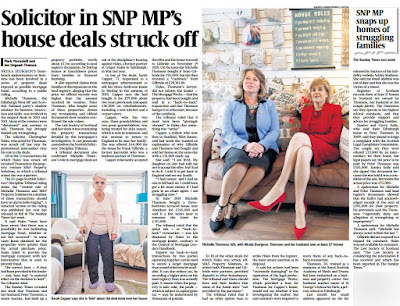
‘Unconvincing’ Lord Advocate raises fears of cover up. DURING one of the worst performances ever by a Lord Advocate before the Scottish Parliament – top prosecutor Frank Mulholland said he did not think there should be an inquiry into the handling of an investigation of a lawyer who was struck off over property deals involving SNP MP Michelle Thomson.

Responding to questions on when the Crown Office & Procurator Fiscal Service (COPFS) was informed of allegations of mortgage fraud involving solicitor Christopher Hales – Frank Mulholland told MSPs that he does not believe there should be an inquiry into when prosecutors knew and how the case has since been handled - after it emerged the Law Society briefly informed the Crown Office of the ‘issue’ in December 2014.

Hales, who once listed his occupation as “Police Constable” – and is now struck off by the Scottish Solicitors Discipline Tribunal from working as a solicitor - handled numerous property deals for his client – SNP MP Michelle Thomson. Mr Hales acted for Ms Thomson before she was elected as an SNP MP.

According to a ruling by the Scottish Solicitors’ Discipline Tribunal, a full version of which has been published by the Sunday Times, Mr Hales failed to provide key information to mortgage lenders in breach of guidelines designed to prevent fraud in numerous cases.

In the Scottish Parliament on Thursday, Labour MSP Jackie Baillie asked Mr Mulholland about the timeline in the case.

During the 10 minute session, Lord Advocate Frank Mulholland presented a timeline of events as the Crown Office saw it:

18 December, 2014 - The issue of solicitor Christopher Hales was raised "informally" by the Law Society of Scotland with the Crown Office. Neither the clients nor properties were named.

28 April, 2015 - The issue was raised again and it was noted that the matter of referral to the Crown Office was still under consideration by the Law Society. Neither the clients nor properties were named.

1 July, 2015 - The Crown was advised by the Law Society that it was required to obtain authorisation from its Guarantee Fund Sub Committee to formally refer the case.

3 July, 2015 - Referral was received by the Crown following the required authorisation. Documents were handed over to the Crown Office and in those documents the names of clients and properties were disclosed.

9 July, 2015 - A formal referral was made to the Crown Office and instructions were issued to Police Scotland.

Frank Mulholland  questioned by MSPs about when the Crown Office was first notified of allegations of mortgage fraud against Christopher Hales.

Mr Mulholland said: "As the Crown has made clear on a number of occasions, the case of Christopher Hales was first brought to its attention by the Law Society of Scotland at a meeting on 18 December, 2014."

Ms Baillie asked if Mr Mulholland believed there should be an investigation into the processing of information between the Law Society and the Crown Office.

She asked if he would order such an inquiry, given that there may have been "additional opportunities for alleged mortgage fraud" due to the delay.

Mr Mulholland responded: "I don't have the power to order an inquiry, and I don't think there should be an inquiry."

He said Police Scotland were instructed to investigate the allegations on 3 July 2015 and formally issued officers to do so on 9 July.

He said the issue was raised at routine quarterly meetings between the Law Society and the Crown Office.

Mr Mullholland said the Crown Office was first made aware on 18 December 2014 that the case was under consideration for referral. The issue was raised again on 28 April.
Image copyright PA Image caption Ms Thomson denies acting illegally

Mr Mulholland added: "The first time the Crown was made aware of the identity of the clients and the properties, was the 3rd of July."

Mulholland was also asked by Jackie Baillie if the Crown Office had begun any Proceeds of Crime actions against those involved.

Embarrassingly for the Lord Advocate, and appearing to have little clue as to the sequence of events, he responded “not yet”.

Police Scotland launched an inquiry only after the Crown Office was finally handed the detailed case files in the Hales case by the Law Society, some seven months from the day it first alerted prosecutors to the case.

Hales was banned from the legal profession in May 2014 over 13 property deals linked to Thomson and her business partners. The transactions involved “back to back” sales, where homes – often owned by vulnerable people – were bought at below full market value and then resold at far higher prices, in some cases on the same day; where large cash sums were transferred between the parties involved; where mortgage loans were sought that were higher than the price paid for the home, and where higher prices than those actually paid were recorded in the Scottish land registry.

Mortgage companies involved in those transactions, including Lloyds, which gave loans through its subsidiary Birmingham Midshires, and Virgin Money, which now owns the mortgage book for Northern Rock, which lent money for one sale, have confirmed they are now in contact with the police.

The Sunday Times disclosed it had submitted new evidence of an unusual property transaction to Police Scotland detectives after a couple who sold a home to Thomson alleged they had £32,000 deducted from the sale proceeds to pay off a loan they had no knowledge of.

The solicitor involved in that transaction, James Craig, had been found guilty of professional misconduct in February 2014 by the Scottish Solicitors Disciplinary Tribunal (SSDT), the body that struck off Hales three months later, and fined £2,500 for breaching money laundering regulations. There was no evidence that Craig acted improperly in the case reported by the Sunday Times.

The Sunday Mail reported that a second lawyer named in the SSDT judgment on Hales called Christopher Tulips, whose firms Strefford Tulips was involved in several deals for Thomson’s firm M&F Property Solutions, had also been censured and fined £2,500 for his role in back-to-back property deals. The published ruling by the SSDT on Tulips is anonymised, so it remains unclear whether his case involved transactions linked to Thomson.

Last week, the Law Society said its director of financial compliance Ian Messer "informally" raised concerns about the case of Mr Hales during two separate meetings with prosecutors in December 2014 and April 2015.

However, the Law Society did not "formally" submit its evidence to the Crown until July 2015, two months after Ms Thomson was elected SNP MP for Edinburgh West.

Law Society chief executive Lorna Jack gave an "absolute and categorical assurance" last week that the election played no part in the timings of the case.

She said Mr Messer would have seen Ms Thomson's name in the unredacted report into Mr Hales but may not have been aware she was a Westminster candidate.

The secretary to the Law Society committee that struck Mr Hales off, Sheila Kirkwood, is said to be a personal acquaintance of Ms Thomson with close links to the SNP.

Lorna Jack has pledged to look more deeply into Ms Kirkwood's links with Ms Thomson, but said she has received an assurance the secretary was unaware of the MP's links to Mr Hales until she read about it in media reports.

Ms Thomson is linked to 13 transactions Mr Hales conducted in 2010-11 where properties were said to have been bought cheaply from clients looking for a quick sale and then sold at a huge mark-up on the same day.

Complicated "cashback" deals were said to have been used to artificially inflate property prices in order to secure bigger loans from lenders.

Ms Thomson has denied acting illegally.Ms Thomson has surrendered the SNP party whip and has also stood down as the party's business spokeswoman at Westminster until the investigation into Mr Hales has concluded.

Previously, First Minister Nicola Sturgeon denied having any prior knowledge of a scandal which led to one of her most prominent MPs stepping down from the party.

During First Minister’s Questions last Thursday, 1 October,  Nicola Sturgeon said in response to questions that "serious issues" had been raised around the conduct of Michelle Thomson. The First Minister said that a police investigation should be allowed to take its course.

NO HOMELESSNESS FOR POLITICIANS:

The House of Commons Register of Members’ Interests lists 16 SNP MPs as holding property interests from which most receive rental income.

Under the rules, Members of Parliament are required to list a property if (i) its value is over £100,000 and (ii) if they receive rental income of at least £10,000 a year.

Tasmina Ahmed-Sheikh(Ochil and South Perthshire): Three flats in Glasgow and a house in Kingussie, Highlands and Islands (i/ii).

Richard Arkless(Dumfries and Galloway): A house in Broxburn, West Lothian, and a flat in Glasgow (i/ii).

Ian Blackford(Ross, Skye and Lochaber): Croft, including two holiday rental properties on the Isle of Skye (i/ii). A house in Lanark (i),

Deidre Brock(Edinburgh North and Leith): A half share in two Edinburgh flats (i).

Lisa Cameron(East Kilbride, Strathaven and Lesmahagow): A house in South Lanarkshire (i/ii). Five residential and holiday let apartments in Edinburgh and South Lanarkshire (i/ii).

Martyn Day(Linlithgow and East Falkirk): A house in West Lothian (i).

Patricia Gibson(North Ayrshire and Arran): A flat in Edinburgh (i).

Calum Kerr(Berwickshire, Roxburgh and Selkirk): A house in Wester Ross (i/ii).

Chris Law(Dundee West): A flat in Dundee (i) and a flat in Aberdeen (i).

Angus Brendan MacNeil(Na h-Eileanan an Iar): Jointly owns a house in Fort William plus a flat in Glasgow and a flat in London (i/ii).

Stuart McDonald(Cumbernauld, Kilsyth and Kirkintilloch East): A flat in East Dunbartonshire (i).

John McNally(Falkirk): Owns a hair salon, The Barber Shop, from which he receives £600 a month in rent.

John Nicolson(East Dunbartonshire): A terrace house in London’s Tower Hamlets (i/ii). He occasionally receives income for renting it out for photoshoots.

Steven Paterson(Stirling): A half share in a flat in Stirling (i).

Tommy Sheppard(Edinburgh East): Commercial premises and residential property in Edinburgh (i) owned by entertainment company Salt ‘n’ Sauce Promotions of which he is a shareholder.
Share article

Michelle Thomson(Edinburgh West): Two residential properties in Edinburgh, one in Falkirk, one on the Isle of Bute, one in East Calder, one in Stirling, one in Dollar, a half share of a property in Edinburgh and a quarter share of a property in Edinburgh (i/ii). She is a shareholder in the property management firm Your Property Shop.

Tuesday, June 09, 2015

Police Chief & Sheriff clash over ‘cover up culture’ within Police Scotland as top cop slapped down by judge over attempt to interfere with judiciary

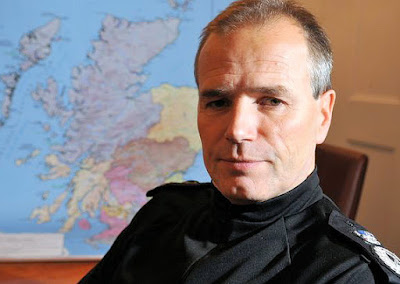
Top cop slapped down for interfering with sheriff. CHIEF CONSTABLE Sir Stephen House – in charge of Scotland’s single Police service Police Scotland  has been ‘slapped down’ by a senior judicial figure amid allegations he attempted to interfere with the role of Scottish Sheriffs.

Chief Constable House demanded a meeting with Scotland’s Sheriff Principal Brian Lockhart to voice his anger at comments made by Sheriff Robert H Dickson - who suggested a cover-up culture may exist within Scotland’s single Police Force.

However, after an angry exchange of letters between the two, Sheriff Principal Lockhart refused to meet with the top cop – and then went on to accuse Chief Constable House of failing to “recognise the role of the judiciary”.

The spat between Scotland’s most senior Police Officer and a senior judge was reported by 'The National' newspaper earlier today.

The row erupted after a case at in December at Airdrie Sheriff Court, which prompted Sheriff Robert H Dickson to jail PC David Carmichael for seven months after he was convicted of lying to protect a colleague who was drunk driving.

The row between Scotland’s top cop and members of the judiciary erupted after a case at in December at Airdrie Sheriff Court - which prompted Sheriff Robert H Dickson to jail PC David Carmichael for seven months after he was convicted of lying to protect a colleague who was drunk driving.

In his sentencing, Sheriff Dickson said the evidence “suggests that there may be a perceived culture that police officers are willing to prevent the arrest and prosecution of a colleague”.

He added: “If that culture exists, then every superior officer and anybody involved in the training of the police must ensure that it is stamped out forthwith.”

Chief Constable Sir House – angered at the comments of the sheriff -  demanded a meeting to discuss the case with Sheriff Dickson’s boss – Sheriff Principal Brian Lockhart, but was rebuffed.

In letters, House criticises Dickson for raising concerns about Police Scotland’s integrity in public and says he should have raised them directly with the police or through the Sheriff Principal.

But Sheriff Principal Lockhart wrote back to say: “Sheriff Dickson was entitled to draw from the facts before him that this cover-up may not have been a one-off incident”.

Sheriff Principal Lockhart added there is “ample evidence” to support Sheriff Dickson’s claims: “These were carefully phrased expressions of concern, justified by the evidence in the case before him.”

The sheriff said Dickson had every right to make the remarks, in order that “public confidence in the judicial system is not further damaged. To suggest otherwise fails to recognise the role of the judiciary”

He continues: “The integrity of the police force is not merely a matter of concern to senior police officers but to us all.”

The case related to in incident in 2010, when PC David Carmichael and fellow officer, probationer PC Justyna Niedzwiecka responded to a call about a drunk driver in Coatbridge, who turned out to be PC Daryl McKillion.

Instead of breathalysing the drunk policeman, Carmichael radioed in to control to say that nobody had answered the door.

Niedzwiecka reported the matter to a senior officer.

The call about McKillion had come from an off-duty detective who had seen the PC buy a bottle of whisky and get into a car.

McKillion, who was suffering from severe depression, took his life three weeks later.

Professor James Chalmers, Regius Professor of Law at the University of Glasgow, said House was attacking the messenger.

Chalmers said: “It may only be a problem of perception, but that’s still a real problem which he has a responsibility to do something about. The problem seems to be one of perception within the force rather than more generally, so there’s no room for the argument that the sheriff was making the problem worse by speaking out publicly.

“On the plus side, it’s good to see the independence of the judiciary defended so robustly, which is particularly important now that we have a single police force”.

Former policeman and Scottish Parliament Justice committee member John Finnie MSP defended Sir Stephen: “It is important there is a frank exchange of views. The independence of the judiciary must be guarded in any liberal democracy. I well understand the chief constable’s spirited defence, because the overwhelming majority of police officers act with integrity.

“In this case the standards were dropped and I don’t think the chief’s comments were at all unreasonable.”

A spokesperson for Police Scotland said: “The correspondence clearly sets out the chief constable’s rejection of the claim that such practice may have been widespread and his personal condemnation of any officer who wilfully neglects their duty and that all members of Police Scotland are expected to maintain the organisation’s highest professional standards.

“It also clearly sets out the respect for the independent role of the judiciary but does express concern that the original comments by Sheriff Dickson could have been misconstrued”.

Amid calls for a statement on the matter from Lord Justice Clerk Lord Carloway – who is currently acting Lord President – the Judicial Office refused to give any further comment.

Police Scotland was created by the Scottish Government in early 2013 after local policing across Scotland was scrapped in favour of a more easily ‘controlled’ and now highly politicised policing service steered by PR driven headlines to assist Scottish Ministers increasingly dodgy claims regarding crime statistics.

The current make up of the force – which has been subject to budget cuts, loss of key staff & has rumblings of low morale among  officers - has recently hit the headlines over alleged bullying within it’s ranks, the dodgy crime statistics, alleged targets for certain types of crimes, and support for questionable changes in the law backed by headline grabbing politicians and dodgy Crown Office prosecutors out to fiddle their own conviction rates.

Wednesday, May 13, 2015

Scots Crown Office prosecution of journalist Andy Coulson moved for third time, four week trial expected to cost more than £2m over perjury allegations in Sheridan case

Coulson trial date moved for third time. THE TRIAL of Andy Coulson, the former editor of the News of the World, for alleged perjury is due to start this Friday 15 May 2015 after being moved several times.

The trial - HMA v Andrew Coulson – is the only case resulting from a multi million pound Scottish Police operation condemned “Operation Rubicon” .

The trial is expected to last up to four weeks and cost taxpayers more than two million pounds.

Coulson, who went on to become David Cameron’s director of communications after leaving the News of the World, is accused of lying on oath during the trial of Solidarity party leader and former MSP, Tommy Sheridan, for perjury in Glasgow in December 2010. Sheridan was later convicted of perjury and sentenced to three years in prison.

Mr Coulson denies all of the charges against him

Scotland's Judicial Office initially said: "The trial diet in the case of HM Advocate v Andrew Coulson, previously set for Monday 11 May 2015, has been adjourned. The case will now call at 10am on Tuesday 12 May at the High Court in Edinburgh (Lawnmarket Court 3), to deal with any outstanding procedural matters and to fix another date for the trial to proceed."

The Judicial Office then updated their statement with another change of date: "A new trial diet in the case of HM Advocate v Andrew Coulson has been fixed following a hearing at the High Court in Edinburgh. The case will call at 10am on Friday 15 May 2015 at Edinburgh High Court (Lawnmarket Court 3).”

Coulson, the former editor of the News of the World who became Downing Street director of communications after Cameron came to power in 2010, was due to face a jury during the last weeks of this year's general election campaign, however legal argument led to the case being postponed until this week, removing a potential political embarrassment for the prime minister before the polls closed.

Coulson is charged with three counts of perjury relating to testimony he gave in the 2010 trial of Scottish politician Tommy Sheridan. The former News International journalist, who was working for Downing Street at the time, was called by the defence to answer questions about his role at the now defunct News of the World and his knowledge of the illegal interception of voicemails carried out by the newspaper's staff while he was editor. Sheridan was later convicted of perjury and sentenced to three years in prison and Coulson resigned from the government a month later.

In the wake of the 2011 phone-hacking scandal, Strathclyde Police launched "Operation Rubicon" to investigate allegations of misconduct at Sheridan's trial. As a result, in 2012 seven Scottish police officers detained the former editor at his home in Dulwich, South London at 6.30am and drove him to Glasgow. Shortly afterwards he was arrested and charged.

Also facing legal action are the paper's former Scottish editor Bob Bird and  senior reporter Douglas Wight. However Lord Advocate Frank Mulholland of the Crown Office & Procurator Fiscal Service (COPFS) has not announced any decision on whether prosecutors will proceed in the remaining two cases.

A similar operation run in England & Wales by the Crown Prosecution Service called "Operation Elveden", costing the public over £20 million has all but collapsed.

Nine out of the remaining twelve prosecutions against journalists – which included Andy Coulson - have been dropped by the Director of Public Prosecutions, and the entire operation branded an expensive taxpayer funded political witch hunt against the media.

Four more reporters were cleared at the Old Bailey of bribing public officials, taking the total number found not guilty by a jury to 14

An urgent review of the £20 million investigation was ordered last month, after the Court of Appeal quashed the conviction of former News of the World reporter Lucy Panton, who was the first reporter to be found guilty.

Tuesday, March 18, 2014

NO JUSTICE: Victims of crime often end up as victims of secretive Crown Office prosecutors & Scotland’s “Gentlemen's Club” of a justice system

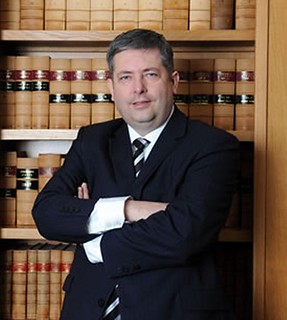
Lord Advocate Frank Mulholland

Lord Advocate Frank Mulholland – Crown Office failed to explain dropped rape prosecution. AS questions grow over the Crown Office & Lord Advocate’s role in the dropped prosecution of footballer David Goodwillie for rape, and other cases come to light where victims of crime and their families often end up as victims of the justice system itself and the sinister role of the Crown Office across a multitude of cases, crime victims are launching a campaign demanding their voice is heard in Scotland’s justice system reports the Sunday Mail newspaper.

As most victims of crime in Scotland will know from experience, dealing with Scotland’s secretive, unaccountable Crown Office & Procurator Fiscal Service (COPFS) – which often pursues its own agenda in criminal investigations or prosecutions, often places victims of crime in a far worse position after inept prosecutors and COPFS staff frequently dither, delay or fail to present cases or evidence in court – especially when friendships, associations and the vested interests of Scotland’s notorious gentlemen’s club of a justice system come into play.

Police and prosecutors have let us down claim victims of crime as they launch new campaign for justice

Mar 16, 2014 08:41
By Marion Scott Sunday Mail

PARENTS Anne and Richard Craig whose son died in a school attack and Denise Clair, who claims to have been raped by a footballer, have spoken out about their experiences of Scotland's justice system.

CRIME victims joined forces yesterday to launch a campaign demanding their voice is heard in Scotland’s justice system.

Anne and Richard Craig, whose son Euan, 14, was punched to death at school, say their suffering was made worse by their dealings with prosecutors and courts.

They met Denise Clair, who fears her fight to discover the truth of what happened on the night she claims to have been raped by footballer David Goodwillie has been undermined by Crown Office decisions.

Anne, Richard and Denise were brought together by Scottish Labour’s justice spokesman Graeme Pearson, a former police chief, who is demanding extensive reform to improve the treatment of victims of crime.

The three – all supported by the Sunday Mail – have spoken to the MSP about their ordeals in a video to be shown at next weekend’s Labour conference in Perth.

Pearson, who has urged Justice Secretary Kenny MacAskill to act, said: “I spend a lot of my time speaking to families like the Craigs and victims like Denise Clair and it’s disheartening hearing what they have to say.

“Under this Government, we have a criminal justice system that no longer has victims at its heart.

“In fact, if they didn’t feel victimised enough before they entered the system, they most certainly do by the time they emerge at the other end.”

Senior firefighter Richard, 45, is disgusted that Darren Taylor was jailed for just three-and-a-half years for his attack on Euan, who died after being punched five times at Rosshall Academy in Glasgow two years ago.

Richard, of the city’s Cardonald, said: “Victims are the very last thing that matter today in Scotland’s criminal injustice system.

“If, like us, you suddenly find yourself thrust into that nightmare, you very soon discover victims are merely the audience in a pantomime.”

His wife Anne, 44, who works with homeless people, said: “We’ve just been told Taylor will be free in August.

“He’ll be free and we still don’t know how this could have happened to our boy, or how we can prevent it happening to other families.

“There’s more chance of winning the lottery than winning justice in Scotland.”

Denise, 27, was on a night out in Bathgate, West Lothian, in 2011 but woke the next day, naked, alone and terrified, locked inside a strange house in nearby Armadale.

Witnesses claimed she was so drunk or drugged that she was “100 per cent” incapable of consenting to sex but the Crown dropped Goodwillie’s rape prosecution.

He categorically denies doing anything wrong but Denise, who was given criminal injuries compensation for being attacked, is suing him in a civil action.

Denise will never know whether her drink was spiked because a specialist sex crime unit took too long to carry out blood tests.

She called police just after 9am but no doctor was available to do the tests until after 6pm.

Denise said: “My life will never be the same again but nobody has apologised, nobody has promised to ensure it won’t happen to other victims.”

The campaigners have described a culture of “institutional indifference” to Scotland’s victims of crime.

Sandy Brindley, of Rape Crisis Scotland, said: “Reporting rape can take a great deal of courage and far too many rape survivors continue to feel very let down by the justice system they believed was there to protect them.

“Only around a quarter of rapes reported to the police ever make it to court – and for those survivors whose cases do get to court, the experience can be very traumatic.

“Survivors often tell us of how violating they find the experience, particularly when their past sexual history is brought up in court.”

David Sinclair, of Victim Support Scotland, said: “Our service is in every sheriff and high court in Scotland and we are available to assist witnesses and victims in every way we possibly can.

“We do recognise there is still work to do to improve the system.”

He said they hoped to establish a central information hub, which would reduce the number of times a victim of crime would have to give a statement about what happened to them.

The Crown Office declined to comment but the Scottish Government said: “Our Victims and Witnesses Bill, recently passed by the Scottish Parliament, has been developed in close dialogue with established organisations representing victims and witnesses, including Victim Support Scotland.

“The measures contained in the Bill will make important improvements to the criminal justice system for victims and witnesses.

“It will improve support, provide greater protection to their rights, ensure a more joined-up support across the system and give victims and witnesses confidence that their voices will be heard.”

The new law will also introduce a victims’ surcharge fund.

Case study: Denise Clair

What I believe happened to me that night was hard to come to terms with – but how I was treated by the criminal justice system was every bit as bad.

Because they let me down, I’ll never know what happened to me that night and that’s unforgivable.

If I’d known how I was going to be treated, I’d never have called the police that day. They did their job but the system went on to let me down at every turn.

I had to give up my career with the prison service because the criminal justice system left me
broken. They took everything from me and left me feeling worthless.

They told me the evidence in my case was good, then they pulled the rug out from under me and dropped the charge. No proper explanation was given.

I was told to go away and get on with my life. Now I’ve got the extra trauma of relying on the civil court for some form of justice.

I’m not alone – there are hundreds like me who mistakenly thought victims came first.

It’s taken me a long time to rebuild my self-confidence but I’m determined to come out fighting to help other victims.

Case study: Richard and Anne Craig

Richard: There was a great hue and cry about what a wonderful thing victim impact statements were going to be – but the forms have space for a single sentence.

Then, after all the pain of sitting down for hours, trying to put your loss into words, these statements aren’t read out in court.

Isn’t that what they were supposed to be used for?

We quickly formed the impression that prosecution lawyers are just not used to being challenged.

What the public already know, but the Crown Office appear to have failed to understand, is that we don’t have a justice system.

It’s about making deals behind closed doors and bending over backwards to ensure criminals aren’t too traumatised from the slap on the wrist they are undoubtedly going to get in what passes for sentences.

It’s not about making sure victims come out the other side feeling less victimised, or God forbid, that they’ve had justice.

Anne: The first thing we were told when we went into court was that prosecutors weren’t there to represent us.

I’d always believed they were fighting for victims but nothing could be further from the truth. They told us they were there simply to present the facts.

If only they’d at least done that, Euan’s killer might have received a sentence that matched the severity of the crime.

Instead, they sat silent while the defence presented a picture of a lad who made a mistake.

The prosecution refused to introduce evidence that showed another side to him.

Nobody talked about what a wonderful boy our son was or how our family have been devastated by his loss.

We were excluded, almost as if we were mere bystanders. We weren’t consulted about why the charges were reduced and when we asked questions we were treated like unwanted guests at a gentlemen’s club.

Graeme Pearson: Criminals have lawyers but victims don't

WE need to turn things around so ordinary people feel they’re at the centre of the system, not on the fringe.

Right now, they feel as if they’ve been spat out, not listened to.

Justice Secretary Kenny MacAskill keeps boasting that there is a 30-year low in recorded crime. But if police are not out arresting people because they are now doing the jobs of support workers then the figures will reflect that.

We now have many more alternatives to prison than ever before, including police and fiscal fines and warnings. No wonder victims say they’ve lost all confidence in the system.

There are many police officers, support staff and prosecutors working very hard to bring justice to victims.

But until we make radical changes, victims will continue to come out the other end feeling victimised for a second time.

They need to be able to walk away feeling their voices have been heard. When you see things like the impact statement forms, you can see why families feel their input is completely disregarded.

I’ve seen better-structured insurance claim forms – and they should be read out in court if witnesses wish, as well as being read out at parole hearings.

I proposed all of those things but they were rejected by the Government.

Victims should be told at the point of sentencing when the earliest date of release is for those sentenced to prison.

The criminals have lawyers talking up for them but victims and their families have no one.

It’s really simple. We need a criminal justice system that protects witnesses from abuse and allows them to deliver the best evidence.

We need a system that works for victims and witnesses every bit as well as it works for the accused.

Thursday, February 06, 2014

Corroboration to remain for now: Holyrood’s Justice Committee rebel against MacAskill’s ‘mad plan’ to remove Scotland's safeguard against miscarriage of justice

Corroboration to stay for now, says Justice Committee report. CORROBORATION, a long held safeguard against miscarriage of justice in Scots law where evidence in a criminal trial is required from two separate sources for a conviction, is to remain for now. The news comes as the Scottish Parliament’s Justice Committee have suggested Justice Secretary Kenny MacAskill ditch his plans to abolish corroboration in an effort to assist the Crown Office in obtaining higher rates of convictions, even where evidence is dodgy or practically non existent.

News of today’s development came after it was made clear in a report published today by the Scottish Parliament indicated that the majority of members of Holyrood’s Justice Committee, chaired by Christine Grahame MSP (SNP), did not support the much vaunted ‘reform’ put forward by MacAskill, who has served an unprecedented seven years as Scotland’s often accident prone Justice Secretary.

Contrary to much of the lobbying put out by the Crown Office and ‘campaign’ groups with a vested interest in removing Corroboration from Scots Law, the fact is that this long held safeguard against miscarriage of justice cuts across all criminal prosecutions, and not just rape or sexual offence cases, as anyone with an actual understanding of the law and a clear head will know.

Christine Grahame MSP: ‘Justice Committee Not Convinced Over Corroboration’

In response to the Justice Committee's rebellion against Mr MacAskill’s ill advised plan to remove corroboration, the Scottish Government have announced an inquiry to be led by former High Court judge Lord Bonomy, who will look at safeguards needed if corroboration is eventually abolished.

The terms of reference for the group headed by Lord Bonomy include consideration of the following areas:

• Whether a formal statutory test for sufficiency based upon supporting evidence and/or on the overall quality of evidence is necessary

• Whether any proposed prosecutorial test or a requirement for publication of any such test should be prescribed in legislation

• The admissibility and the use of confession evidence

• The circumstances in which evidence ought to be excluded

• The practice of dock identification

• Jury majority and size

• The future basis and operation for a submission that there is no case to answer at the end of the prosecution case

• Whether a judge should be able to remove a case from a jury on the basis that no reasonable jury could be expected to convict on the evidence before it

• Whether any change is needed in the directions that a judge might give a jury, including a requirement for special directions in particular circumstances

• Whether any additional changes are required in summary proceedings.

Appeals are not expected to be considered by the review as they are for wider consideration, not related specifically to corroboration.

The group is expected to take a year in its deliberations. Any necessary legislative and practical change to be taken forward on the back of its recommendations will then be subject to full Parliamentary scrutiny and commenced alongside the provisions in the Criminal Justice Bill, abolishing the corroboration requirement – which as before, is intended to take place in the financial year 2015-16.

Commenting on the plans announced by the Scottish Government, Lord Gill, Scotland’s top judge said: “I am grateful to the Cabinet Secretary for his sensitive response to the widespread discussion of this proposal, and for his usual courtesy in letting me see the terms of reference before they were finalised. The proposed review will enable this issue to be looked at at greater length by a body of experienced professionals. The terms of reference should allow a thorough consideration of the issues. I am pleased that Lord Bonomy has agreed to Chair the Review and I look forward to seeing the results of the Review’s work.”

In October of last year, Scotland’s top judge gave evidence to the Justice Committee, reported HERE, defining corroboration as one of the "finest features" of the country's justice system.

The Lord President’s testimony at Holyrood backing the retention of corroboration came after a terse Lord Advocate Frank Mulholland appeared before MSPs, demanding the lifting of corroboration to enable often incompetent prosecutors to gain higher rates of convictions for cases the Crown Office & Procurator Fiscal Service (COPFS) more often than not fail to take to court for one excuse or another.

And, contrary to intense lobbying by the Lord Advocate, Police Scotland, and campaign groups, it is widely known in the legal system the regular failures by COPFS in cases involving sexual offences are mostly due to the fact evidence and statements in such cases are so badly handled by prosecutors and Police, it is unlikely a prosecution could be presented in a court of law without incurring regular criticism from the benches of COPFS and the Lord Advocate himself.

The Criminal Justice (Scotland) Bill, which includes proposals to abolish the requirement for corroboration, is currently at Stage 1 in the Parliamentary process. Further information on the Bill is available from:HERE

It should be noted Scottish Law Reporter supports the retention of corroboration, and has reported on the issue in previous coverage HERE

BBC News reports further: Ditch corroboration plans, say Justice Committee MSPs

MSPs have suggested ditching controversial plans to abolish the requirement for corroboration from criminal justice legislation. It emerged that the majority of Justice Committee members do not support change.

The government said an inquiry led by former high court judge Lord Bonomy would look at safeguards needed if corroboration was abolished.Opposition leaders called on ministers to wait until after the inquiry. The reform is included in the Scottish government's Criminal Justice Bill.

Justice Secretary Kenny MacAskill said he remained "committed to this essential and long-overdue reform as the corroboration rule can prevent strong cases which could be prosecuted in other jurisdictions from being taken forward".

He added: "Scotland is the only country in the world which has been identified as having the requirement and this is acting as a barrier to justice and denying too many victims their opportunity to have their day in court."

But MSPs on the Justice Committee said they were "concerned that the case for abolition has paid insufficient regard to the importance of this requirement within the Scottish criminal justice system".

Opposition party leaders pressed First Minister Alex Salmond during his weekly question time to delay abolition until Lord Bonomy's inquiry had concluded.

Scottish Conservative leader Ruth Davidson said: "What we as members are being asked to do is to vote through a bill which we know to be deeply flawed on the grounds that Kenny MacAskill says he'll sort it later. "There is an obvious solution here. Leave the scrapping of corroboration out of the bill. "Ask Lord Bonomy to report on the whole issue and then let us look at it again."

Liberal Democrat leader Willie Rennie argued: "Appointing Lord Bonomy doesn't restore justice, it simply papers over the cracks with a veneer of respectability." He urged the first minister to overrule his justice secretary "before he does serious damage".

But Mr Salmond responded: "It's not a quick fix, it's a distinguished judge who's looking to make absolutely certain that as this change is made, appropriate safeguards are there to prevent miscarriages of justice."
'Archaic rule'

The committee has been scrutinising the Scottish government's Criminal Justice (Scotland) Bill, which includes plans to abolish the centuries-old requirement for corroboration - which means that currently evidence against an accused person must come from more than one source.

One of Scotland's top judges, Lord Carloway, called for the change in a review of the criminal justice system, insisting corroboration was "an archaic rule that has no place in a modern legal system".

Supporters include the police, victims' groups and prosecutors. Some have argued that the removal of corroboration could also help widen access to justice for victims, particularly in cases of rape and domestic violence.

Opponents, including many from within the legal profession, have said it could lead to rises in miscarriages of justice. Justice Committee convener Christine Grahame said the proposal had divided opinion among the MSPs.

The SNP MSP said: "The committee could not reach agreement on whether removing such a significant and integral part of the criminal justice system would improve 'access to justice' for victims of sexual offences in a meaningful way or indeed secure more convictions. "Some therefore asked the cabinet secretary to consider removing the relevant sections on corroboration from the bill. "Others felt that the case had been proved."

Ms Grahame also said the Scottish government needed to provide "much more information on its plans to review additional safeguards" before the Scottish Parliament as a whole voted on the general principles of the bill.

Mr MacAskill said he noted the committee's recommendations and hoped its members would "welcome today's announcement on safeguards".

He said: "I have always been clear that we are willing to listen and to work with stakeholders on building further safeguards into our reforms. "I therefore welcome the fact that Lord Bonomy has agreed to chair this reference group. "I am confident that he and his team will carry out a robust and thorough exploration of any additional safeguards which may be required in the light of the corroboration requirement being abolished."

The group is expected to take a year for its deliberations, and will not make any recommendations before the bill is voted on at Holyrood.