Showing posts with label Kevin Dunion. Show all posts

Thursday, February 02, 2012

Agnew gets FOI role, Holyrood msps discuss secret plan ‘to bulldoze FOI decisions database’ in move to wipe past findings by Information Commissioner

msps plan to delete foi decisionsRosemary Agnew ditches lawyer complaints to become Information Commissioner. THE DAY AFTER msps at the Scottish Parliament unanimously approved the appointment of a lawyer complaints boss Rosemary Agnew as the new Scottish Information Commissioner, Holyrood insiders have spilled the beans on a SECRET PLAN discussed by msps who are suspicious of Freedom of Information laws TO WIPE the current itspublicknowledge website of the Scottish Information Commissioner including all of the outgoing Commissioner Kevin Dunion’s previous decisions and replace it with a new website in what is described by one Scottish Parliament employee as “a bid to bring relief for some at Holyrood and give Rosemary a clean slate”.

A whistle-blowing member of staff at the Scottish Parliament who has been involved in the secret discussions for the website redesign told Scottish Law Reporter this morning the secret plan to wipe all decisions was being discussed between only a few msps amid concerns of protests from the public & media over the content of Mr Dunion’s current website and all previous decisions being lost or being made deliberately difficult for members of the public to access in any replacement website.

The insider confirmed : “The plan being discussed is for the entire FOI website to be taken offline while officials & msps argue over the redesign which ‘may’ archive only short summaries of selected cases or more probably remove all content of Mr Dunion’s previous investigations & decisions to give the new Scottish Information Commissioner a fresh start.”

The source continued : “So you can expect to see decisions such as the one revealing the SPCB’s attempt to cover up MSP David McLetchie’s theft of expenses for taxi journeys to be deleted from public view. I’m sure he and the Scottish Conservatives will be very happy at this prospect, as will a few other msps caught out by Mr Dunion’s decisions on poorly handled foi requests.”
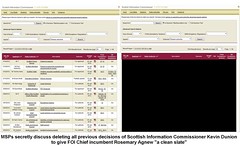
FOI decicions website to be deleted - msps secret plansBefore & After Dunion ? MSPs plan to delete all previous decisions on Info Commissioner’s website. Many of Mr Dunion’s decisions on cases brought to his attention during his two terms of office serving as Scotland’s Information Commissioner since 2002, have revealed scandals involving politicians expenses, hospital deaths, failings of Police Forces around the country, failures of the justice system including Scotland’s Prosecutors & justice bodies such as the Crown Office, and Rosemary Agnew’s current employment base, the Scottish Legal Complaints Commission which has been investigated on at least TWENTY OCCASIONS by the Scottish Information Commissioner and his team, with most decisions going against the SLCC during Agnew’s term as Head of Investigations and then its Chief Executive.

Further decisions of Mr Dunion and his investigations team have led to exposures of scandals involving local authorities & the Scottish Government, with some cases bitterly fought in the courts by lawyers acting for the Scottish Government in attempts to block publication of material sought by members of the public & media.

An insider said today “It will be a disaster for openness & transparency if msps went ahead and bulldozed Mr Dunion’s entire work over the past decade.”

A law reform campaigner speaking to Scottish Law Reporter earlier today said : “Msps and the Scottish Government must be preparing to hide something big to appoint someone with a record of being anti-foi. What are the big political issues around just now ? independence referendum and a crap justice system with more criminals in it than outside it .. couldn't be a coincidence of course.”

Internal notes on discussions on the planned changes to the Information Commissioner’s current website shown to a journalist staggeringly reveal one msp wants the new website to be handled by the same team who handled the ‘redesign’ of the Scottish Parliament’s E-Petitions website, which has been purposely kept offline for nearly a year out of fears football fans may use it to lodge e-petitions to challenge the Scottish Government’s controversial anti bigotry law, the Offensive Behaviour at Football and Threatening Communications (Scotland) Bill. Scottish Law Reporter covered the year long loss of the E-Petitions website due to sectarian fears, HERE

Meanwhile, msps were at pains to portray their choice of Information Commissioner, Ms Agnew as a step in the right direction.
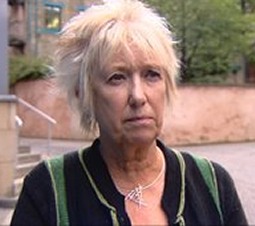
Justice Committee Convener Christine Grahame Christine Grahame MSP who has been caught out before via foi requests and was recently accused by a former employee of allegedly making sectarian jibes against fellow msps and alleged expenses fiddling, released a statement on Agnew’s appointment claiming : "The commissioner's role is an important one. The commissioner is responsible for enforcing and promoting Scotland's freedom of information laws which give people anywhere in the world access to information held by more than 10,000 public authorities in Scotland."

She added: "Rosemary Agnew will bring to the post a range of skills and experience, including an understanding of the challenges freedom of information presents to those seeking and providing information. I believe Rosemary Agnew will prove to be an effective and fair commissioner who will bring to the post enthusiasm and a determination to continue to ensure that the freedom of information regime in Scotland remains highly regarded throughout the world."

Christine Grahame also sat on the secret closed-to-the-public all women msp only selection panel which gave Agnew the £78,000 a year plus expenses job for a SIX YEAR TERM. Grahame introduced the motion in the Parliament herself to require msps to vote for her choice. “S4M-01865 Christine Grahame on behalf of the Selection Panel: Appointment of the Scottish Information Commissioner—That the Parliament nominates Rosemary Agnew to Her Majesty The Queen, for appointment as the Scottish Information Commissioner.”

Carole Ewart, co-convener of the Campaign for Freedom of Information in Scotland said: "We congratulate Ms Agnew on her appointment, and look forward to continuing working with the Commissioner's office to develop and promote this important legislation. The Scottish Information Commissioner is a key figure in the success of FOI and, as FOI is at a pivotal stage in Scotland, we would like to see her continuing the positive developments her predecessor has established."

A journalist from a national newspaper branded the comments by msps & alleged FOI campaigners as “barmy” and pointed to the number of decisions taken by the Scottish Information Commissioner “to rebuke” Agnew’s handling of FOI requests as evidence the incumbent for Mr Dunion’s job appears to be anti-foi and against transparency & accountability.

Whether Ms Agnew chooses to promote Freedom of Information by continuing Mr Dunion’s demands for FOI to be safeguarded & expanded, or simply decides to allow public bodies, politicians and others to keep their secrets to themselves, remains to be seen.

Wednesday, January 11, 2012

SHAMELESS : Scottish Legal Complaints Commission’s Chief Exec Rosemary Agnew in running for Freedom of Information Commissioner post

Scotland’s new Information Commissioner for the next EIGHT YEARS ? SLCC Chief Exec Rosemary Agnew is tipped by some to replace Kevin Dunion, yet others question her openness credentials after SLCC widely abused FOI REVELATIONS in the media this week report Rosemary Agnew, the current Chief Executive of the Scottish Legal Complaints Commission (SLCC), who is one of the candidates favoured to replace the outgoing Kevin Dunion for the position of Scottish Information Commissioner, has been ‘rebuked’ on at least FIVE OCCASIONS by the Information Commissioner for withholding information to the extent the SLCC has been named in a league of shame of public bodies which openly flout Freedom of Information laws.

From further reports it transpires Ms Agnew had also shockingly used FOI exemptions refuse the release of key data on how much compensation was paid to clients of solicitors, while Scottish Parliament officials conducted interviews for the key FOI post which will give the candidate a position in protecting information rights in Scotland for the next EIGHT YEARS.

The Scottish Legal Complaints Commission has not issued any statement so far on what effect Ms Agnew’s decision to stand for the FOI role will have on the SLCC, which has already lost an earlier Chief Executive, Eileen Masterman in mysterious circumstances which where also covered up from Freedom of Information requests made by journalists after revelations Ms Masterman had negotiated a large PAY OFF which was personally sanctioned by Justice Secretary Kenny MacAskill.

If Ms Agnew gets the post, the SLCC will have to recruit its THIRD CHIEF EXECUTIVE IN THREE YEARS, an issue which has raised concerns among consumer groups & the legal profession about the ability of the law complaints regulator to do its job properly.

During Ms Agnew’s term at the Scottish Legal Complaints Commission, firstly as Head of Investigations and then taking over the role of Chief Executive upon the demise of Eileen Masterman, the SLCC has been the subject of multiple investigations by the Scottish Information Commissioner, most of which have gone against the SLCC who frequently sought to cover up its workings and information which identified massive failings within the quango, along with bitter personal feuds between its board members who openly turned on members of the public & journalists in secret email exchanges which also featured in the media. Ms Agnew was also reported to have refused to monitor individual claims against the Law Society of Scotland’s Master Policy, a matter reported by Scots law blog Diary of Injustice, HERE.

Reported in the Daily Record newspaper earlier this week :

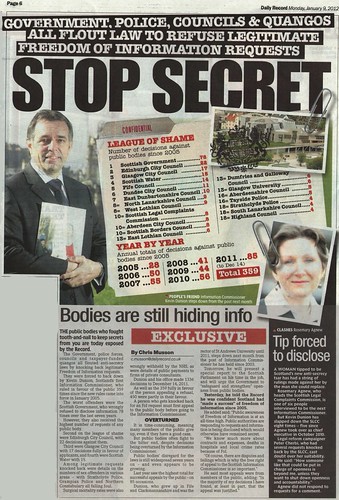
stop secret Daily Record 9 January 2012STOP SECRET : Revealed: Government, police & local councils all among public bodies who flouted anti-secrecy laws

Jan 9 2012 Exclusive by Chris Musson

TIP FORCED TO DISCLOSE

A WOMAN tipped to be Scotland's new anti-secrecy tsar has had a string of rulings made against her by the man she could replace.

Rosemary Agnew, who heads the Scottish Legal Complaints Commission, is one of six people interviewed to be the next Information Commissioner. But Kevin Dunion has slapped down the SLCC eight times - five since Agnew took over as Chief Executive in October 2010.

Legal Reform campaigner Peter Cherbi, who had several requests knocked back by the SLCC, cast doubt over her suitability. He said : "How someone like that could be put in charge of openness is beyond me, unless they want to shut down openness and accountability."

Agnew did not respond to requests for a comment.

THE public bodies who fought tooth-and-nail to keep secrets from you are today exposed by the Record. The Government, police forces, councils and taxpayer-funded quangos all flouted anti-secrecy laws by knocking back legitimate Freedom of Information requests. They were forced to back down by Kevin Dunion, Scotland’s first Information Commissioner, who ruled in favour of the public 359 times since the new rules came into force in January 2005.

The worst offenders were the Scottish Government, who wrongly refused to disclose ­information 78 times over the last seven years. However, they also received the highest number of requests of any public body. Second on the league of shame were Edinburgh City Council, with 22 decisions against them. Third were Glasgow City Council with 17 decisions fully in favour of applicants, and fourth were Scottish Water with 15.

Among legitimate requests knocked back were details on the numbers of sex offenders in various areas – with Strathclyde Police, Grampian Police and Northern Constabulary all falling foul. Surgical mortality rates were also wrongly withheld by the NHS, as were details of public payments to firms of private consultants.

Dunion and his office made 1336 decisions to December 14, 2011. As well as the 359 fully in favour of the person appealing a refusal, 450 were partly in their favour.

A person who gets knocked back for an FoI request must first appeal to the public body before going to the Information Commissioner. It is time-consuming, meaning many members of the public give up, even if they have a good case.

But public bodies often fight to the bitter end, despite decisions being overturned by the ­Information Commissioner. Public bodies’ disregard for the laws is still widespread seven years on – and even appears to be growing. Last year saw the highest total for successful appeals by the public – on 85 occasions.

Dunion, who grew up in Fife and Clackmannanshire and was the rector of St Andrews University until 2011, steps down next month from the post of ­Information Commissioner he has held since 2003. Tomorrow, he will present a special report to the Scottish ­Parliament on his time in the job, and will urge the Government to “safeguard and strengthen” openness from public bodies.

Yesterday, he told the Record he was confident Scotland had “made a success” of freedom of information since 2005. He added said: “Public awareness of Freedom of Information is at an all-time high. Public authorities are responding to requests and information is being disclosed which would otherwise have remained secret. “We know much more about contracts and expenses, deaths in hospitals and local crime rates because of FoI. “Of course, there are disputes and failings which is why the free right of appeal to the Scottish Information Commissioner is so important.”

He said most appeals were from members of the public, adding: “In the majority of my decisions I have found, at least in part, that the appeal was justified.”

Tuesday, January 10, 2012

Outgoing Information Commissioner Kevin Dunion urges Scottish Parliament to “Safeguard Freedom of Information Rights”

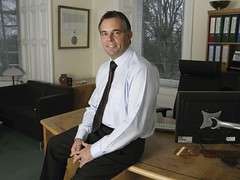
Kevin DunionOutgoing Information Commissioner Kevin Dunion urges Holyrood to safeguard information rights. THE outgoing Scottish Information Commissioner, Kevin Dunion, who was appointed to the post in 2003 and reappointed for a second term in 2008, will lay a Special Report before the Scottish Parliament entitled Informing the Future -The State of Freedom of Information in Scotland. Afterwards he will address the Justice Committee on the measures which he believes should be taken to safeguard and strengthen rights to information in Scotland. The full report by Mr Dunion to the Parliament can be downloaded here : Special Report to the Scottish Parliament 2012 (pdf - 724 kB)

This is the first time that a departing Parliamentary officeholder has formally made a submission to Parliament reflecting on their full term in office.In his final report, the Commissioner recommends that:

Additional bodies should be designated under FOISA to ensure rights follow the public pound.

Charges which deter or exclude requesters must be avoided.

The Commissioner should be empowered to take evidence under oath.

The Commissioner should have discretion over considering late submissions to his investigations by public authorities.

Timescales for bringing prosecutions under section 65 (offence of destroying information after a request) should be extended.

FOISA should be altered to expressly exclude environmental information so it can be dealt with solely under the Environmental Information (Scotland) Regulations 2004 (the EIRs).

Provisions relating to charging for information under publication schemes should be clarified.

The Commissioner concludes that, overall, the state of freedom of information in Scotland is still strong. Public awareness of FOI rights is at an all time high and public authorities are generally complying with their obligations. However he warns that appeals against authorities are rising sharply, with appeals for 2011/12 projected to be 25% up on 2010/11. Increasingly, the Commissioner's decisions are finding that authorities have failed to deal with requests correctly.

The Commissioner also makes a final call for action to Ministers to use their powers to designate arm's length organisations, such as local authority trusts and private contractors, which now increasingly provide public services and facilities such as education, health, sports and leisure.

Mr Dunion said: "It is testimony to the effect of FOI that information on important matters such as public sector contracts, hospital acquired infections and school closures has not only been disclosed but proactively published. This success may be undermined if the right to information is lost when service delivery changes. It is nearly ten years since Parliament was told that powers to designate additional bodies such as local authority trusts and private contractors would be used. Disappointingly, successive administrations have failed to make good on this despite opinion polls showing that the public is strongly in favour of such action."

The Commissioner rejects suggestions that FOI is a burden and points out that Scotland is in danger of falling behind other countries, including the rest of the UK, saying: "The view that FOI is an intolerable regulatory burden on authorities turns the clock back 20 years and is not supported by evidence. Alternative measures such as codes of practice and voluntary charters have been shown not to work effectively – often because there is no capacity for a Commissioner to enforce compliance and hear appeals. Designation is not just about extending the reach of FOISA, but safeguarding vital rights to information."

The UK Government has already made its first designation order and is consulting with nearly 400 other bodies.The Commissioner's report recommends that Ministers should proceed with designation of those bodies already consulted in Scotland and a rolling review of designation be instituted to ensure rights to information keep pace with changes in the delivery of public services.

The Special Report sets out a number of other recommendations to clarify and strengthen FOISA, only one of which is being addressed by the Freedom of Information (Amendment)(Scotland) Bill which was announced by Ministers on 16 December 2011.

Mr Dunion said : "I believe my Special Report is particularly timely given the current consultation by the Scottish Government on a Freedom of Information (Amendment)(Scotland) Bill, and as an early contribution to the Government's intended consultation on a Transparency Agenda for Scotland in 2012."

Monday, January 31, 2011

Salmond’s SNP is now ‘Secrets’ National Party as Scottish Government bow to vested interests over widening of Freedom of Information laws

In what may come as little of a surprise to anyone, the current SNP minority Scottish Government have stalled on expanding the reach of Freedom of Information legislation, apparently after business interests lobbied to prevent any further reforms to FOI in Scotland.

The Sunday Herald reports :

SNP U-turn protects big business from scrutiny

EXCLUSIVE: Rob Edwards
30 Jan 2011

The Scottish Government has been slapped down by the Information Commissioner for bowing to pressure from big business and abandoning plans to end the secrecy enjoyed by private contractors working for the state.

Ministers have shelved proposals to extend freedom of information legislation to cover the companies that build and run schools, hospitals, prisons and roads. The move was fiercely opposed by the firms.

Other bodies which will also now escape designation under the Freedom of Information (Scotland) Act are trusts set up by local authorities to run leisure and cultural activities, Glasgow Housing Association and the Association of Chief Police Officers in Scotland.

The U-turn has earned a strong rebuke from the Scottish Information Commissioner, Kevin Dunion.

He said: “I have consistently warned the government that freedom of information rights are under threat given the number of local authority trusts and private contractors used to deliver public services … I am disappointed that successive Scottish administrations have failed to use their powers to protect and extend the public’s right to know.”

Campaigners accused ministers of caving in to vested interests.

Carole Ewart from the Campaign for Freedom of Information in Scotland said: “We are deeply disappointed that the government has reversed its position on extending the Act because of opposition from the private sector bodies themselves.

“It would have been obvious to ministers before making these proposals that the contractors did not want to be covered, and we are amazed that merely because they have said they don’t like the idea the government has shelved it.”

Ewart warned that Scotland was now losing its lead over England on freedom of information. South of the Border, the law is being extended to cover police chiefs, the Local Government Association, the Law Society and other bodies that are not going to be covered in Scotland.

The Confederation of British Industry (CBI) in Scotland lobbied strongly against the extension of freedom of information rights. It has warmly welcomed the government’s change of heart.

CBI Scotland’s assistant director, David Lonsdale, said: “Extending freedom of information obligations to private sector suppliers of public services would have been unnecessary, costly, and at odds with promises to simplify regulation and public procurement, so we are pleased that ministers have listened.”

The Scottish Government accepted that there was “broad support” for increased openness and transparency.

But it said: “Any extension of legislation is not favoured by the majority of those bodies proposed for coverage at the present time.”

The Scottish Government’s rather long winded statement saying FOI would not be expanded to private contractors working for the state, issued earlier in the week, follows :

Freedom of Information (FoI)

Freedom of Information (FoI)

26/01/2011

Minister for Parliamentary Business Bruce Crawford today announced the Scottish Government is committed to bringing forward a Bill clarifying and strengthening the Freedom of Information (Scotland) Act.

After six years of the existing legislation, some necessary improvements have been identified, meaning the time now seems right to review the legislation as a whole.

Mr Crawford said that the Scottish Government intends to bring forward measures to strengthen and improve the Act through a Freedom of Information (Scotland) Amendment Bill in the next Parliamentary session.

The Government also considers that it would be premature to extend the legislation to cover a greater range of bodies delivering public services during this Parliamentary session.

The Freedom of Information (Scotland) Act 2002 encourages the development of a more open culture across the public sector by providing a statutory right of access to information held by some 10,000 Scottish public authorities.

The proposed legislation in the next Parliamentary session will put right two deficiencies in the current FOI laws that have been identified relating to Part 5 (Historical Records) and Section 65 (Offence of altering etc. records with intent to prevent disclosure).

The Scottish Government also intends to review and consult on how best the Act can be improved and strengthened as part of bringing forward this primary legislation.

Ministers consulted last year on whether existing FOI legislation should be widened to cover a greater range of bodies who deliver public services in Scotland. As was made clear at that time, the consultation was necessary as the Scottish Government had not reached firm conclusions on which bodies it might be appropriate to extend coverage to.

As a result of this consultation, Ministers believe it would be premature to extend coverage before the deficiencies in the Act can be put right and the opportunity is taken to strengthen and update the current legislation.

Minister for Parliamentary Business Bruce Crawford said:

"Freedom of Information has brought a welcome culture of openness and transparency to the work of Government and other public bodies since its introduction in Scotland, and we can be proud of the fact that we have set an example for other countries in this respect. However, the existing legislation can be improved, and that is why we intend to bring forward legislation in the next Parliamentary session to improve and strengthen the existing Act.

"At the same time, Scottish Ministers have carefully considered responses to our consultation on the possible extension of FOI, and it is clear that, while there is broad support for the principles of openness and transparency, any extension of legislation is not favoured by the majority of those bodies proposed for coverage at the present time.

"It was also apparent from the replies to the consultation that many of these organisations are already acting within the spirit of the act by making relevant information available, through both voluntary and statutory means. Ministers believe it would be premature to extend coverage before the deficiencies in the Act can be put right and the opportunity is taken to strengthen and update the current legislation.

"In the meantime, alternative methods with the same aim, including revision to the FOISA Code of Practice, assessment of the impact of the proposed Scottish Housing Charter and the further development of the transparency agenda, will continue to be explored.

"The Scottish Government will always encourage all organisations in Scotland to operate with the same principles of openness and transparency as ourselves, as they are fundamental elements of open democratic government and responsive public services."

Part 5 (Historical Records) relates to the 30 year lifespan of a 'historical record'; sets out the exemptions which are subject to this category and identifies the lifespan of certain other exemptions; and gives Scottish Ministers order making powers to amend these timescales.

By Order under Section 59 Scottish Ministers can change the 30 year lifespan to 15 years (or, whichever lifespan they so choose to define). This amendment however, would change all exemptions in Section 58(1). In order to be able to move these timescales independently, primary legislation will be required.

Section 65 (Offence of altering etc. records with intent to prevent disclosure). The destruction of information after it has been requested is a criminal offence. The standard timescale for commencing proceedings of a summary conviction is 6 months as set in section 136 of the Criminal Procedure (Scotland) Act 1995.

Due to the process that FOISA follows, it is potentially 10 months from commission before any offence could be discovered by the Commissioner at appeal stage. Subsection (2) of section 136 of the Criminal Procedure (Scotland) Act 1995 allows Acts, such as FOISA, to fix their own time limit.

Thursday, March 19, 2009

Secret Scotland : First Minister refuses Freedom of Information access to cabinet minutes

Funny how the tables turn on those who shout the loudest ... and this time the tables are well & truly turned on First Minister Alex Salmond and the Scottish Government, who, after leading a campaign to demand the release of the Westminster Cabinet minutes relating to the decision to go to war in Iraq, now refuses Freedom of Information requests for access to Cabinet minutes of the Scottish Government.

The First Minister must have asked for a wee bit legal advice on that too from the Government Legal Service for Scotland (GLSS). The Scotsman newspaper, who originated the FOI request, might think to ask for that legal advice too perhaps ... just to complete the picture.

Freedom of Information seems to have been in the news quite a bit this past week .. with Kenny MacAskill’s Justice Department fiddling the FOIs of the Scottish Legal Complaints Commission. What a band of chancers this lot are turning out to be (stop quoting wee Mags from Glasgow ! – Ed)

The Scotsman reports :

SNP 'hypocrisy' as it insists on keeping Cabinet papers secret

Published Date: 19 March 2009
By DAVID MADDOX
SCOTTISH POLITICAL CORRESPONDENT

THE SNP has been accused of double standards and hypocrisy over freedom of information after the Scottish Government insisted on keeping its Cabinet discussions secret.

The Nationalists led protests last month against the decision by Jack Straw, the Justice Secretary, to ignore a call from the Information Commissioner to publish the minutes of key UK Cabinet meetings in the run-up to the war in Iraq.

But the SNP has now turned down a request from The Scotsman, made under freedom of information laws, for the release of Scottish Government Cabinet minutes from 10 February, when ministers decided to drop a bill to replace the council tax with a local income tax (LIT).

There is suspicion that the decision was forced through by Alex Salmond, the First Minister, and John Swinney, the finance secretary, against opposition from their colleagues. But the only way any Cabinet split could be proven would be through the publication of the minutes.

However, the reason for the refusal was similar to the one given by Mr Straw – the need for ministers to feel they could hold free and frank discussions.

David McLetchie, the Scottish Conservatives' chief whip, said: "This is a classic case of saying one thing in opposition in Westminster and doing another in government in Edinburgh."

He pointed out that Mr Straw's refusal regarded a matter of national security, while LIT "is hardly in the same league".

Lord Foulkes, a Labour MSP, said: "The hypocrisy and double standards of the SNP is quite staggering."

The Liberal Democrats, who had been in negotiations with the SNP to try to get LIT through Holyrood, also want answers. Mike Rumbles, their chief whip, said: "What are the SNP covering up over LIT? It certainly suggests that there were splits in the Cabinet over dropping LIT."

Refusing The Scotsman's request, the Scottish Government said: "While we aim to provide information when we can, it is important that Cabinet can operate in an environment which allows ministers to have thorough discussion and debate before reaching decisions."

Opponents say the SNP's stance is far removed from its earlier rhetoric.

When Mr Straw made his decision, Angus Robertson, the SNP leader at Westminster, said: "This Cabinet cover-up is typical of the Labour government's attitude to freedom of information."

In addition, 17 SNP MSPs signed a Holyrood motion condemning the decision.

At First Minister's Questions last week, Mr Salmond boasted of his government's greater transparency.

Answering a question from the Nationalist MSP Christine Grahame, he said: "I certainly agree that this government is much more accountable and transparent than the Labour government in London."

A Scottish Government spokesman said: "There is a big difference between these two requests because there are suspicions parliament (Westminster] was misled over Iraq and the only way of seeing if that was true is for the minutes to be published. It was an issue of huge importance and national security."

WHAT NEXT

AS THE Scottish Government has refused to release its Cabinet minutes, an appeal can be made to its most senior civil servant, John Elvidge.

The next appeal would be to Kevin Dunion, the Scottish Information Commissioner. If he tells the Scottish Government to publish, it must either do so or appeal to the Court of Session.

However, if it followed the example of the UK government over the Iraq war Cabinet minutes and simply refused to publish, it would be the Scottish Information Commissioner who would take the issue to the Court of Session.

Appeals can go all the way to the House of Lords.

Friday, February 08, 2008

Court of Session quashes FOI Commissioner's ruling on Trading Standards complaints

Fresh from a spate of warnings to the Government & politicians over the implementation of judicial reforms, the courts have now struck down a ruling by Kevin Dunion, the Freedom of Information Commissioner, that Dumfries & Galloway Council disclose details about a 'particular company' over a period of 10 years which operates across Scotland.

Another message from the judiciary along the lines of 'don't mess with us' ?

Maybe the person making the FOI request would be advised to make the details of his knowledge public for all to see and judge for themselves ...

BBC News reports :

Court quashes information ruling

The Court of Session has backed a council's refusal to comply with a Freedom of Information request.

Dumfries and Galloway Council had appealed against a decision by Information Commissioner Kevin Dunion ordering it to release the details.

The request centred on complaints to trading standards about a particular company over a period of 10 years.

The council said the Enterprise Act prohibited disclosure and its appeal has been ruled to be successful.

The case started in February 2005 when an FOI request was made by a member of the public to all 32 councils across Scotland.

Request declined

It sought details of any complaints lodged against a particular company, its directors and employees over the previous 10 years.

In addition the date of the complaint, a summary of its nature and the outcome of any investigation were requested.

A number of councils - including the Dumfries and Galloway authority - declined to issue the information.

That resulted in a ruling by the Information Commissioner in November 2006 that the details should be released.

However, the Court of Session has now ruled against that judgment and quashed the commissioner's decision.