Showing posts with label McKenzie Friend. Show all posts

Wednesday, July 11, 2012

Two Days in the City : Rights of Audience for McKenzie Friends in Scots courts could have made the difference in Tods Murray v Arakin

Andrew McNamara’s 16 year battle against a law firm may have been shortened considerably by talking McKenzie Friend reform. A SIXTEEN YEAR BATTLE in Scotland’s courts between a struggling pensioner, Andrew McNamara and the might & influence of Edinburgh law firm Tods Murray, may well have been considerably shortened if reforms implemented only a few days ago in Scotland’s courts, granting McKenzie Friends a right of audience had come much earlier, reports Catherine Simpson in the Herald newspaper. While court users in England & Wales have been able to call upon the services of McKenzie Friends, Scotland took FORTY YEARS to allow McKenzie Friends to appear in the Court of Session, many contend due to resistance from the legal profession & worries clients may chose to litigate themselves instead of hiring expensive legal teams.

An earlier report on the Tods Murray v Arakin case can be read HERE with coverage of the appeal, recently heard by the court HERE and more on the history of Arakin Ltd’s dispute with Tods Murray can be found at a website on the case, here : Tods Murray v Arakin

Legal end to 'injustice' for sole litigants

Ruling benefits those without representation

By Catherine Simpson

NEW rules which came into force this week will improve the access to justice for people forced to represent themselves in Scotland’s civil courts.

Litigants who either can’t afford or can’t secure professional representation are often hugely disadvantaged as they invariably face a team of lawyers on the other side.

But from this week in Scottish courts, people helping them with their cases, who are known as McKenzie friends, will be granted the right to speak for them.

As Lord Justice Clerk, Scotland’s second most senior judge Lord Gill published in 2009 the results of a two-year review he had chaired into the civil courts in Scotland which recommended rights of audience should be extended to McKenzie friends.

The Scottish Parliament enabled legislation to that effect and it became law on Monday, potentially ending what many campaigners have described as an injustice in the Scottish courts.

But for one family, now awaiting the final judgment in a 16-year legal battle against their former lawyers, Tods Murray, the change came an agonising five days too late.

At the age of 70, partially-sighted and partially deaf Andy McNamara, owner of contracting firm Arakin Ltd, was incredulous when his wife Janette received a letter from Lord Gill’s office on Tuesday morning last week.

Mrs McNamara, 69, had written to the new Lord President reminding him of the recommendations he made three years ago and urging him to enact them. She said it would help her husband achieve a fairer hearing in his appeal against a decision that Arakin had to pay Tods Murray more than £86,000 in unpaid fees going back to the 1990s.

Mr McNamara has been assisted through numerous court battles against Tods Murray by his daughter Carol who knows the case as well as he does but whose role has been restricted to handing her father the correct papers and advising him before he speaks.

After the two-day hearing, which ended last Thursday, Ms McNamara said: “It was hard to believe someone wasn’t having a laugh at our expense. We’ve been asking for this for some time, have written to the Lord President and to all MSPs and then we learn the day before we’re in court the change is coming, which is great, but five days too late to be any use to us.

“We told the Lord President and MSPs we believed being forced to go it alone breached my father’s human rights and that is an avenue we will explore further.”

Mr McNamara spent much of the two-day appeal hearing on his feet, struggling to read documents with a magnifying glass and often having to ask the judges _ Lords Menzies and Bracadale and Lady Cosgrove _ to repeat questions.

At one stage, he asked that his daughter be allowed to speak for him. The judges had been given copies of the letter from Lord Gill’s office, confirming the change in law from today, but after a brief conference they told him they could not grant his daughter rights of audience in advance of the change.

The outstanding litigation between Mr McNamara and Tods Murray saw a rigorous examination of Tods Murray’s fees for professional services to Arakin in the 1990s and the sums paid to account by Arakin.

Mr McNamara told the court that the paperwork showed clearly that Arakin had paid some £70,000 more than the sums invoiced for when Tods Murray sued for payment.

But Alastair Duncan, for Tods Murray, who was supported by junior counsel and a solicitor, argued Lord Woolman had been right to find against Arakin in February when he ordered the firm to pay its former lawyers £86,376.

The judges will present a written judgment at a later date.

Tuesday, May 12, 2009

MacAskill fails to shine at Holyrood on McKenzie Friend questions

Justice Secretary Kenny MacAskill came up with anything but a straight answer to questions posed by Margo MacDonald MSP at the Scottish Parliament on the subject of enacting McKenzie Friends in the Scottish courts.

While England & Wales has had McKenzie Friends for some 39 years, Scotland’s Justice Secretary can only manage further delays, however, we might be saved by Lord Gill in his forthcoming review of the Civil justice system, where it is rumoured he supports the introduction of McKenzie Friends to Scotland. (Not if the Law Society have their way – Ed)

Kenny MacAskill faces questions over the 39 year lack of McKenzie Friends in Scottish Courts.

McKenzie Friends

5. Margo MacDonald (Lothians) (Ind): To ask the Scottish Executive whether it will introduce the practice of allowing a McKenzie's friend into law courts. (S3O-6781)

The Cabinet Secretary for Justice (Kenny MacAskill): The term "McKenzie friend" refers to the practice in English and Welsh courts in which parties are given assistance from someone other than a lawyer in presenting their case in court. At present, a party may be represented by a friend, relative or lay representative, such as a citizens advice bureau representative, in the small claims and summary cause sheriff courts. That covers actions up to a value of £5,000.

The right hon Lord Gill's civil courts review is considering the issue of McKenzie friends. I look forward to receiving his report, which is expected in June, and I will carefully consider all his recommendations about McKenzie friends and about wider issues concerning those who represent themselves in court. Those wider issues include the funding of court actions, improved court procedure and other methods of dispute resolution.

Margo MacDonald: I thank the cabinet secretary for his reply and for his attention to Lord Gill's upcoming report. Before its publication, he will see the petition on the matter that was discussed in committee just two days ago.

I draw to the cabinet secretary's attention that the McKenzie friend system, which we advocate, does not allow anyone to advocate on behalf of someone in court; the McKenzie friend is simply there to advise or support a person who might be without legal representation. The cabinet secretary must agree with me that that would only enhance the procedure in Scottish courts.

Kenny MacAskill: Anything that makes people more comfortable in a court environment is to be welcomed. There must be majesty of the court and the experience of court can be traumatic for whatever reason, so people's ability to have support is important.

The question of who has formal representation rights is of greater complexity and must be considered in the round. We have addressed the issue at small claims and summary levels, and there can be representation in some debt cases in ordinary actions. We have broadened the approach to give the Association of Commercial Attorneys various powers, which have been signed off by the Lord President. One thing that differentiates Scotland from England is that there is wider access to legal aid in Scotland than there is south of the border, which means that there is greater opportunity for representation.

Lord Gill must consider the matter because it is not simply about comfort and people's ability to be assisted in court, whether by a lay or legal representative, but about whether court is the appropriate forum in which to deal with a matter. That is why the issue should be considered in its totality. I look forward to Lord Gill's review, and I will be more than happy to discuss the matter thereafter.

Sunday, May 10, 2009

McKenzie Friend petition to Holyrood gains support from Margo MacDonald

The Scottish Parliament’s Petitions Committee considered at its 5th May hearing, a proposal to enact the facility of McKenzie Friends in the Scottish Courts.

McKenzie Friends have been excluded from Scotland since the whole issue of a McKenzie Friend took place, some 39 years ago in the London courts. (Time we caught up then – Ed)

Here follows the video clip of Holyrood’s Petitions Committee’s hearing of the McKenzie Friend’s petition, with Margo MacDonald present, giving a very thorough brief on the advantages of having a McKenzie Friend alongside you in court.

Petition PE1247 McKenzie Friends for Scotland :

Scottish Courts (McKenzie Friends) (PE1247)

The Convener: Our final new petition is PE1247, from Stewart Mackenzie, which calls on the Parliament to urge the Scottish Government to introduce a McKenzie friend facility in Scottish courts as a matter of urgency.

Margo MacDonald has expressed an interest in the petition. I invite her to comment on it.

Margo MacDonald: I have been interested in lay representation in the Scottish courts for a while. My interest arises out of the failure of Scots law to enact a provision that has been running successfully in England for about 20 years now. That provision allows professional representation rather than legal representation in highly complex technical cases such as fraud cases or cases in which it is necessary to have knowledge of the construction industry. Companies may apply to be registered to provide such representation. Only two or three have registered, but the system works because not many cases of such complexity go through the English courts every year. There would be even fewer such cases in Scotland, but we have failed to enact that legislation, and I have yet to be given a satisfactory explanation why.

15:15

I now find that in civil court cases, for example involving the rescheduling of small debts, people can find it impossible to get legal representation. They might be unable to afford legal representation in a more complex action so they need to represent themselves in court. For the past 39 years, what is known as the McKenzie friend system has been operational in England. That allows persons who are defending themselves to be supported, aided and backed up by expert information or even simple help. For example, having spread out my papers on the table, if I start really to shake, it might be handy for me to have a McKenzie friend to fix my papers. That is the situation in which unqualified persons can find themselves in court. That is the sort of function that a McKenzie friend might fulfil.

As well as being backed by Which? magazine and the Consumers Association, the petition appears to be backed by the European convention on human rights, which is heavy-duty support. The European Court of Human Rights has defined the principle of equality of arms as meaning that "a party must be able to put forward his arguments in conditions such that he is not put at a considerable disadvantage vis-à-vis the other side".

If someone is unrepresented in a court, they are at a disadvantage to start off with. That disadvantage is made considerable if they are denied the practical support that I have mentioned.

In essence, Mr Mackenzie's petition asks that the Scottish courts incorporate the principle and facility of a McKenzie friend as soon as possible. Lord Gill seems to support the idea, so I think that the petition is a serious runner for receiving the committee's support.

The Convener: Do members have any comments?

Robin Harper: I would be happy to act as a McKenzie friend to Margo MacDonald at any time.

Margo MacDonald: Thank you.

The Convener: You are an old charmer, Robin. A silver fox.

Robin Harper: The idea seems so obviously good and full of common sense that we must pursue it. We should ask the Scottish Government directly whether it will introduce a McKenzie friend facility in Scottish courts and, if not, why not. We can ask whether the matter will be included in the Scottish Law Commission's eighth programme of law reform.

We could also ask a number of other institutions—including the Law Society of Scotland, the Faculty of Advocates, the Lord President of the Court of Session, the Scottish Court Service, Citizen Advice Scotland, Money Advice Scotland and the Scottish Consumer Council—whether they support the introduction of a McKenzie friend facility and, if not, why not.

Nigel Don: It is worth noting that the McKenzie friend was not introduced by the British Government but was simply allowed by the courts. The matter was tested in the Court of Appeal, which said that the McKenzie friend should be allowed. If members are looking for helpful material, I can point them to a wonderfully comprehensive review—it is dated about 2006—by Robin Spon-Smith, which I found on the internet. He shows how the law has developed in England and Wales and suggests how it could develop in Scotland. We can write to the Government and the Lord President, but it is plainly open to the courts to introduce a McKenzie friend system. They do not need to be told. We probably just need to encourage them to do that. If Lord Gill's review will encourage the introduction of such a facility, we will probably find that nothing else is needed other than perhaps a nod from the Lord President.

Margo MacDonald: May I respond to that?

The Convener: I will let other members comment before allowing Margo MacDonald to respond.

Bill Butler: I know that, in small claims hearings and certain other sheriff court procedures, parties can speak on behalf of the folk involved. However, if I may play devil's advocate, is there evidence that the McKenzie friend facility works as a support and is not simply superfluous?

Margo MacDonald: There is such evidence from England.

The Convener: You can also respond to the point that you intended to speak on previously, Margo, before I gently cut you off.

Margo MacDonald: To respond to Nigel Don's point, the reason for doing something now is that there has been such a time lag in implementing the provision that has been running successfully in England for expert lay representation in court rather than professional legal representation. It would appear that there is some form in this regard in the Scottish system.

On whether the McKenzie friend facility works, I point out that it has been running successfully in England for 39 years.

Bill Butler: I am not against asking the questions that Robin Harper suggested, but I just wonder about the evidential basis.

Margo MacDonald: Thankfully, it is not up to me to provide the evidential basis in written form. If you want it, I will ensure that Mr Mackenzie knows that the committee would like to see it. However, I think that it is self-evident that using McKenzie friends works, because they are used in England with no complaint.

Nigel Don: I point out to Bill Butler and others that McKenzie friends do not represent and put the case for others; rather, the person representing themselves puts their case and the McKenzie friend simply sits alongside and, as Margo MacDonald said, keeps the papers in order, nods, suggests and gives advice, help and encouragement. This is not to do with advocacy, which is a separate issue that the committee recently debated.

The Convener: We have a series of suggestions to explore. For example, with reference to Nigel Don's comment on the framework of the courts, the clerk has suggested that we could write to the Lord Chancellor's department in England to explore its experience of, and observations on, the McKenzie friend facility, which might help the dialogue on the issue that Bill Butler understandably raised. Robin Harper's suggestions are helpful, too. Do you have any final comments, Margo?

Margo MacDonald: No, except to say that I think that committee members can see the common sense in the McKenzie friend approach. I sense, too, that the committee wants to know that the facility is not superfluous to requirements, but I think that that can be demonstrated.

The Convener: Okay. I thank Margo MacDonald for her presence for this item. We will have a comfort break for a couple of minutes and a quick cup of tea before we move on to current petitions.

15:23

Monday, May 04, 2009

Holyrood to hear that McKenzie Friends will bring much needed help to litigants in Scots courts

A petition to the Scottish Parliament, Petition PE 1247, seeking to install the facility of McKenzie Friends in Scotland, will be heard tomorrow at Holyrood.

We reported on the McKenzie Friend Petition last week, HERE and wish it the best of luck !

The Scotsman reports :

Little help from my friends

Published Date: 04 May 2009
By John Forsyth

A PETITION to the Scottish Parliament calling for the introduction of McKenzie Friends into Scottish courts may be pushing at a door that's already swinging open.

A McKenzie Friend is a non-legally-qualified supporter, who can sit with someone representing themselves in a civil case and provide assistance in a court hearing.

The McKenzie Friend cannot address the court unless invited to by the judge, but can take notes, help with case papers, quietly give advice on points of law or procedure; and prompt the litigant with questions to put to witnesses.

They have been a fixture on the civil litigation landscape in England and Wales for nearly 40 years and have spread to jurisdictions around the world, but curiously never to Scotland.

The petition, to be discussed tomorrow, has been presented by Stewart McKenzie (no relation) who lives near Perth. He says: "England's had it for 38 years so why don't we?"

Mr McKenzie says he heard about McKenzie Friends a few years ago and couldn't find anybody to explain why they aren't allowed in Scotland: "I think it's shocking that if you are forced to present your case on your own because you can't afford a lawyer and don't get legal aid, you aren't allowed any help in court. This petition isn't about any individual case and isn't about any case I'm involved in. It's for the people of Scotland."

He observes that when Heather Mills sacked her legal team in the divorce hearing with Sir Paul McCartney, she had McKenzie Friends to help her – not one, but three, including her sister.

The term comes from an otherwise unremarkable London divorce case, McKenzie v McKenzie, in 1971. On the night before the hearing, the husband discovered he was not going to get legal aid to be represented by a solicitor. His wife did have legal aid. Mr McKenzie was determined to represent himself but was not on top of the case.

He had been in contact with a firm of solicitors, Jeffrey Gordon & Co who had taken on a recently-qualified Australian barrister, Ian Hanger, on a gap year. He was sent to court to see what he could do to help Mr McKenzie.

Speaking from Brisbane, Mr Hanger, now one of Australia's most-respected QCs, recalls the events that led to his place in legal folklore with some amusement.

"I sat beside Mr McKenzie and there was a lot of whispered consultation between us," he says. "The judge was getting increasingly irritated. After lunch, the judge asked me who I was and what I was doing, and then announced that he'd had enough and sent me to the public gallery. He said I could not speak to Mr McKenzie except during adjournments."

That rendered the exercise futile and Hanger did not return for the second day. In due course the judge reached his conclusions. Shortly afterwards, Hanger and his friend from Australia, Richard Chesterman, now an Appeal Court Judge in Queensland, planned to set off for a car tour of Scotland. On the day before they left, Jeffrey Gordon sent a copy of the McKenzie v McKenzie judgment to Hanger with a request that he advise on prospects of appeal. There did not appear to be any.

Rather facetiously, Hanger wrote on the papers: "The judge was wrong to exclude me."

That became the ground of appeal. The appeal was upheld and McKenzie Friends haven't looked back.

Steve Hynes, director of the Legal Action Group, says: "McKenzie Friends are very common in England and Wales. As legal aid has receded for an increasing proportion of the population, the vacuum has been filled to a considerable extent by McKenzie Friends. I know a large proportion of debt cases these days will involve McKenzie Friends.

"There's no real point in instructing a qualified lawyer when there are no legal points at issue. The hearing will be about rescheduling debt and it is better to have someone by your side who knows about debt and accounting than law."

Participation of a McKenzie Friend is still at the discretion of the judge in every case, but their position has been underpinned by the incorporation of the European Convention of Human Rights into law in England and Wales.

The president of the Family Law Division in England circulated a note to his judges last year spelling out, in the light of the growth of 'litigants in person' in all levels of family court, "the attendance of a McKenzie friend will often be of advantage to the court in ensuring the litigant in person receives a fair hearing ... When considering any request for the assistance of a MF, the Human Rights Act ... is engaged; the court should consider the matter judicially, allowing the litigant reasonable opportunity to develop the argument in favour of the request ... In the event of objection, it is for the objecting party to rebut the presumption in favour of allowing the MF to attend."

Stewart McKenzie's petition has drawn support from Which? magazine, which has lodged a submission arguing that "the right to use a McKenzie Friend would be highly beneficial and could only result in a fairer hearing and outcome for members of the public".

Lord Gill has been considering a major overhaul of Scottish civil justice and his office has been in touch with the Petitions Committee advising that a question about McKenzie Friends was included in its consultation document of November 2007 and the matter will be addressed in his final report that he hopes to submit to Ministers by the end of next month.

It is difficult to imagine he will argue against the concept.

In the meantime, Ian Hanger QC, the legal prototype, says: "If the Petitions Committee will fly me over to Edinburgh I would love to address them on the virtues of the McKenzie Friend."

Wednesday, April 29, 2009

McKenzie Friends could come to Scottish courts as Holyrood considers 'access to justice' petition

The ability to have a McKenzie Friend by your side in an English courtroom should be extended to Scotland after a 39 year unwarranted exclusion, say access to justice campaigners, and the petitioner, Mr Stewart MacKenzie.

Peter Cherbi’s “Diary of Injustice” law blog reveals more on the merits of the McKenzie Friend petition and why having a McKenzie Friend at your side (if you can’t obtain the services of a solicitor) may very well be a good thing for justice and the courts. (Yes, high time McKenzie Friends were recognised and allowed in Scotland’s courts – Ed)

Diary of Injustice reports :

'McKenzie Friend' proposal to Parliament seeks to end 39 years of lawyers monopoly over Scots access to justice

Law Society of ScotlandLaw Society 'monopolises' Scots access to court. THIRTY NINE YEARS after laws allowing a 'McKenzie Friend' in the English courts system were introduced to facilitate the public's access to justice by allowing a not necessarily qualified legal individual to assist a person in court, a McKenzie Friend Petition (Petition 1247) has been put to the Scottish Parliament at Holyrood, asking for the implementation of the same privileges of a ‘McKenzie Friend’ to be granted in Scotland, to help many who find it difficult through the current system of legal representation, controlled by the Law Society of Scotland, to secure access to the Scottish Courts.

McKenzie's friend Petition PE1247 Page 1McKenzie Friend petition will end 39 years of prejudice against Scots ‘justice rights’ in Court. The petition, brought to the Scottish Parliament by Mr Stewart MacKenzie, calls on the Scottish Parliament to urge the Scottish Government to introduce a McKenzie Friend facility in Scottish courts as a matter of urgency. Mr MacKenzie’s case involving the legal profession became famous, when revelations of secret internal memos documenting a claims fixing policy at the Law Society of Scotland, resulted in a televised confrontation between Mr Swinney & former Law Society Chief Douglas Mill during the Justice 2 Committee's investigation of the now passed into law Legal Profession & Legal Aid (Scotland) Act 2007. The memo-gate scandal eventually toppled Douglas Mill as Law Society Chief Executive in January 2008.

Mr MacKenzie speaking today to Diary of Injustice said : "I am hopeful the petition will get a good hearing at the Scottish Parliament, and begin the work of ending what is a glaringly prejudicial omission from the public's legal rights & entitlements in Scotland, while people in the rest of the UK have enjoyed and heavily used the right of having a McKenzie Friend accompany them in court hearings for nearly four decades."

John SwinneyCabinet Secretary Swinney will be asked to speak to Holyrood committee on the merits of McKenzie Friends. It emerged today, the Scottish Parliament's Petitions Committee has set a 5th of May hearing for the petition, but has not granted Mr MacKenzie the right to give oral evidence, to which the petitioner replied : "Since I am not being allowed to speak on the merits of my own petition, I have asked my MSP, Cabinet Secretary for Finance, John Swinney, to attend the Petition Committee hearing and speak on my behalf, as he has done so with considerable care and attentiveness on previous occasions."

In England & Wales, the concept of a McKenzie Friend has existed for some 39 years, assisting people in court, who find it difficult to obtain legal representation either through cost or other reasons.

The guidance from the President of the Family Division of the courts in England & Wales states : Where proceedings are held in open court, it is clear from the principles set out in Court of Appeal decisions that a litigant who is not legally represented has the right to have reasonable assistance from a layperson, sometimes called a McKenzie Friend (“MF”).”

A litigant in person wishing to have the help of a MF should be allowed to do so unless the judge is satisfied that fairness and the interests of justice do not so require. The presumption in favour of permitting a MF is a strong one.”

A McKenzie Friend May : • Provide moral support for the litigant • Take notes • Help with case papers • Quietly give advice on: points of law or procedure, issues that the litigant may wish to raise in court, questions the litigant may wish to ask witnesses.

Mr Stewart MacKenzie's 'McKenzie Friend' Petition reads as follows : “39 years after a McKenzie Friend was introduced in the English Courts, we still do not have an equivalent in Scots law. For those who are unable, for whatever reasons, to be represented in court by a solicitor, be it cost or principle, it is unjust, immoral and a breach of their fundamental human right to have a fair hearing with reasonable “equality of arms” as required by Article 6 of the European Convention on Human Rights, to force them to appear in court as a party litigant without the facility of having someone to offer them support and guidance.

As people in Scotland are having their lives ripped apart by having their homes repossessed without the opportunity, as they do in England, to at least have their day in court, it is barbaric and inhuman that this obstinate refusal to ensure that the people of Scotland are not treated in an inferior manner compared with the rest of the United Kingdom when it comes to access to Justice. This is not an attempt to get the Parliament to consider any individual case.”

MacAskill tight lippedJustice Secretary MacAskill criticised over his own failure to reform access to justice. While many of the failures to implement the 1990 access to justice legislation can obviously be pinned on previous Scottish administrations who stood by while the Law Society in effect dictated policies on restricting the individual’s right of access to legal representation and the courts, the current Justice Secretary, Kenny MacAskill, and the Scottish Government have done very little, if anything to improve the lot of members of the public who simply cannot get into court because the legal profession feel it is not in their best interests to allow such cases to go forward.

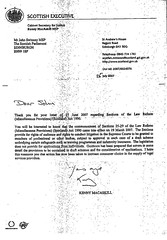
Justice Secretary Kenny MacAskill to Cabinet Secretary for Business John Swinney 26 July 2007 Justice Secretary’s leaked letter promised cabinet colleague John Swinney that access to justice was happening two years ago. The road to reforming access to justice in Scotland has been a rocky one so far, as almost all attempts to-date of implementing changes allowing the Scots public increased access to justice and the Scottish Courts, have either been thwarted by the legal establishment, or held in political limbo by an exceedingly uncooperative Justice Secretary Kenny MacAskill, who despite promises to Cabinet colleague John Swinney, two years ago in 2007 that change 'was on the way', has in reality made things very difficult for anyone other than solicitors to enter the Scots legal services market to this date and no doubt beyond.

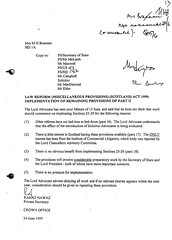
Lord Hardie - Repeal Sections 25-29 24th June 1997High Court Judge Lord Hardie while serving as Lord Advocate, wanted to repeal Scots access to justice legislation. However, while the prickly thorn of reforming access to justice falls to the current Scottish Government to act upon, the legal establishment’s attitude to counter any reforms to increased access to the Scottish Courts go back years, as I revealed in an earlier report where in 1997, the serving Lord Advocate at the time, Lord Hardie, himself advocated repealing the laws which allowed increased competition in the Scots legal services market, which had actually been kept from the public by an intense campaign ran by the Law Society of Scotland for over seventeen years, seeing Sections 25-29 of the Law Reform (Miscellaneous Provisions) (Scotland) Act 1990 only implemented in March 2007 after public queries and the release of documents through Freedom of Information laws which revealed the secret campaign by senior law figures and civil servants within the Scottish Executive to withhold or repeal the access to justice legislation.

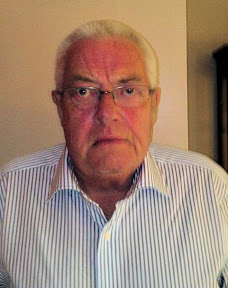
A member of the public whose legal case could have significantly benefited from the use of a McKenzie’s friend said today : “"It is a matter of record that Lord Hardie has consistently denied the Scottish Public any meaningful or proper access to the law by his stubborn obstruction of articles 25-29 [of the Law Reform & Miscellaneous Provisions (Scotland) Act 1990], allowing members of the public to be represented by a third party of their choice.“

He went on : “The deafening silence by every major political party which has accompanied this wicked betrayal of trust indicates their tacit approval of it. Disturbingly, the Scottish Courts have also consistently refused to allow recordings of hearings to be made - a proposal also rejected by the Scottish Parliament.”

Given the lack of willingness on the part of the current Scottish Government to speedily reform the Scots legal services market, leaving many clients out in the cold in terms of legal representation, many Scots caught up in legal difficulties feel with some justification, their rights are being impugned by both the legal profession and the Government simply to protect solicitors long held monopoly over access to justice.

Clearly the Scots public could benefit from the McKenzie Friend facility being applied to Scots Law, and as with other legal reforms long overdue, the Scottish Government should act without delay and reverse the 39 year prejudice against ordinary Scots obtaining access to courts, while our English counterparts have enjoyed the use and privilege of a McKenzie Friend at their side.

I therefore look forward to reporting on and watching how the McKenzie Friend petition progresses through the Scottish Parliament .. as surely the public interest of access to justice comes first over protecting solicitors business markets & profits.