Showing posts with label pleural plaques. Show all posts

Friday, May 01, 2009

Damages (Asbestos related Conditions) (Scotland) Act will take effect from June 17 2009

Despite the big insurance companies ongoing judicial review against the Damages (Asbestos-related Conditions) (Scotland) Act 2009, the Scottish Government has announced today the act in its present terms will be effective from June 17 2009, allowing people who develop pleural plaques from being negligently exposed to asbestos to take legal action seeking compensation.

Scottish Government release :

Damages (Asbestos-related Conditions) (Scotland) Act 2009 takes effect June 17 2009

01/05/2009

The right to redress for people who develop pleural plaques after being negligently exposed to asbestos will be secured from June 17, 2009 it was announced today.

Earlier this month Royal Assent was given for the Damages (Asbestos-related Conditions) (Scotland) Act. A Commencement Order signed by Community Safety Minister Fergus Ewing means that the Act can now come into force in Scotland from Wednesday,, June 17.

Welcoming the final stage of the Act's journey, Fergus Ewing said:

"Asbestos is a potentially lethal substance. That has been widely known for many decades. Sadly, however, proper protective measures were not always put in place. Some employers failed in their duty of care. They negligently left workers exposed to asbestos and so to risk of serious harm, even death.

"For many years the Courts accepted that anyone injured in these circumstances, with or without symptoms, was entitled to redress. The Scottish Government believes that was the right approach. That is why we have acted to ensure that the House of Lords ruling of October 2007 will not have effect in Scotland.

"We are determined to stand up for the rights of wronged individuals. The implementation of this legislation will ensure recognition, compensation and justice are not denied to those of our fellow citizens who, through no fault of their own, have sustained an asymptomatic asbestos-related injury and are at much greater than average risk of developing a painful and ultimately fatal condition.

"The legislation received overwhelming support in the Scottish Parliament last month, but only after supporters and opponents had been given opportunities to make their case. I now hope that the arguments will cease. The role of the Scottish Parliament - Scotland's legislature - is to decide our country's laws: that is what it has done.

" I am pleased that Lord Glennie this week rejected an attempt by Axa Insurance, Norwich Union Insurance (Aviva), Royal & Sun Alliance Insurance and Zurich Insurance to prevent the Scottish Government bringing this legislation into force. We will continue to defend the rights of individuals who have been negligently injured and the right of the Scottish Parliament to make law for our country."

Exposure to asbestos can result in the development of a number of conditions, including pleural plaques (i.e. scarring of the membranes around the lungs). This condition is generally asymptomatic, though it does indicate that asbestos fibres have lodged in the body and caused a physiological reaction. Medical evidence is that "people with pleural plaques are at risk of developing diffuse pleural thickening causing breathlessness, asbestosis of the lungs causing breathlessness, lung cancer which is usually fatal and mesothelioma, a cancer which can occur in the lining of the chest cavity or in the lining of the abdominal cavity which is almost invariably fatal, usually within 12 to 18 months of the first symptoms. People with pleural plaques who have been heavily exposed to asbestos at work have a risk of mesothelioma more than one thousand times greater than the general population. The risk for those more lightly exposed is less but still significant." (Written evidence to the Justice Committee of the Scottish Parliament from Dr Robin Rudd, Consultant Physician, Co-Director Barts Mesothelioma Research, Co-Chair London Lung Cancer Group)

From the 1980s onwards, where pleural plaques arose from negligent exposure to asbestos, Courts throughout the UK made compensation awards; those awards were paid by the negligent party or their insurer. On 17 October 2007, however, the House of Lords ruled in respect of a number of cases in England that asymptomatic pleural plaques do not give rise to a cause of action under the law of damages. The House of Lords ruling is not binding in Scotland, but would be considered highly persuasive by Scottish Courts.

On November 29, 2007 the Scottish Government announced its intention to bring forward legislation to ensure that the House of Lords ruling would not have effect in Scotland.

On February 6, 2008 the Scottish Government announced that, as well as pleural plaques, the legislation would cover two other asymptomatic asbestos-related conditions: asymptomatic asbestosis and pleural thickening.

Between February 6, 2008 and April 4, 2008 the Scottish Government consulted on a partial Regulatory Impact Assessment.

On June 23, 2008, the Scottish Government introduced the Damages (Asbestos-related Conditions) (Scotland) Bill. Following a report by the Justice Committee, the Bill passed Stage 1 on November 5, 2008. It then passed Stage 2 on December 2, 2008 and Stage 3 on March 11, 2009. Royal Assent was received on April 17, 2009 and Scottish Ministers made a Commencement Order on April 29 to bring the Act fully into force on June 17.

It is standard practice for there to be a two month period between Royal Assent and an Act coming into force.

Wednesday, March 11, 2009

Scots legal firm Brodies & Dean of Faculty threaten Parliament over asbestos claims legislation

Legislation designed to allow sufferers of medical illness related to asbestos exposure is to be challenged by the insurers, who have taken on legal representation in the form of Edinburgh legal firm Brodies LLP, and Richard Keen QC, the Dean of the Faculty of Advocates

Peter Cherbi’s “A Diary of Injustice in Scotland” reports the insurers idea is a judicial review against Parliament’s law making powers on this legislation :

Insurance firms with links to Scottish Government threaten legal challenge against Holyrood on asbestos claims reforms


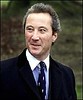
richard keen qcDean of Faculty Richard Keen QC to fight asbestos claims law. Insurance firms and lawyers who have strong financial relationships with the Government and the Scottish Parliament, have teamed up in an attempt to defeat through the courts, the Damages (Asbestos-Related Conditions) (Scotland) Bill, expected to be passed this week at Holyrood, which will allow victims of asbestos related illnesses to claim compensation from insurers for suffering such conditions as lung scars, which are an indication of exposure to asbestos.

The Edinburgh legal firm of Brodies has been called in by several insurance companies, identified in the Sunday Herald newspaper as AXA, Norwich Union, RSA and Zurich, to mount a judicial review legal challenge to the Damages (Asbestos-Related Conditions) (Scotland) Bill, which goes through Parliament this week. The insurers legal position is that the legislation proposed will allow people to claim compensation who suffer from ailments associated with asbestos exposure, which the insurers currently don't classify as harmful.

Richard Keen as you all know, appeared in the media only a few weeks ago demanding that class actions be allowed in Scotland against banks, however I take it that class actions for the victims of asbestos claims are not included in his thinking at the time.

I wrote a previous article on the Parliamentary hearings, which saw lawyers representing the legal profession attempt to argue that ‘pleural plaques’, a condition which indicates exposure to asbestos, was “good for you”, here : Insurance lawyers argue against laws to help asbestos victims asserting part of their suffering 'is a good thing'

Law Society of ScotlandLaw Society’s insurers threaten Parliament. It is of note that two of those Insurers - Royal Sun Alliance (RSA) and Norwich Union are backers of the Law Society of Scotland's infamously corrupt Master Insurance Policy, which insures every member of the Scots legal profession including the dean of faculty himself, all other advocates, and even the legal firm of Brodies, who themselves have been caught up in claims made by clients against their negligence cover.

You can read more about the Law Society’s Master Insurance Policy here : The Master Insurance Policy, Marsh UK & corrupt practices by insurers of the Scots legal profession

A legal insider who was approached for comment said "It is true that all advocates are part of the Master Policy, although it is generally left to individual advocates to arrange their own Indemnity Insurance cover, albeit through the same firm. It is fair to say the dean of faculty is probably insured by the same insurers now challenging the asbestos claims legislation".

On being asked for his thoughts on revelations the same insurers deal with Government, he said : "It is my understanding that Marsh also arrange insurance cover for many public institutions, including Government. This insurance cover will also be underwritten by many of the same insurance firms who are affected in the asbestos damages bill now before Holyrood."

ScottishGovernmentScots Govt pays millions to insurers now threatening legal action. The Master Policy, run by Marsh UK, a subsidiary of the US Insurance giant Marsh, which itself has been caught up in insurance fixing scandals, amazingly shares among its clients, the current SNP controlled Scottish Government, which pays out millions of pounds of public money in Professional Indemnity Insurance cover for all Government Departments, many public bodies & quangos, and also the Justice Department's 'goliath' Government Legal Service for Scotland, staffed by 175 seriously well paid lawyers who under Justice Secretary Kenny MacAskill, also get their huge insurance subscriptions paid as expenses perks by the taxpayer.

You can read more about the Government Legal Service for Scotland (GLSS) and exactly what contribution they make to us here : Scottish Government's £10m in-house lawyers make their mark against legal reforms & public access to justice

scotparliScottish Parliament also has links to insurers. Even the Scottish Parliament itself is not immune from associations with the insurers who are now challenging the legislation to help asbestos victims. The 13 lawyers assigned to the Scottish Parliament from the GLSS are also themselves insured by the same insurers who are threatening legal action against Holyrood, and several departments of the Scottish Parliament also allegedly rely on insurance services provided by Marsh UK and the RSA for their own indemnity insurance !

An official from a consumer organisation today who declined to be named said : "One could speculate a great deal on whether such involvement at all levels of government by a single insurance firm, or cartel of insurers, may give rise to the conclusion by some there is an inherent conflict of interest going on, which may lead to ineffective or badly worded legislation being passed, or a general lack of will on the part of politicians to do the right thing for consumers, on the basis they don't want to upset their services provided by the Insurance community."

So, we have a situation where the same insurers who are now threatening legal action against Parliament to prevent asbestos sufferers receiving compensation, are at the same time, receiving millions of pounds in taxpayers money from Government, the Parliament, and many public authorities in Scotland, to ensure protection against financial claims for wrongdoing or negligence in public office. Is that right ? Is this an acceptable state of affairs ?

Is it ethical to pay millions of pounds of taxpayers money to the same insurers who are fighting proposals of reforms in the legislative process which are designed to make life better for those who are suffering fatal illness ?

Let us remind ourselves of the arguments put forward by the insurance companies lawyers in Parliament against asbestos sufferers :

Scots lawyers argue ‘asbestos related illnesses are good for you’ :


From the Sunday Herald :

Insurance giants to challenge new asbestos legislation

Firms will fight move to allow Scottish workers to claim £50m in damages

By Tom Gordon, Scottish Political Editor

BRITAIN'S BIGGEST insurers are planning an unprecedented legal challenge to a new law which would allow Scots workers to sue for asbestos exposure.

Four firms are preparing to seek a judicial review of the legislation, which is expected to pass its final stage at Holyrood on Wednesday with over-whelming cross-party support.

The law is designed to give workers the right to seek compensation for scars on the lung known as pleural plaques, which indicate exposure to asbestos, but which are themselves harmless.

It is understood the Edinburgh law firm Brodies is co-ordinating the judicial review on behalf of AXA, Norwich Union, RSA and Zurich.

The lawyers have already engaged two of Scotland's most formidable advocates to attempt to overturn the law at the Court of Session. Leading will be Richard Keen QC, dean of the Faculty of Advocates, and he will be assisted by Jane Munro.

If successful, the challenge would humiliate the government and dash the hopes of thousands of people negligently exposed to asbestos.

While the average payout would be around £8000 per person, legal costs would be twice as much again, and ministers estimate the total cost to private companies will top £50 million.

Frank Maguire of Thompsons Solicitors, which represents many Scots asbestos victims, said the court would be loath to reverse the will of parliament, especially as it was a clarification of the existing law.

He said: "We have researched all the angles and we are pretty confident that this will be overcome. We believe this judicial review will be defeated."

A spokesman for justice secretary Kenny MacAskill said: "We are entirely confident that this bill is within the legislative powers of the Scottish parliament. There is a moral imperative here that the SNP government in Scotland is acting on, even if Westminster is not. The House of Lords judgment means that people diagnosed with pleural plaques would have to live with the worry of possible future ill health for the rest of their lives, with no recourse to claim damages."

The judicial review will not surprise the Scottish government. During a consultation last year, insurance firms warned the proposed legislation was "wholly wrong", would open the flood-gates to similar dubious damage claims, and ought to be dropped. Some warned of potential legal challenges.

One of the main complaints against the legislation was that it would allow people to sue for a condition that causes them no physical harm: pleural plaques are symptomless, and do not develop into fatal mesothelioma. Allowing people to claim damages for something that hasn't damaged them is perverse and up-ends centuries of case law, critics argued.

But advocates of compensation said people who discover they have plaques suffer psychological stress.

In October 2007, after more than 20 years of people being able to claim compensation for plaques, the House of Lords ruled plaques were too trivial to merit damages. The Westminster government has so far accepted the ruling, but in Scotland asbestos victims persuaded the Scottish government to legislate to restore the "status quo ante", and let workers pursue damages for the condition once more. Wednesday's third-stage vote will see the culmination of that two-year campaign.

Last week, ministers were forced to issue a revised financial memorandum to the Damages (Asbestos-Related Conditions) (Scotland) Bill, after realising it had underestimated the likely cost of compensation.

Settling the backlog against private firms is expected to cost £11.8m to £20m, followed by annual costs of £3.7m-£7m.

Councils also face bills of around £850,000 to settle existing cases, and annual bills of around £500,000.

The Ministry of Defence, which runs the Rosyth Naval Dockyard, and the UK Department for Business, which inherited liability for defunct shipyards, face total costs of around £7m, a bill the UK government could choose to hand back to Edinburgh.

Christine O'Neill, of Brodies, added: "We have been instructed by a number of insurers to look at a challenge."