Showing posts with label miscarriage of justice. Show all posts

Thursday, February 06, 2014

Corroboration to remain for now: Holyrood’s Justice Committee rebel against MacAskill’s ‘mad plan’ to remove Scotland's safeguard against miscarriage of justice

Corroboration to stay for now, says Justice Committee report. CORROBORATION, a long held safeguard against miscarriage of justice in Scots law where evidence in a criminal trial is required from two separate sources for a conviction, is to remain for now. The news comes as the Scottish Parliament’s Justice Committee have suggested Justice Secretary Kenny MacAskill ditch his plans to abolish corroboration in an effort to assist the Crown Office in obtaining higher rates of convictions, even where evidence is dodgy or practically non existent.

News of today’s development came after it was made clear in a report published today by the Scottish Parliament indicated that the majority of members of Holyrood’s Justice Committee, chaired by Christine Grahame MSP (SNP), did not support the much vaunted ‘reform’ put forward by MacAskill, who has served an unprecedented seven years as Scotland’s often accident prone Justice Secretary.

Contrary to much of the lobbying put out by the Crown Office and ‘campaign’ groups with a vested interest in removing Corroboration from Scots Law, the fact is that this long held safeguard against miscarriage of justice cuts across all criminal prosecutions, and not just rape or sexual offence cases, as anyone with an actual understanding of the law and a clear head will know.

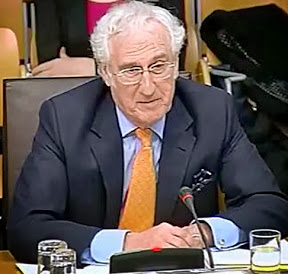
Christine Grahame MSP: ‘Justice Committee Not Convinced Over Corroboration’

In response to the Justice Committee's rebellion against Mr MacAskill’s ill advised plan to remove corroboration, the Scottish Government have announced an inquiry to be led by former High Court judge Lord Bonomy, who will look at safeguards needed if corroboration is eventually abolished.

The terms of reference for the group headed by Lord Bonomy include consideration of the following areas:

• Whether a formal statutory test for sufficiency based upon supporting evidence and/or on the overall quality of evidence is necessary

• Whether any proposed prosecutorial test or a requirement for publication of any such test should be prescribed in legislation

• The admissibility and the use of confession evidence

• The circumstances in which evidence ought to be excluded

• The practice of dock identification

• Jury majority and size

• The future basis and operation for a submission that there is no case to answer at the end of the prosecution case

• Whether a judge should be able to remove a case from a jury on the basis that no reasonable jury could be expected to convict on the evidence before it

• Whether any change is needed in the directions that a judge might give a jury, including a requirement for special directions in particular circumstances

• Whether any additional changes are required in summary proceedings.

Appeals are not expected to be considered by the review as they are for wider consideration, not related specifically to corroboration.

The group is expected to take a year in its deliberations. Any necessary legislative and practical change to be taken forward on the back of its recommendations will then be subject to full Parliamentary scrutiny and commenced alongside the provisions in the Criminal Justice Bill, abolishing the corroboration requirement – which as before, is intended to take place in the financial year 2015-16.

Commenting on the plans announced by the Scottish Government, Lord Gill, Scotland’s top judge said: “I am grateful to the Cabinet Secretary for his sensitive response to the widespread discussion of this proposal, and for his usual courtesy in letting me see the terms of reference before they were finalised. The proposed review will enable this issue to be looked at at greater length by a body of experienced professionals. The terms of reference should allow a thorough consideration of the issues. I am pleased that Lord Bonomy has agreed to Chair the Review and I look forward to seeing the results of the Review’s work.”

In October of last year, Scotland’s top judge gave evidence to the Justice Committee, reported HERE, defining corroboration as one of the "finest features" of the country's justice system.

The Lord President’s testimony at Holyrood backing the retention of corroboration came after a terse Lord Advocate Frank Mulholland appeared before MSPs, demanding the lifting of corroboration to enable often incompetent prosecutors to gain higher rates of convictions for cases the Crown Office & Procurator Fiscal Service (COPFS) more often than not fail to take to court for one excuse or another.

And, contrary to intense lobbying by the Lord Advocate, Police Scotland, and campaign groups, it is widely known in the legal system the regular failures by COPFS in cases involving sexual offences are mostly due to the fact evidence and statements in such cases are so badly handled by prosecutors and Police, it is unlikely a prosecution could be presented in a court of law without incurring regular criticism from the benches of COPFS and the Lord Advocate himself.

The Criminal Justice (Scotland) Bill, which includes proposals to abolish the requirement for corroboration, is currently at Stage 1 in the Parliamentary process. Further information on the Bill is available from:HERE

It should be noted Scottish Law Reporter supports the retention of corroboration, and has reported on the issue in previous coverage HERE

BBC News reports further: Ditch corroboration plans, say Justice Committee MSPs

MSPs have suggested ditching controversial plans to abolish the requirement for corroboration from criminal justice legislation. It emerged that the majority of Justice Committee members do not support change.

The government said an inquiry led by former high court judge Lord Bonomy would look at safeguards needed if corroboration was abolished.Opposition leaders called on ministers to wait until after the inquiry. The reform is included in the Scottish government's Criminal Justice Bill.

Justice Secretary Kenny MacAskill said he remained "committed to this essential and long-overdue reform as the corroboration rule can prevent strong cases which could be prosecuted in other jurisdictions from being taken forward".

He added: "Scotland is the only country in the world which has been identified as having the requirement and this is acting as a barrier to justice and denying too many victims their opportunity to have their day in court."

But MSPs on the Justice Committee said they were "concerned that the case for abolition has paid insufficient regard to the importance of this requirement within the Scottish criminal justice system".

Opposition party leaders pressed First Minister Alex Salmond during his weekly question time to delay abolition until Lord Bonomy's inquiry had concluded.

Scottish Conservative leader Ruth Davidson said: "What we as members are being asked to do is to vote through a bill which we know to be deeply flawed on the grounds that Kenny MacAskill says he'll sort it later. "There is an obvious solution here. Leave the scrapping of corroboration out of the bill. "Ask Lord Bonomy to report on the whole issue and then let us look at it again."

Liberal Democrat leader Willie Rennie argued: "Appointing Lord Bonomy doesn't restore justice, it simply papers over the cracks with a veneer of respectability." He urged the first minister to overrule his justice secretary "before he does serious damage".

But Mr Salmond responded: "It's not a quick fix, it's a distinguished judge who's looking to make absolutely certain that as this change is made, appropriate safeguards are there to prevent miscarriages of justice."
'Archaic rule'

The committee has been scrutinising the Scottish government's Criminal Justice (Scotland) Bill, which includes plans to abolish the centuries-old requirement for corroboration - which means that currently evidence against an accused person must come from more than one source.

One of Scotland's top judges, Lord Carloway, called for the change in a review of the criminal justice system, insisting corroboration was "an archaic rule that has no place in a modern legal system".

Supporters include the police, victims' groups and prosecutors. Some have argued that the removal of corroboration could also help widen access to justice for victims, particularly in cases of rape and domestic violence.

Opponents, including many from within the legal profession, have said it could lead to rises in miscarriages of justice. Justice Committee convener Christine Grahame said the proposal had divided opinion among the MSPs.

The SNP MSP said: "The committee could not reach agreement on whether removing such a significant and integral part of the criminal justice system would improve 'access to justice' for victims of sexual offences in a meaningful way or indeed secure more convictions. "Some therefore asked the cabinet secretary to consider removing the relevant sections on corroboration from the bill. "Others felt that the case had been proved."

Ms Grahame also said the Scottish government needed to provide "much more information on its plans to review additional safeguards" before the Scottish Parliament as a whole voted on the general principles of the bill.

Mr MacAskill said he noted the committee's recommendations and hoped its members would "welcome today's announcement on safeguards".

He said: "I have always been clear that we are willing to listen and to work with stakeholders on building further safeguards into our reforms. "I therefore welcome the fact that Lord Bonomy has agreed to chair this reference group. "I am confident that he and his team will carry out a robust and thorough exploration of any additional safeguards which may be required in the light of the corroboration requirement being abolished."

The group is expected to take a year for its deliberations, and will not make any recommendations before the bill is voted on at Holyrood.

Thursday, November 21, 2013

Scotland's top judge Lord Gill warns Holyrood Justice Committee against scrapping corroboration of evidence justice safeguard

Lord President Brian Gill – ‘good rule’ of corroboration should be retained. SCOTLAND’S top judge the Lord President, Lord Brian Gill, appeared before Holyrood’s Justice Committee yesterday, warning against supporting plans by the Scottish Government to remove the long held safeguard of Corroboration, where evidence in a court of law is needed from two separate sources for a conviction.

Speaking to MSPs on the Scottish Parliament's Justice Committee, 20 November 2013, Lord Gill, the Lord President of the Court of Session, said the rule - which requires that evidence against an accused person must come from more than one source - was one of the "finest features" of the country's justice system.

He told MSPs that only one judge in Scotland, the Lord Justice Clerk Lord Carloway - who recommended abolishing corroboration in his review of criminal law and practice - supported getting rid of the rule, with all other judges opposed to the move.

Lord Gill told MSPs corroboration justice safeguard should be retained (Click to watch)

Giving evidence to msps on the intentions of the Scottish Government to remove corroboration to help the Crown Office secure higher prosecution statistics, Lord Gill told the committee: "I don't think this will improve the quality of justice in Scotland in any way.

"I think there is a very serious risk there will be fewer convictions and I also think that if you make this change in isolation, without looking at the wider picture, there are consequences that at the moment are unknowable but could be very adverse to the system."

He added that scrapping corroboration "might increase the number of prosecutions" but said he was "certainly not convinced it will increase the number of convictions".

Lord Gill argued getting rid of the requirement would mean defence lawyers would be able to "go to the jury and say 'would you convict my client on the word of one person, with nothing else to support it?'".

He went on: "That could be a a very powerful line to take with juries and if corroboration is abolished I am not persuaded it will increase the conviction rate."

He stressed: "We've got to think very carefully about what the consequences of this could be. It's a major change which has consequences, many of which are unknown at this stage.

"It's not just a piece of law reform in the narrow area of the law of evidence, this affects the whole approach of our society towards justice and it could have consequences which could be very, very serious.

"By and large we do not have many miscarriages of justice in Scotland and when they are discovered we put them right. There are very few. My fear would be there will be many more if corroboration is abolished."

"I think we should be very proud of the fact we have something that other jurisdictions do not have, it is one of the great hallmarks of Scottish criminal law.

"I take the view we are all privileged in Scotland to live in what is a just society, and the reason for that is our criminal system is rooted in the idea of fairness and corroboration is, in my opinion, a critical element in that.

"So, I'm not here to apologise for the fact that we've got corroboration, I think we should be very grateful that we do."

Lord Gill told MSPs this was the "general view of the judiciary", adding: "I asked every judge to express their view individually to me. With the exception of my colleague the Lord Justice Clerk, all the judges were opposed to the abolition of corroboration."

Lord Gill added corroboration was "not some sort of legal relic from antiquity", saying: "We didn't get where we are by accident, the fact that we have this rule in our law, which I regard as one of its finest features, is a result of centuries of legal development and legal thought.

Concluding his testimony, Lord Gill told MSPs : "It has been found to be a good rule and I would say listen to the wisdom of the ages, it has a lot to tell us.”

All of Scotland’s High Court judges have announced their support for the retention of corroboration : Judges respond to public consultation on Carloway Report

On 3 July 2012, the Scottish Government launched a public consultation seeking views on how best to reform areas of Scottish criminal law and practice. This consultation was based on the recommendations set out in Lord Carloway’s Report on criminal procedure which was published in November 2011.

The Judges of the High Court of Justiciary, other than Lord Carloway, have now submitted their response available online here : Response by the Senators of the College of Justice to SG consultation : Reforming Scots Criminal Law & Practice  to proposals in the present consultation paper.  While their response provides support for the majority of the Carloway Review proposals, they unanimously agree that the rule of corroboration should not be abolished.

The full Carloway Review can be read online here: Carloway Review Report & Recommendations 2011 along with the Executive Summary and Lord Carloway's statement

It should be noted Scottish Law Reporter supports the retention of corroboration, and has reported on the issue in previous coverage HERE

Tuesday, April 15, 2008

Lawyers could do much more to prevent miscarriage of justice

Yes we certainly could.

Now that miscarriage of justice' is viewed as more of the order of the day now in Scotland than not, the legal profession itself, which has been well known to cause plenty of injustice itself, should now take up the sword and help prevent, even, clean up miscarriages of justice and injustice.

It would surely be for the benefit of all concerned to do so, and we could all have peaceful lives again ...

The Scotsman reports :

It would be criminal to let budgets cause miscarriage of justice

By Jennifer Veitch

LAWYERS are often viewed as a conservative bunch, and while it is a bit of a lazy assumption, there are reasons that justify a collectively cautious nature.

Legal work involves treading carefully – teasing out the facts, analysing the law, following procedures, and the general avoidance of jumping to conclusions that are not backed up by the evidence.

And so, it takes quite a lot to provoke lawyers into mounting any sort of public protest.

In recent years however, solicitors practising in two key areas – criminal and family law – have become increasingly vocal with their concerns about the impact of low rates of legal aid on access to justice.

In 2006 the criminal solicitors became so frustrated by the lack of progress on the issue that they called on the Law Society to cease to co-operate with the Executive and Scottish Legal Aid Board on criminal matters.

Although the problem has not gone away, last year's change of government has taken some of the heat out of the situation and Kenny MacAskill, the Justice Secretary, has had breathing space to try to sort it out.

So what has he come up with so far? A few days ago, the minister announced changes to legal aid for summary justice, including the introduction of a single fee level for cases disposed of before trial, a 10 per cent increase in criminal advice and assistance rates, and enhanced payments for duty solicitor work.

Some positive noises have emanated from the Society's Legal Aid Solicitors committee. Convener Oliver Adair said he was pleased that the Scottish Government had listened to many of their recommendations.

Significantly however, he added that the "overall cut in the summary Legal Aid budget remains", and he described the failure to address the issue of fixed fees, which have not been increased since 1999, as a "missed opportunity".

It may be overly simplistic to say that this entire problem boils down to money, but in this case it may be true.

Under-resourcing of criminal legal aid has already had a significant impact for the legal services marketplace. While many law students start their studies with a strong interest in criminal law, there are now few firms with the resources to train them.

With fewer lawyers going into criminal work, even the significant expansion in the Public Defence Solicitors' Office, set in motion by the previous administration – there are now PDSO offices in Edinburgh, Glasgow, Inverness, Ayr, Dundee, Falkirk and Kirkwall – may not be enough to plug gaps in provision in the longer term.

Since the PDSO was set up, there has been much debate as to whether public defenders offer as good or as cost-effective a service as solicitors in private practice.

Yet the issue at stake is not whether independent solicitors or the PDSO presents a better option – both are being paid by the public purse, after all, and all solicitors are subject to the same practice rules – but whether the entire criminal justice system is being adequately resourced.

In these times of tight financial settlement from Westminster, it will be even harder for the Justice Secretary to argue the case for more money to pay for the defence of people whom the public often brand criminals before they are convicted of any offence.

But how refreshing would it be if politicians stood up for this fundamental right. Paying for those accused of crimes to have a robust defence and a fair hearing is not only the humane option, but a necessary one in a democratic society.

Ultimately the question is, how much are we as a society willing to pay to avoid miscarriages of justice?

Wednesday, October 31, 2007

Miscarriage of Justice victim Stuart Gair dies before compensation payout

Stuart Gair who was jailed in 1989 for murder died on Tuesday in Edinburgh just months before he was to receive compensation after the Court of Appeal quashed his conviction last year, citing yet another disclosure failure by the Crown Office, who failed to hand over witness statements to the late Mr Gair's solicitors.

The Scotsman reports :

Innocent man jailed for 12 years dies just months before £1m compensation

TANYA THOMPSON AND EAMONN O'NEILL

THE victim of one of Scotland's most shocking miscarriages of justice has died, months before he was to receive £1 million in compensation.

Stuart Gair, who was jailed in 1989 for murder, died yesterday at Edinburgh Royal Infirmary following a heart attack.

Mr Gair, 44, who spent 17 years protesting his innocence, was last year cleared by appeal judges who attacked a failure to disclose witness statements to his lawyers.

Jailed for life, he served 12 years but protested his innocence from day one. He was released in 2000 pending an appeal, but it took a further six years before his conviction was quashed at the Court of Appeal in Edinburgh in July last year. He insisted he had been the victim of a police frame-up.

Mr Gair, originally from Alloa, was cleared after it was ruled he had suffered a miscarriage of justice. In the judgment delivered by the Appeal Court, Lord Abernethy said it meant "the defence were deprived of a powerful argument on the crucial issue of identification".

John McManus, co-ordinator for Glasgow-based Mojo, the Miscarriages of Justice Organisation, said he was with Mr Gair when he died.

He added: "This is a tragedy. Stuart had been waiting for compensation and the whole thing had put him under a lot of strain. He had suffered dreadfully, and had only just started to get some counselling."

In 1989 after a five-day trial at the High Court in Glasgow, Mr Gair was found guilty of murdering Peter Smith, a former soldier, who was stabbed in Glasgow city centre.

Mr Gair denied murder and put forward a defence of alibi, insisting he was in another part of Glasgow at the time. But he was convicted on a majority verdict.

He protested his innocence and campaigners rallied to his cause. Eventually, his case was sent to the Appeal Court by the Scottish Criminal Cases Review Commission.

Mr Gair had petitioned the Scottish Secretary over his case and was freed on bail in 2000. Identification was the key issue at the trial and lawyers acting for Mr Gair argued that, crucially, the Crown failed to disclose important information to his defence.

During the trial, a witness, Brian Morrison, who was 19 at the time, identified Mr Gair as a man he saw come out of public toilets and go in the direction of North Court Lane, where the attack happened.

In an initial statement, he said he would definitely be able to identify the two men he had seen and that one of them had threatened him.

But later, he told officers: "A lot of what I have already told the police is not the truth. I made up some of it to attract attention."

Mr Gair's defence counsel, Gordon Jackson, QC, argued that if this information had been available to his lawyers Mr Morrison could have been cross-examined in such a way as to show the jury they could not trust a word he said.

A note had been attached to Crown papers for the trial which said that at one point Mr Morrison had signed himself into a psychiatric hospital. It went on: "Morrison and his vivid imagination certainly set the police off on the trail of a red herring initially."

In the Appeal Court judgment, Lord Abernethy concluded: "In these circumstances, we have come to the conclusion that the non-disclosure of these police statements and other information resulted in a miscarriage of justice."

Sources close to Mr Gair said that, had he lived, he would have received about £1 million in compensation.