Showing posts with label Mike Dailly. Show all posts

Saturday, February 26, 2011

Law Society resignations : Scottish Legal Aid Board Chief accused of interfering with Law Society to gag committee in legal aid money debate

THE entire membership of the Law Society of Scotland’s powerful Access to Justice Committee is reported in today’s Herald newspaper to have followed its Convener, the Govan Law Centre’s Mike Dailly, and resigned in a mass protest over allegations of undemocratic behaviour at the Law Society of Scotland, the body which represents all of Scotland’s 10,500 solicitors.

The Chief Executive of the Scottish Legal Aid Board, Lindsay Montgomery also now stands accused of leaning on the Law Society to silence Mr Dailly's criticisms of SLAB and how it is funded.

The Law Society’s President Jamie Millar denied all the allegations made by Mr Dailly in a rambling response, reported HERE

Mr Millar’s statement claims a number of Council members had expressed concern over the work of Mr Dailly’s Access to Justice Committee, a reference which appears to refer to a story reported in October 2010, where Mr Dailly’s Committee suggested the Scottish Legal Aid Board & the Scottish Legal Complaints Commission should be merged in the name of saving money. The idea was widely attacked at the time by SLAB, the SLCC & the Law Society as neither wanted to be merged with the other (not again ! – Ed).

Independent law publication “The Firm” has published the full text of Mr Dailly’s resignation letter to the current Law Society President, Jamie Millar. In the letter, Mr Dailly pulls no punches in his criticisms of the way the Law Society operates, telling the President he has no confidence in him or the Law Society’s Council, who appear to have been determined to axe the Access to Justice Committee after discussions had allegedly taken place between the Scottish Legal Aid Board & the Law Society to reign in Mr Dailly’s Committee.

The Herald reports the latest developments :

Lawyers in revolt at alleged ‘gagging’ attempt

David Leask Investigations Reporter

26 Feb 2011

SCOTLAND’S legal profession was plunged into chaos last night after an entire committee of the Law Society of Scotland quit, claiming a senior civil servant attempted to gag them.

The society’s Access to Justice Committee stood down in a mass protest late yesterday after its convener, prominent solicitor Mike Dailly, accused the chief executive of the Scottish Legal Aid Board (Slab), Lyndsay Montgomery, of leaning on the society to have him silenced.

The committee has led criticism of Mr Montgomery and Slab as Scotland’s lawyers squabble over who should take the brunt of millions of pounds in cuts to the legal aid budget.

Mr Dailly, in a resignation letter, said Slab had asked the society to have the committee “reined in and controlled”.

This was immediately denied by both Slab and the society. The mass resignations come less than a week after another high-profile Glasgow solicitor, John McGovern, like Mr Dailly, resigned from the society’s ruling council.

Both are members of the Glasgow Bar Association which, as The Herald revealed a week ago, is exploring legal ways to break up with the Edinburgh-based society, which both regulates and represents solicitors.

The Access to Justice Committee last year called for Slab to be scrapped. This, Mr Dailly yesterday claimed, prompted a furious response from Mr Montgomery, who phoned him to say solicitors were “useless and unable to count”. In the letter to Jamie Millar, the Law Society’s president, Mr Dailly said: “It was an intolerant and quite inappropriate call from a senior Scottish public servant.”

The solicitor, who heads the not-for-profit Govan Law Centre, believes the Law Society took sides with Slab and Mr Montgomery, and not its own committee. He said the society responded to the criticism by imposing a “gagging order” on him and his committee.

Mr Dailly claimed Mr Millar said council members were concerned about the committee’s attacks on the legal aid board. Mr Dailly added in the letter: “I find it deeply troubling that the Council of the Law Society of Scotland is incapable of standing up for free speech and open public debate on matters of importance to the Scottish public and the Scottish legal profession. Particularly, as this is a primary statutory function of the society.”

A spokeswoman for The Law Society last night confirmed that “a number of council members had expressed concern over the work of the committee”. Their main worry, she said, was that Mr Dailly had failed to answer to the ruling council for three successive monthly council meetings. They requested that he appear before a meeting next month. She said: “We are sorry that Mike has now chosen to resign from council, rather than allowing council members to discuss these matters with him directly”

Paul McBride QC, a member of Slab’s board, last night rubbished Mr Dailly’s claims that Mr Montgomery or anybody else from the legal aid quango was behind the gagging order. He said Mr Dailly was trying to “make a martyr of himself”.

A spokesman for Slab said: “We are disappointed that Mr Dailly has chosen to make misleading and personally offensive remarks.” He said the board had acted appropriately and there had been no undue influence on the Law Society.”

Friday, February 25, 2011

Drumsheugh Dictatorship : Law Society President launches attack over Council resignation, amazingly claims Society values free speech !

The latest salvo in the resignations over at the Law Society of Scotland comes this time, from the Society’s current President, Jamie Millar, who has issued a long & rambling statement in response to the resignation of the Govan Law Centre’s Mike Dailly from the Society’s ruling Council & Access to Justice Committee.

Mr Millar’s statement claims a number of Council members had expressed concern over the work of Mr Dailly’s Access to Justice Committee, a reference which appears to refer to a story reported in October 2010, where Mr Dailly’s Committee suggested the Scottish Legal Aid Board & the Scottish Legal Complaints Commission should be merged in the name of saving money. The idea was widely attacked at the time by SLAB, the SLCC & the Law Society as neither wanted to be merged with the other (not again ! – Ed).

The Law Society President also makes some claims about allowing & valuing free speech, claims which seem to contradict its own policies on media comment, which we reported on during late November 2010, HERE.

Mr Millar wryly ends his response saying the process will be started to appoint a new convener of the Access to Justice Committee (Wasn't this the position which was penciled in for a certain retiring msp who recently got into trouble for making certain remarks ? -Ed)

The Law Society of Scotland’s media release is reprinted below :

Resignation from Council

Jamie Millar, President of the Law Society of Scotland, said: "A number of Council members had expressed concern over the work of the Access to Justice Committee and the fact that Mike Dailly as its Convenor had not been present at any of the last three Council meetings to report on the committee's work. Our Council is the democratically elected ruling body of the Law Society of Scotland. All our committees report to Council and it was a matter of real concern that the work of such an important committee had gone unreported to Council since November.”

"That is why Council agreed to place the Access to Justice Committee on the agenda for its next meeting in March so these matters could be discussed with Mike Dailly present. I am sorry that Mike has now chosen to resign from Council, rather than allowing Council members to discuss these matters with him directly.“

"The Law Society of Scotland both allows and values free speech. However, it also important for those elected to the Council of the Society to work together as a team and for issues to be brought to Council for discussion. For example, it is also wrong for work to be presented as Society policy when it has never in fact been considered or approved by our elected Council. That is why Council overwhelmingly approved the media protocol last November, which was basic common sense and was passed to ensure that Council members and committee convenors worked together on public statements, especially where there was a crossover of work.”

"Mike also talks about the proposed constitution which he claims would exclude the rights of members to influence Society policy. The reality is that the new constitution actually delivers the changes which the vast majority of our members told us they wanted. As someone who talks frequently about the importance of listening to members, I am surprised that Mike would now advocate overturning the clearly expressed views of our members in this area.”

"Indeed his arguments about ending the Society's role of representing and regulating the solicitor profession are equally out of step with the views of our members. Just last year, 78% of members voting in a referendum voted in favour of the Society maintaining its dual role. I do not understand why Mike believes we should now go against the overwhelming and democratically expressed views of our members. We are a membership organisation and we need to respect the views that our members express.”

"I am of course sorry that Mike has chosen to resign from Council. I want to thank him for his service over the last nine months, both on Council and as the Convenor of the Access to Justice Committee. Indeed, the Society's work in terms of maintaining proper public access to the justice system has never been more important, particularly in the context of significant cuts to public spending. That is why we will be starting a process of appointing a new convenor for the Access to Justice Committee to ensure this work continues."

Govan Law : Dailly resigns from Law Society, accuses President of killing free speech, says tiny elite run undemocratic Scots legal profession

Mike DaillyGovan Law Centre’s Mike Dailly resigns from Law Society. THE Law Society of Scotland has been accused of acting against Free Speech, Democracy & the Scottish Public Interest by well known Glasgow lawyer Mike Dailly, who is reported to have resigned his position on the Law Society of Scotland’s Council and his Convenership of the Society’s powerful Access to Justice Committee, after disagreements emerged between the Law Society’s Council and Mr Dailly’s Committee over suggestions to merge the Scottish Legal Aid Board (SLAB) with the Scottish Legal Complaints Commission (SLCC).

The friction between the Law Society’s Council, SLAB & the Access to Justice Committee which has led to Mike Dailly’s resignation appear to be linked to a story reported in October 2010, where Mr Dailly’s Committee suggested the Scottish Legal Aid Board & the Scottish Legal Complaints Commission should be merged in the name of saving money. The idea was widely attacked at the time by SLAB, the SLCC & the Law Society as neither wanted to be merged with the other (SLAB & the SLCC afraid of losing their big staff budgets, expenses claims etc – Ed)

Independent law publication “The Firm” has published the full text of Mr Dailly’s resignation letter to the current Law Society President, Jamie Millar. In the letter, Mr Dailly pulls no punches in his criticisms of the way the Law Society operates, telling the President he has no confidence in him or the Law Society’s Council, who appear to have been determined to axe the Access to Justice Committee after discussions had allegedly taken place between the Scottish Legal Aid Board & the Law Society to reign in Mr Dailly’s Committee.

Mr Dailly’s resignation letter is reprinted below, detailing a number of serious allegations against the Law Society of Scotland & the Scottish Legal Aid Board, many of which appear typical of the way both organisations have operated over the years in what can be described as a most undemocratic manner, to put it midly (also dont forget the SLCC, although they are more incompetent than undemocratic ! - Ed).

Mike Dailly's Resignation : The Letter, in full (Reprinted from The Firm’s website)

This is the text of the letter sent by the Law Society's Access to Justice Committee Convener Mike Dailly to President Jamie Millar this afternoon.

It is reproduced here in full in the interests of transparency and promoting debate amongst solicitor members about the operation of the Law Society

Dear Jamie

Resignation from Council of the Law Society of Scotland and the Convenership of the Access to Justice Committee: Free speech, Democracy & the Scottish Public Interest

I write further to your telephone call this morning whereby you advised that ‘many members of Council had expressed concern about the activities’ of the Access to Justice Committee (AJC) and how ‘this needed to be brought to a head’.

When I asked what ‘activities’ caused concern you confirmed the AJC’s work in relation to Scottish legal aid, the leak of the Scottish Legal Aid Board’s secret response to the AJC’s Discussion Paper, and comments I have made as AJC Convener on legal aid.

You concluded the conversation by saying you ‘could not work with me’ and that the position of the AJC would be determined at the next meeting of Council, after the AGM on Friday 25 March 2011. I am grateful for the courtesy of your call.

I find it deeply troubling that the Council of the Law Society of Scotland (LSS) is incapable of standing up for free speech and open public debate on matters of importance to the Scottish public and the Scottish legal profession. Particulary, as this is a primary statutory function of the LSS.

At last year’s AGM, the CEO of the LSS, Lorna Jack, was full of praise for my appointment as convener of the AJC – the previous AJC having been defunct and invisible for 18 months or so - and indeed our AJC was highly praised for its work highlighting the adverse impact of the welfare benefit and public funding cuts in Scotland, and the need to protect access to justice in order to alleviate the worst injustices from these cuts.

Yet, later last year when the AJC suggested how savings could be made in the administration of Scottish legal aid – to protect front line public services in Scotland - and started a public debate on how things might be done better in the administration of legal aid for the benefit of the Scottish public, the AJC was undermined and attacked by you, Council and the CEO of the Scottish Legal Aid Board (SLAB), Lindsay Montgomery.

I expressly advised you of the lengthy telephone call Mr Montgomery, made to me following our suggestion that things might be done differently with legal aid. It was an intolerant and quite inappropriate call from a senior Scottish public servant.

I explained how he had nothing but contempt for Scottish solicitors, suggesting they were useless and unable to count. I sought the support and backing of you and Council to tackle this unacceptable hegemony in the interest of the Scottish public.

Your response and that of Council was to introduce a ‘gagging order’ to prevent the AJC from expressing any public view without the permission of you and your media manager, Kevin Lang. Indeed members of the LSS’s Legal Aid Negotiation Team expressly stated that SLAB had asked for the AJC had to be reined in and controlled.

Despite the LSS media gagging order, the AJC continued to develop its ideas and recently published a Discussion Paper on legal aid. SLAB sought to prevent this Discussion Paper from being published by the LSS, by attacking the paper with a very long written response which it insisted must not be made public.

Neither I nor the AJC had any difficulty with SLAB challenging our paper and ideas – for that is the essence of a public debate. Yet, we can have no public debate because SLAB operates privately and Council would rather challenge my right, and the right of my colleagues on the AJC, to express a view in public.

I regret to advise I have no confidence in you or Council. At a time when the hunger for democracy and free speech has spread across North Africa and the Middle East like a fire, I am ashamed to say, you and most members of Council (the majority of whom are unelected) would prefer to kill free speech and extinguish the fire of democratic accountability and freedom.

Next month Council will seek the adoption of its proposed new constitution. This would further exclude the right of its members to influence the policy of the LSS, and would permit a tiny elite to do as they see fit in the name of 10,500 Scottish solicitors. Many Scottish solicitors will object to this on democratic principles, and I will stand by them.

My experience on Council of the LSS has taught me two things:

· the people of Scotland deserve an independent statutory regulator of legal services and;
·
the Scottish legal profession deserve the right to choose who represents them.

I herewith tender my resignation as a member of Council of the LSS, and as Convener of the Access to Justice Committee of the LSS. Said resignations are of immediate effect.

Yours sincerely
Mike Dailly
Principal Solicitor
Govan Law Centre

Wednesday, December 08, 2010

Scottish Legal Aid Board responds to Govan Law Centre’s accusations of denial of access to justice in Sharp v Bank of Scotland 'bank charges' case

The Scottish Legal Aid Board have issued a statement in response to accusations from the Govan Law Centre and its principal, solicitor Mike Dailly, that SLAB’s refusal to fund a bank charges case via civil legal aid amounts to a denial of access to justice for the GLC’s client.

Statement from the Scottish Legal Aid Board (pdf) Re: Bank charges - Sharp v Bank of Scotland

A spokesperson for the Board stated, “We’re surprised and disappointed that Govan Law Centre (GLC) has publicised this case in its press release, in view of the fact that the Board only received their latest letter yesterday, which raised fresh issues and asked us to consider additional information not previously given to us. The Board has not yet had the opportunity to fully consider these new issues nor to provide a substantive response.

When the initial application for legal aid was lodged it had to be rejected as necessary information was not provided. Solicitors undertaking civil legal aid work are aware from our guidance what information is needed to allow an application to be considered.

Following receipt, the application was considered but refused as it did not meet the reasonableness test for civil legal aid. No mention was made of wider public interest by Govan Law Centre at this time.

A review application was then made asking us to re-consider our refusal of civil legal aid. The review application indicated that the case could be of relevance to the wider public interest in Scotland in that if the case was successful it could lead the way for many others to make similar claims.

However, the review application did not provide the detailed information required to support the claim of a wider public interest. Again, the Board has published detailed guidance for solicitors on this, which was not adhered to. As such the review application was refused.

Yesterday, on 7 December 2010, we received the letter referred to in today’s press release from the applicant’s solicitors asking us to take into account certain additional aspects supportive of the applicant’s claim and to look again at the refusal. The solicitor’s letter provides new information, including the question of seeking a protective costs order.

The Board is considering re-opening the application as it may be more cost effective to do this rather than insisting on a fresh legal aid application. Further information will however be needed in relation to the points raised in the latest letter. On the information provided to the Board initially and on review, we are satisfied that the refusal decisions were appropriate especially with regard to the guidance we have issued about civil legal aid applications.

The Board entirely rejects entirely Mr Dailly’s assertions and are confident of the Board’s role in monitoring and safeguarding access to justice in Scotland.

Over the past two years there has been a substantial increase in the numbers of people receiving civil legal aid and benefiting from wider access to justice through services such as grant funded projects and in-court advisers, which are funded by the Board.

However, it is also important that the Board properly applies the statutory test for civil legal aid. In doing this the Board has to rely on the information provided by the solicitors in applications and the extent to which this information meets the Board’s requirements as set out in our guidance.

GLC’s press release suggests that legal aid is unlikely to be obtained for certain cases. This is not accurate. Each application is considered on its own merit and the question of whether legal aid is granted is very much dependant on the quality of the application made by the solicitor in relation to providing the necessary information to enable the statutory tests to be met.

As this application is still “live” it would be inappropriate for the Board to give further details or comment.”

Sunday, November 21, 2010

Drumsheugh Dictatorship on the march : Law Society of Scotland gags its own Council members with ‘big brother’ media protocol

AFTER revelations of the Law Society of Scotland’s BACKROOM PLOT to take over the Scottish Legal Aid Board & the Scottish Legal Complaints Commission were exposed in the media and on Scottish Law Reporter, the Law Society of Scotland has issued an overly harsh, reminiscent of a dictatorship, ‘media protocol’ which intends to ban office bearers, Council members & committee members from talking to the press.

The gagging order media protocol will come up for a rigged vote to wave it through democratic discussion at the Law Society’s Council meeting on Friday 26 November 2010

The draft protocol was suspiciously leaked to online law magazine “The Firm”.

The Media Protocol states :

Title: Media Protocols

Aim

The purpose of this paper is to set out draft protocols for office bearers, Council members and committee members in their dealings with the media on behalf of the Law Society of Scotland. The paper also outlines the role of the Communications & Marketing Team in supporting the efforts of members to promote the work and policy positions of the Society through the media.

Brief History/Background

As a respected and authoritative organisation, the Law Society of Scotland is frequently approached by the media for comment on a broad range of issues. Similarly, the Society will often wish to proactively seek media coverage to ensure that key decision makers and the wider public are aware of the work being undertaken by the Society and to promote the organisation’s various policy positions.

The Law Society of Scotland’s Communications & Marketing Team (CMT) sits as part of the Society’s executive. Its central objective is to maintain and enhance the Society’s reputation and, to that end, aims to ensure the media report on the Society accurately and fairly.

To meet this aim, it is essential for the CMT to be aware of and manage all aspects of the Society’s media relations. The CMT therefore operates a 24 hour, 365 days a year media relations operation, with a designated communications manager available to deal with media enquiries both during and outwith traditional office hours. This ensures an experienced communications manager is available at any time to respond to media requests and to assist the Society’s office bearers, Council members, committees and executive with any media communications requirements.

Until now, there has been general agreement on the importance directing any and all media communications on behalf of the Society through the CMT. This ensures that the Society’s media relations are properly coordinated and that there is a consistency of message.

At its October 2010 meeting, the Board of the Law Society of Scotland requested a more formalised set of protocols for members in their dealings with the media. The following paper provides the recommended protocols.

Key Factors

A. Protocols for reactive media comment

1. All media requests for Society comment should be made through the CMT press office.

Where an office bearer, Council member or committee member is approached directly by the media and asked to comment on behalf of the Society, they should advise the journalist to make the request via the CMT press office.

2. Where the CMT receives a media request for comment, the relevant communications manager will identify an appropriate Society spokesperson, taking into account the subject matter, the requested format of a response (i.e. written statement, opinion article, broadcast interview etc) as well as the practical availability of individuals.

3. The communications manager will contact the designated spokesperson and brief them on the nature of the request. The communications manager and designated spokesperson should then agree on how to respond to the media request, both in terms of content and format. This may involve consultation with other relevant individuals such as office bearers and committee conveners.

4. Written response statements should be issued to the relevant journalist by the CMT press office and should not be issued by the designated spokesperson. Where there is agreement to provide an interview, either in person or by telephone, the communications manager and designated spokesperson will agree as to who will contact the journalist with respect to any practical arrangements, such as the time and location of the interview.

5. The communications manager may, following consultation with the designated spokesperson and other relevant individuals, decide against providing any reactive comment where doing so is deemed as inappropriate. In such circumstances, the communications manager will respond to the journalist and confirm the Society will not be issuing a comment.

6. Where an office bearer, Council member or committee member disagrees with the communication manager’s proposed strategy for dealing with a specific media request, they should first discuss the matter with the Head of Communications & Marketing. If the matter cannot be resolved with the Head of Communications, attempts should be made to resolve the matter with the Chief Executive and/or the President.

7. In cases where two or more relevant council members and/or committee members disagree on how to respond to a specific media request, attempts should be made to resolve the disagreement with the Head of Communications. If the matter cannot be resolved with the Head of Communications, attempts should be made to resolve the matter with the President.

8. In circumstances where a Council or committee member wishes to respond to a media request in an individual capacity and with a statement that purposely conflicts with the position of the Society, the member should inform the CMT as a courtesy. The CMT will however be unable to issue any such press comment on behalf of the member. In these circumstances and following consultation with the office bearers and others, the CMT may chose to issue a public response to the member’s statement on behalf of the Society.

B. Protocols for proactive media comment initiated by the CMT

1. To promote the work and policy positions of the Law Society of Scotland, the CMT will frequently wish to issue press comment proactively. In such circumstances, the CMT will aim to plan such media communications in advance by scanning ahead for likely media opportunities and, where possible, agreeing comments in advance with the relevant individuals.

2. Where a communications manager wishes to issue a proactive media comment, they will contact the relevant individuals within the Society to first agree that a proactive communication should be issued and to discuss the nature of that communication. A suitable spokesperson for the Society should be determined, with the statement issued in their name.

3. All proactive written media communications should be issued by the CMT press office.

Similarly, all proactive attempts to secure media interviews should be managed by the CMT.

4. Where an office bearer, Council member or committee member disagrees with the communication manager’s proposal to issue a proactive media comment, the matter should be discussed first with the Head of Communications & Marketing. If the matter cannot be resolved with the Head of Communications, attempts should be made to resolve the matter with the Chief Executive and/or the President.

C. Protocols for proactive media comment initiated by an office bearer, Council member and Committee member.

1. An individual office bearer, Council member or committee member may wish to promote their work in the Law Society of Scotland or advocate a certain policy position by issuing a proactive statement to the media. In such circumstances, the relevant individual should contact the CMT to discuss the matter with a communications manager. No proactive media communication should be issued by an individual on behalf of the Law Society prior to a discussion taking place with a CMT communications manager.

2. The individual member and communications manager should agree on the principle of issuing a proactive media communication and the nature of that communication. The individual member may wish to write the content of the communication themselves.

Alternatively the individual member can request that the communication manager draft a full written statement after providing them with background information. The individual member and communications manager should collectively agree the final statement before it is issued to the media following consultation with the Head of Communications & Marketing.

3. All proactive written media communications should be issued by the CMT press office. Similarly, all proactive attempts to secure media interviews should be coordinated by the CMT.

4. Any follow up media requests following the issuing of the proactive communication should be handled in the normal way as detailed in section A.

5. In circumstances where a communication manager disagrees with an individual member’s request to issue a proactive media communication, the matter should be discussed with the Head of Communications & Marketing. If the matter cannot be resolved with the Head of Communications, attempts should be made to resolve the matter with the Chief Executive and/or the President.

6. If the proposed media communication crosses the subject area of another committee, it is the responsibility of the individual member who wishes to issue the proactive communication to contact the relevant committee convener to discuss the matter. In cases where there is disagreement between two or more relevant council members and/or committee members, attempts should be made to resolve the matter with the President.

7. In circumstances where a Council or committee member wishes to act in an individual capacity and issue a proactive media statement that purposely conflicts with the position of the Society, the member should inform the CMT as a courtesy. The CMT will however be unable to issue any such press comment on behalf of the member. In these circumstances and following consultation with the office bearers and others, the CMT may chose to issue a public response to the member’s statement on behalf of the Society.

Recommendation
To approve the protocols set out in this paper.
Author: Kevin Lang
Title: Head of Communications
Date: 16th November 2010

Monday, October 18, 2010

Doughnuts, principles and no £6m surplus : Law Society’s backroom plot to take over Legal Aid Board attacked by top QC Paul McBride

Mike DaillyLast week, Law Society’s Access to Justice Committee Convener Mike Dailly suggested Law Society should take over Legal Aid Board & SLCC. A BACKROOM PLOT by the Law Society of Scotland to take over the Scottish Legal Aid Board and the Scottish Legal Complaints Commission, exposed late last week by Scottish Law Reporter has featured in today’s Scottish newspapers, with top QC Paul McBride, himself a board member of SLAB, coming out strongly criticising the idea lawyers should be able to award themselves legal aid and regulate it, all under the guise of saving money for taxpayers.

Mr McBride likened the Law Society’s Access to Justice Committee’s suggestion as akin ‘to putting Homer Simpson in charge of a doughnut factory’.

Even worse news was to follow for Mr Dailly on the subject of the SLCC’s massive surplus, allegedly £6 million pounds according to statements issued by the Law Society’s Access to Justice Committee, which now turns out to be false, with the SLCC claiming they have a current surplus of around £1.5 million or less.

Report from the Daily Record follows :

Paul McBride QCIt's like putting Homer Simpson in charge of a doughnut factory; Lawyer slams legal aid plan.

Byline: John Ferguson

A TOP lawyer has blasted proposals to put solicitors in charge of their own legal aid payments as "like putting Homer Simpson in charge of a doughnut factory".

Paul McBride QC spoke out after an influential committee suggested scrapping the Scottish Legal Aid Board (SLAB) to save money.

The Law Society of Scotland's access to justice committee want to shut down the SLAB and hand over their role to a new "one-stop shop" body funded and managed by lawyers.

But McBride, a SLAB member, slammed the proposed changes as "preposterous". He said: "SLAB exist to enable access to justice and to make sure legal aid delivers the maximum value for the taxpayer.

"The board serve a vital role and save the public an enormous amount every year. The idea of putting lawyers in charge of administering money to themselves is preposterous and unworkable. "This is like putting Homer Simpson in charge of a doughnut factory."

The access to justice committee's plan would transfer the responsibility for administering legal aid to a new body created out of the Initiative Committee chairman Mike Dailly claimed the changes could save pounds 40million. Dailly, of Govan Law Centre in Glasgow, said: "We can either sit back and wait for front·line legal services for vulnerable people to be cut or we can seize the initiative.

"We are confident a new one-stop shop that handled all legal complaints and payments could save the taxpayer up to pounds 40million over the next five years."

But the SLAB hit back, saying they save the public "tens of millions" a year by limiting unnecessary and excessive payments to lawyers and cracking down on fraud.

A spokesman said: "It is unlikely the proposals would lead to significant savings and may risk higher costs to the taxpayer."

In an update to this report, Mr Dailly has now complained to the Press Complaints Commission about the Daily Record’s story, reprinted above.

Mr Dailly’s complaint to the PCC, reported by The JournalOnline – the Law Society of Scotland’s own in-house law magazine, states : “Mr Dailly's main complaint is that contrary to what was stated in the article, and a supporting editorial, "the Access to Justice Committee has never suggested that solicitors be 'in charge of their own legal aid payments', nor that they should 'manage' the proposed new one-stop body, nor that they should ‘administer money to themselves’. Instead, we pointed to the obvious scope for making savings in terms of administration and overhead costs, with a view to ensuring vulnerable members of the Scottish public did not lose out in front-line services with the forthcoming expected severe public sector cuts".

“He adds that had the paper contacted him before printing the articles, he could have advised that Mr McBride "was misrepresenting our committee’s position and providing a false factual basis for his attack"; and also provided evidence of the Board's administration costs.”

“In addition to Mr McBride's connection with the Scottish Legal Aid Board, it is also pointed out that he provides regular legal advice to the Daily Record in checking the paper for potential defamatory content, and has a potential conflict of interest as adviser to the Conservative Party on legal affairs, given that the Conservative Party is in Government and implementing cuts to public funding.”

However, legal insiders have indicated to Scottish Law Reporter the Law Society remains of the view it should take over SLAB’s duties and those of the Scottish Legal Complaints Commission, with secret discussions ongoing … so it would appear we at SLR, and the Daily Record are on the scent of the missing doughnuts ...

Friday, October 15, 2010

Dailly's Law : Law Society ‘takeover plot’ for SLCC & Legal Aid Board backfires over leak of law complaints quango’s alleged £6 million surplus

Mike DaillyGovan Law Centre’s Mike Dailly suggests Law Society should take over Legal Aid Board & SLCC. A BACKROOM PLOT by the Law Society of Scotland to assume control of the Scottish Legal Aid Board & the Scottish Legal Complaints Commission has somewhat backfired after key financial information alleging the costly law complaints quango is holding a whopping £6 million pound surplus was provided to a newspaper by the Law Society of Scotland's Access to justice committee, headed by Mike Dailly, boss of the Glasgow based Govan Law Centre.

The audacious campaign by the Law Society of Scotland to take over the Scottish Legal Aid Board and the Scottish Legal Complaints Commission on the pretext of saving money was mounted early this week, insiders say on the back of the expected publicity surrounding the Coalition Government's announcement yesterday of 'quango bonfire' savings. Legal insiders claim the Law Society hoped their campaign to take control of the way legal aid is distributed in Scotland as well as the 'independent' handling of complaints by the SLCC would succeed, given their highlighting of the costs of running the Scottish Legal Aid Board and massive surpluses held by the Scottish Legal Complaints Commission, costs which of course, could be saved if the Law Society ran SLAB & the SLCC.

The Law Society’s Access to Justice Committee (sounds like a quango itself – Ed) released a raft of information to justify its grab for control of SLAB & the SLCC, simultaneously in “The Firm” magazine & the “JournalOnline” late last week.

The “JournalOnline” version stated : “The committee, convened by Mike Dailly of Govan Law Centre, believes there is "self-evident scope to make major savings" by, in effect, breaking up the Scottish Legal Aid Board (SLAB) and sharing out its functions.

At present, it costs £12.7m per annum in administrative costs (excluding pension fund liability) for SLAB to manage the legal aid budget of around £156m. The committee believes there is scope for savings of up to £40m over the next five years. Measures it is currently examining include:

* administrative savings by merging the Scottish Legal Complaints Commission (which is paid for by a levy on Scottish solicitors, with a current surplus of £6m) with slimmed-down functions of SLAB, including responsibility for regulating and administering payments from the fund, strategic planning, monitoring and intervening to ensure sufficient provision for access to justice across Scotland;
* shared and lower overheads by locating the new "Scottish Legal Services Commission" in modern premises with lower maintenance costs, preferably outside Edinburgh, for example, West Lothian or Lanarkshire;
* delegation to solicitors to undertake full client income verification tests to implement the current means testing of legal aid, act as "service gatekeepers" like GPs, and collect client contributions to the fund, with a concomitant reduction in bureaucracy on firms; all subject to tough, independent, compliance checks through Audit Scotland.

Mr Dailly was reported as saying : "We can either sit back and wait for frontline legal services for vulnerable people to be cut, or we can seize the initiative and identify innovative solutions. We’ll be producing detailed re-modelling, but are confident a new ‘one-stop-shop’ which handled all legal complaints, payments, and strategic planning could save the taxpayer up to £40m over the next five years, with further savings over the longer term. Such savings would avoid the need to cut access to vital front line legal services for the Scottish public. The Access to Justice Committee believes a radical process of reorganisation and simplification should form part of an early Access to Justice or Legal Aid Bill after the Scottish parliamentary elections in May 2011."

Curiously the two versions, although reporting the same events & comments of the same “Access to Justice Committee” headed by Dailly and quoting the Committee’s Convener directly, differed significantly in respect of accusations contained in the “JournalOnline” version that the Scottish Legal Complaints Commission was holding a massive £6 million pounds in surplus while the version in “The Firm” left out the SLCC’s apparently leaked financial data.

What's £6 million pounds between friends ? Answer : Just a drop in the ocean as Law Society Committee claims savings can be made at Legal Aid regulator & discredited complaints quango.

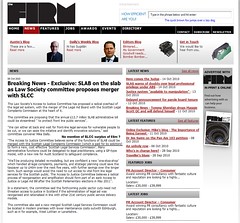
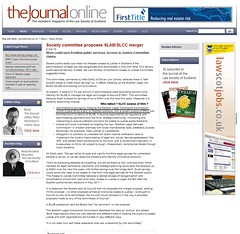
SLAB on the slab as Law Society Committee proposes merger with SLCC - The Firm 8 October 2010 Society Committee proposes SLAB & SLCC merger - Journalonline 8 October 2010

However, earlier this week, the ‘story’ found its way into the Herald newspaper, the day after Mr Dailly wrote on his webblog at “The Firm”, also alleging the SLCC were holding a £6 million pound surplus. The Herald was apparently provided with a release by the Law Society/Mr Dailly continuing the allegations the SLCC was holding the £6 million surplus although no such media release currently exists on the Law Society of Scotland’s website (clearly they didnt want it appearing in other newspapers – Ed)

The next day however, a letter of correction appeared in the Herald sent in by Mr Dailly curtly stating “I Write to correct the figure we provided as the surplus held by the Scottish Legal Complaints Commission, or SLCC (“Law Society committee to seek abolition of legal aid quango”, The Herald, 12 October). In our news release we gave a figure of £6m. However, the latest accounts of the SLCC, for the year ended June 30, 2009, showed a net annual surplus of £1.56m. We do not know what the annual surplus for the year ended June 30, 2010 will be until those accounts are published, and therefore, we await confirmation of the net total surplus, and net assets, held by the SLCC.”

A tale of two surpluses : SLCC’s £6 million pound surplus blogged by Dailly, reported in The Herald, & corrected the next day by letter.

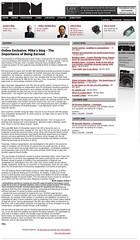
Importance of being earnest Mike Dailly - 11 October 2010 The Firm Law Society Committee to seek abolition of legal aid quango - The Herald 12 october 2010 SLCC accounts correction Mike Dailly The Herald Letters 14 October 2010

Today an insider alleged “someone talked” at the Scottish Legal Complaints Commission, citing information regarding the SLCC’s current finances is not currently in the public domain, as the SLCC is yet to release its annual accounts & reports, due in the next few weeks sometime before or during December 2010. The insider went onto say “a significant amount of inside information was coming out of the SLCC”, however this comes as no surprise, given the quango’s links back to Drumsheugh Gardens.

Some might wonder why a law complaints quango, which costs over £200K a month to run, which is dishing out expenses to its board members almost on a duck-house basis, is apparently handling little in the way of complaints and is apparently battling with its own remit against consumer groups, may be holding such a large surplus equivalent to a lotto win if Mr Dailly’s information proves to be correct.

The Scottish Legal Aid Board said it would not comment on the story, however the Scottish Legal Complaints Commission issued a statement on the proposal from the Law Society's Access to Justice Committee suggesting a merger of the SLCC and the Scottish Legal Aid Board.

The SLCC’s release stated : “The Scottish Legal Complaints Commission described the suggestion of a merger as "curious" and added: "Both organisations have two very defined and different roles in helping the public to access justice and both organisations are funded in very different ways. It is not clear from the article how well these respective roles are understood."

It should be noted the SLCC have not challenged, confirmed nor denied the figure of £6 million pounds revealed in the press by Mr Dailly’s Access to Justice Committee …

Wednesday, March 24, 2010

Law Society’s ‘nobbled’ referendum match on legal services reform likely to end up in a scrum at Murrayfield

ian smartLaw Society’s Ian Smart. MURRAYFIELD STADIUM, Thursday 25 March, 10am might be worth an attendance to see the Govan Law Centre’s Mike Dailly (wannabe scrumhalf ?) have a go at the Law Society President Ian Smart (well-placed, keen hooker ?) during the Special General Meeting on the future of legal services reform in Scotland. The SGM has been called by the Scottish Law Agents Society (SLAS), which wants the Society to change the current policy of supporting alternative business structures (ABS), which members voted for at its 2008 AGM, to one opposing their introduction so we dont get abs and clients dont get the chance to go anywhere other than a solicitor for legal services.

In addition to the SGM, and Mike Dailly calling yet again for the resignation of Ian Smart, there is a nobbled ‘secret ballot referendum’, being run independently by the Electoral Reform Service, to encourage as many solicitors as possible to vote on ABS, and on whether the Society should regulate new business models. The referendum, which runs from 23 March to 7 April will allow the Society's Council to determine its future policy on ABS.

Ian Smart, president of the Society, said: “The Council was conscious that the critics of the result of the 2008 AGM continued to claim that the vote was not representative of the profession. The Council decided that in anticipation of high numbers of proxies again, which is a feature of Law Society general meetings, the vote at this special general meeting could attract the same criticism and concluded by a vote that a referendum of all members, one solicitor-one vote where there can be no proxy voting, would reflect the clear majority view of the profession.

"This means we are asking our members to vote twice, both in the referendum and at Thursday's SGM. The Society’s Council will then decide on a future policy in light of both votes and the respective levels of participation.

“The Legal Services (Scotland) Bill proposes major change and it's vital that solicitors fully consider what the government’s proposals could mean for their businesses and whether they should choose to continue as a traditional solicitors’ practice. There will be no compulsion for solicitors to change how they do business but there are a number of Scottish firms, many of which operate on a UK-wide and international basis, who want to be able to adapt to continue to meet the requirements of their clients, and to operate on a level playing field with their competitors in England and Wales.

“We want solicitors in Scotland to have opportunities now and in the future, to be able to thrive in Scotland and further a field, but not at the expense of independence, core values and principles, the very things that have given the Scottish legal profession such an enviable reputation.

“We have pressed hard for changes to the Bill. As a result we have won concessions from Community Safety Minister, Fergus Ewing, to drop parts of section 92 and with it remove any or even potential, government intervention in the appointment of lay members to the Society’s Council, and from the Justice Committee, which in its stage 1 report has recommended amendments to ensure that any ABS must have a fidelity fund equivalent to the existing Guarantee Fund and the continuation of existing consumer protections.

Mr Smart added: “There are several types of new business models that do not seem to have met with any major resistance from solicitors but we know there are genuine fears about the impact of external ownership or funding of law firms, their regulation and whether the independence of solicitors working there could be compromised.

“That is an important discussion for the profession to have and the Society is asking for members’ views in the current consultation on the types of models that could be permitted and how they should be regulated. I hope for a good debate on Thursday and that there is opportunity to examine and address some of the concerns that some of our members continue to have about the Bill’s proposals."

For those of you who have forgotten what this meeting is all about, watch the following video once more :

Mike Dailly ‘gets Smart’ ? : The road to alternative business structures

Catering, for those of you who wish to stuff faces while listening to this nobbled debate, is in the Presidents Suite, while the actual meeting, which starts at 10am, is in the Thistle Suite. Do remember to post your expectations & experiences of said nobbled debate & said nobbled referendum in the comments section ! (where is Uma Thurman with a Hattori Hanzo when we need her so ? – Ed)

Today’s Times newspaper reports on the accusations flying between both camps, the ones who want alternative business structures (ABS) and the ones who dont (Govan, GBA (or should that be GBH – Ed) etc …) :

Accusations fly ahead of ‘Tesco Law’ referendum
Mike Wade

Bitter divisions in the Scottish legal profession over the so-called Tesco Law burst into the open last night as the Law Society of Scotland (LSS) was accused of acting undemocratically ahead of a Special General Meeting (SGM) to determine contentious reforms to the legal profession.

At issue are proposals to enable legal firms to raise capital from outside investors, while banks and supermarkets could offer a full range of solicitors’ services.

High Street solicitors fear the new rules will enable the big firms to cut prices and cherry-pick the best paying work, such as conveyancing, leaving them with diminishing returns.

This week they accused the society of using its financial resources effectively to rig the meeting against them. The Govan Law Centre, one of the most vocal opponents of the change, said the society’s officials had drawn on confidential databases and its extensive organisational facilities to ensure the vote went their way. Mike Dailly, the centre’s principal solicitor, said they had been able “to help themselves to resources, paid for by members, to run their own campaign in favour of Tesco Law”.

The society has also been accused of calling on solicitors employed by government departments and financial institutions to vote in favour of the reforms.

Yesterday, Mr Dailly repeated a call for the resignation of Mike Smart, the society president, who was “ultimately responsible for this undemocratic process”.

The development came ahead of tomorrow’s meeting, at Murrayfield Stadium, which the society hopes will ratify a decision to implement the reforms, known as Alternative Business Structures (ABS.) They were first adopted by the Society at its 2008 AGM, and now form an integral part of the Legal Services (Scotland) Bill.

As The Times revealed four weeks ago, the Scottish Law Agents Society — representing 1,500 solicitors — was confident it would overturn Law Society policy when it “requisitioned” an SGM last month. Now, it seems, it is not so confident.

Meanwhile the Law Society has met the objections head on by proposing a referendum, based on one member, one vote, to be overseen by the Electoral Reform Society, and to follow the SGM.

Explaining its position, a spokesman said: “There could be serious consequences from division. The society want one vote, one view. I can think of no more democratic process.” The spokesman added that it was quite proper for the LSS to promote policies that had been democratically endorsed two years ago. Last night, however, there were signs that the divisions were deepening. Critics insist that the Law Society rushed through its policy on ABS in 2008, and said it was now attempting to influence both the SGM and the referendum.

In particular, a letter from Janet Hood, the chairman of the society’s In House Lawyers Group, has caused apoplexy amongst its critics. It urged solicitors within government departments, financial institutions or charities, “to attend the SGM or to vote by proxy to support the society’s position”.

“This is twisting our motion,” said Ian Ferguson, a board member of the Scottish Law Agents Society. “Our motion has always been about the external ownership of legal firms. This is about getting the votes of other groups, because they know they won’t get the support of high street solicitors.”

Monday, March 08, 2010

Law Society President Ian Smart & Govan Law Centre’s Mike Dailly debate Legal Services Bill reforms – solicitors don't price fix !

Debate over the proposed reforms to the legal profession’s business model in Scotland as contained in the Legal Services Bill, currently going through the Scottish Parliament, finally made television yesterday with appearances from the Ian Smart, the current Law Society President, and Mike Dailly of the Govan Law Centre. Missing in action from the debate was someone from the consumer lobby, who stand to gain the most from the proposed reforms, which will allow Scottish consumers a much needed choice in who they wish to purchase legal services from.

Banks, supermarkets and others are eventually expected to enter the legal services market if the bill becomes law, hence the ‘headless chickens’ syndrome affecting some parts of the legal profession, reported in the Herald newspaper HERE last week, and covered in Peter Cherbi’s “Diary of Injustice” law blog HERE

Ian Smart & Mike Dailly discuss the Legal Services Bill, splits between lawyers, and price fixing (solicitors of course, do not price fix , haha – Ed)

Monday, February 16, 2009

Scotland’s property management Factors ‘a bit crooked’ but OFT allows continued self regulation as consumers suffer

Property management in Scotland seems to have the same problems as most other professions & industries .. its a bit crooked .. and there are plenty of crooked agents around unfortunately.

The OFT however, feels for now, the industry can still self regulate .. a bad decision …

The Herald reports :

Factor market ‘not working well’ … but it can still police itself

GERRY BRAIDEN February 12 2009

Scotland's property management industry will be allowed to police itself even though "the market is not working well for consumers", the Office of Fair Trading has recommended.

Factors will only face the threat of a statutory scheme which could see them barred from operating if self-regulation fails, the OFT added.

Following a six-month landmark investigation into the factoring sector the OFT is also recommending the development of an advice and mediation service by the Scottish Government, which will be available to both owners and managing agents to help overcome the legal complexities in disputes and prevent the breakdown of arrangements.

Last month it unveiled its findings, which showed that almost half of flat owners believe their factors are not effective in getting things done, while one-third rated their service as poor value for money.

But while the recommendations published today have been welcomed by the industry housing campaigners have been left bitterly disappointed.

One leading figure has branded the recommendations "a shambles" and accused the OFT of telling the public "to trust dodgy companies to regulate themselves".

Prominent housing lawyer Mike Dailly, who has worked on a parliamentary bill to tighten the factoring industry, said: "This shows that our regulators, who let us down with the banking meltdown, are letting us down again.

"Does anyone really believe bad factors are going to start being nice if we ask them nicely? The OFT's conclusions are utterly incompatible with their finding that two-thirds of people who complained about their factor remained dissatisfied with them. That remarkable statistic blows any idea of voluntary self-regulation out of the water."

A particularly Scottish industry, factors manage common shared property such as roofs, staircases and gardens within tenements and other residential properties with a shared commonplace.

Around 135,000 Scottish households rely on property management companies.

The OFT's study also looked at land maintenance companies which maintain open spaces, typically on new housing developments.

It found that while the majority of people were happy with their property manager, around one in five said they were not.

Two-thirds of consumers who had made a complaint about their management firm were dissatisfied with the way their complaint was handled, while many people do not understand their complex legal rights and are unsure about the standard of service they should expect.

It also found there was limited scope for redress when things go wrong, and as owners rarely switch their property manager there is little evidence of active competition between factoring firms to attract business.

Key recommendations include an "early implementation of a Scottish Government promoted self-regulatory scheme, with an independent complaints redress mechanism, to ensure better accountability of property managers for their standards".

The OFT's recommendations have now been submitted to the Scottish Government which has agreed to respond within 90 days.

John Fingleton, OFT chief executive, said: "This is a market that is not working well for many homeowners in Scotland.

"People often have little or no understanding about their rights, households rarely switch factors, suppliers do not seem to be actively competing with each other and the options for consumers when things go wrong are very limited.

"The OFT's recommendations for change should be to the benefit of many Scottish consumers."

The OFT insisted that failure to recommend statutory powers, which many had hoped would include a registration scheme which could see companies struck off because of poor practices and operators required to prove they were "fit and proper", was not a "cop out" as the issue was more complex.

It also said it expected agencies north of the border to keep it up to speed with how any code was progressing while insisting it still had the "stick" of regulation in reserve should that fail.

Glasgow MSP Patricia Ferguson, the architect of the factors bill introduced to Scottish Parliament requiring property management companies to be registered, was scathing about the recommendations.

She said:"All the evidence shows that the majority of people who complain about their factor are unhappy with the outcome, the OFT offers them nothing. I will press on with my Bill and I hope that within the next year we will, finally, have a remedy on the statute book that will actually help people."

Consumer Focus Scotland, which in its previous guise as the Scottish Consumer Council, prompted the investigation, said factors were "drinking in the last chance saloon".

Jennifer Wallace, senior policy advocate at CFS, said: "The patience of consumers is wearing thin. If the industry does not develop self-regulation including an independent complaint system then we will, with the support of the OFT, move to external regulation of the market."

Property Managers Association Scotland Limited welcomed the recommendations, saying it already had a code of practice and supported the Scottish Government's intention to introduce accreditation of property managers in Scotland.

A spokesman said: "PMAS recognises that a simple system of dispute resolution would be advantageous to managers and clients. PMAS had proposed such a mechanism in its evidence on the Reform of the Law of the Tenement but the Scottish Government disregarded this suggestion when the Tenements (Scotland) Act was passed and left disputes to be resolved in the Sheriff Courts."

A Scottish Government spokesman said: "The property management services available to Scottish homeowners have been a matter of concern to the Scottish Government over recent years and we welcome this independent study by the OFT.

"Plans are already under way to develop an industry-led accreditation scheme for property managers. It will build on the OFT's evidence and recommendations and will include an independent complaints redress mechanism. We will consider the most effective way of ensuring advice and mediation services are available where they are needed."

Tuesday, July 15, 2008

Threats of legal action from solicitor bring Ministers cash pledge after ‘blunder’

After the Government seemingly reneged on funding pledges to organisations, it apparently took the threat of legal action from well known solicitor Mike Dailly of the Govan Law Centre in Glasgow, to have those funding pledges restored …

Ministers in cash pledge after blunder over letters

GERRY BRAIDEN

Scottish ministers have moved to head off accusations of political vindictiveness after an administrative blunder was blamed for the reneging on cash pledges to community organisations.

More than 20 groups across Scotland were told on Friday afternoon they had been successful in their applications for funding from the Scottish Government's equality unit only to be told hours later that a decision had "not actually been made" by the Communities Minister Stewart Maxwell and that "all the letters which were sent out were done so prematurely".

Civil servants claimed they had simply been preparing drafts so they could move quickly once a decision had been reached and that those who had been wrongly told could discuss the matter.

However, following allegations by one recipient, Mike Dailly, of the Govan Law Centre, that the U-turn was politically motivated and that he would pursue legal action if the promised £250,000 did not materialise the government pledged yesterday that all those who received the first letter would get the funding.

Mr Dailly, a solicitor and Labour Party activist, had applied for the money from the Race, Religion and Refugee Initiative to establish a Govanhill Law Centre, providing legal advice on housing and welfare to black minority ethnic communities in Glasgow's south side.

He had claimed it was more than coincidental that he had received the second e-mail claiming no decision had been made on the same day he was quoted publicly criticising an SNP councillor who had campaigned against poor housing in a Govanhill street where he owns and rents a flat to a Romanian family in a rundown building for £500 a month.

Mr Dailly said he thought Councillor Jahangir Hanif "was part of the solution but is clearly part of the problem".

After being told on Friday evening that no decision had been made and that the offer had been sent in error, Mr Dailly said he found it incredible that the head of the equalities department, Yvonne Strachan, could send a £250,000 offer without ministerial approval and threatened to take the government to court.

Government sources have accused Mr Dailly of attempting to make political capital out of an administrative error and that no organisation was in danger of losing any money. His threats came amid accusations of cronyism after the government handed hundreds of thousands of pounds in public funds to an Islamic group run by an SNP activist.

Around £215,000 was awarded to the Scottish Islamic Foundation, a group run by Osama Saeed, an SNP member who is to contest the Glasgow Central seat in the next Westminster election.

The issue also spilled on to the Glasgow East by-election, with Labour's Margaret Curran saying she found it "exceptional that this scale of error could be made" and that it was a "very off way of doing business", while her SNP rival John Mason said a mountain was being made of a molehill and that the awarding of the funding yesterday was evidence of "a government making quick decisions".

Last night a Scottish Government spokesman said: "Ministers were already content to approve grants to all the organisations who received these letters early, as per the recommendation from officials.

"However, draft letters were issued prematurely in error before the final, but imminent, ministerial sign-off.

"The content of the letters would not have changed between draft and final versions."

Saturday, June 21, 2008

Scottish Legal Aid Board running costs come in for criticism - make the industry pay instead ?

SLAB, the Scottish Legal Aid Board, which manages legal aid in Scotland, has come in for some harsh criticism over its costs.

Well, since the money goes to the legal profession, because the Law Society of Scotland has ensured that no one other than a lawyer can claim legal aid, how about making the legal profession pay for SLAB's running costs ? Problem solved !

The Herald reports :

Legal aid ‘wastes cash on red tape’

DAVID LEASK

Running costs at the Scottish Legal Aid Board have jumped two-thirds in a decade despite a substantial drop in its caseload.

The quango yesterday confirmed that its administration budget increased by 65% over the past 10 years to nearly £13m this year while the number of grants it issued fell some 34,000 in the same period.

The board, however, defended extra spending on staff and computer systems which it believes will give the taxpayer better value for money on its biggest outgoing, the aid it provides for hundreds of thousands of legal and civil cases.

It did so as its record on red tape was attacked by one of Scotland's most prominent solicitors, Mike Dailly of the Govan Law Centre, in a major speech.

Mr Dailly yesterday told an audience of senior lawyers and industry experts that the board was "diverting" public money into bureaucracy while access to civil justice became a privilege only of the very poor, who are entitled to legal aid, and the very rich, who can afford their own lawyers.

Speaking at an Edinburgh conference sponsored by the Faculty of Advocates, Mr Dailly said: "Access seems to have regressed while bureaucracy has widened. Legal aid expenditure is officially demand-led and uncapped. Yet it might be thought what has happened is more public money has been diverted into bureaucracy and devices which have squeezed demand and restricted take-up."

He added: "Legal aid bureaucracy has grown exponentially over the last few years. Often a client does not have the information now required by the board and solicitors will have to write to local authorities, previous employers, and so on. The time and effort now required to obtain legal aid has become a major task in its own right."

Mr Dailly's Govan Law Centre is one of several community-based legal practices designed, like the board, to help ensure fair access to justice for all. Many clients are poor. But even those on benefits can struggle to get legal aid. The board is currently responsible for around £160m of grants a year, although it is able to claim some of that back when clients it funds win their cases. Its official net spending on grants was £150m in 2006-2007, up from £136m in 1996-1997. Mr Dailly, however, does not believe that this rise warrants increased spending on administration.

Solicitors, he said, are voting with their feet. He said: "The board confirms that in 2006 there were 736 firms registered for civil legal aid work, while in 2007 that number fell by 8% to 678." Forms for legal aid, he said, were long and off-putting, some stretching to 40 pages in length.

A spokesman for the board said much of the new spending on administration was designed to cut bureaucracy. Some of the administration budget went on new computers that are helping solicitors make online applications for grants.

"We have also invested in staff who are involved in quality insurance and checking for fraud. Our staff uncovered one fraud worth £1.7m," he said.

Higher administration costs, the board argues, have helped save money on grants.

The spokesman added: "Over the next few years we will start to see reductions in costs. Our budget for administration will stay the same way for the next three years."