Wednesday, September 30, 2015

The struck off solicitor, and the MP who ‘took advantage’ of homeowners - Michelle Thomson - the SNP Member of Parliament with 17 homes

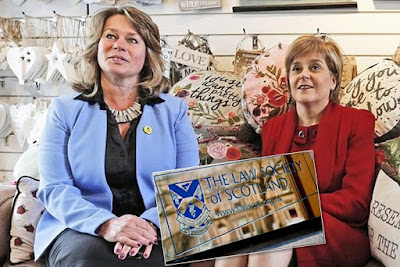
Lawyer involved in property deals with Michelle Thomson - was struck off by tribunal. A SOLICITOR - Christopher Hales, who acted for Edinburgh West MP Michelle Thomson and her husband in multiple property deals, has been struck off for professional misconduct over his part in 13 deals involving Ms Thomson or M&F Property Solutions, of which she was a partner.

Michelle Thomson, the party’s shadow minister for business, innovation and skills, has been accused of taking advantage of vulnerable families by building a property portfolio worth about £1.7 million by buying homes at knockdown prices from families struggling to pay their mortgages.

Hales, who once listed his occupation as “Police Constable” – and is now struck off by the Scottish Solicitors Discipline Tribunal from working as a solicitor - handled numerous property deals for his client – SNP MP Michelle Thomson. Mr Hales acted for Ms Thomson before she was elected as an SNP MP.

According to a ruling by the Scottish Solicitors’ Discipline Tribunal, a full version of which has been published by the Sunday Times, Mr Hales failed to provide key information to mortgage lenders in breach of guidelines designed to prevent fraud in numerous cases.

The decision to strike off Christopher Hales came to a view “the solicitor must have been aware there was a possibility he was facilitating mortgage fraud.”

The decision stated: “The Tribunal had no hesitation in making a finding of professional misconduct. There were numerous breaches of the CML Handbook in respect of 13 different transactions involving an ongoing course of conduct which continued for a period of over one year. The Tribunal has made it clear on numerous occasions that institutional lenders are clients of Respondents in the same way as any other clients and are owed the same duties of care. The CML Handbook has been instituted to help prevent mortgage fraud and emphasise the reporting duties on the part of solicitors. In this case the Respondent had a clear duty to report the back to back transactions, cash backs, increases in prices and deposits being provided by a third party to the lender. These matters would have been very likely to have had a material effect on the lender's decision to lend. The Tribunal consider that the features of these transactions were such that the Respondent must have been aware that there was a possibility that he was facilitating mortgage fraud, whether or not this actually occurred. He generated fees on the basis of allowing this to occur. It must have been glaringly obvious to the Respondent that something was amiss when cash backs of £27,000 or £28,000 from the seller to the purchaser were involved.”

“There were so many breaches of the CML Handbook in these cases that the Respondent would have known that he did not have his client's authority to draw down the funds and accordingly the Tribunal also found it a breach of Rule 6 of the Accounts Rules. The Tribunal considered that not only did the Respondent fail to act in the best interests of his lender clients but he failed to act with the utmost propriety towards these lender clients. This is extremely damaging to the reputation of the legal profession.”

“The Tribunal took account of the Respondent's responses contained in the Executive Summary Report but did not consider that these provided any satisfactory explanation for what had happened. The Tribunal note that the Respondent has ceased practice and took account of the fact that the Respondent had cooperated by admitting the averments of fact, duty and misconduct. The Respondent however did not attend at the Tribunal to provide any mitigation in person.”

“In the whole circumstances, given the ongoing course of conduct, the large number of transactions involved, the Respondent's knowledge of the central role of Mrs A and Company 3, which should have set alarm bells ringing and the fact that this type of conduct is likely to bring the profession into disrepute, the Tribunal considered that it had no option other than to strike the Respondent's name from the Roll of Solicitors in Scotland.”
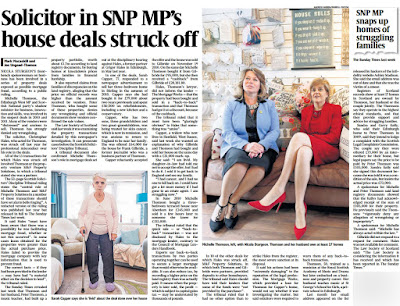
 Solicitor in Thomson's house deals struck off

Sunday Times 27/09/2015

Mark Macaskill ; Jon Ungoed-Thomas

NICOLA STURGEON'S frontbench spokeswoman on business has been involved in a series of property deals exposed as possible mortgage fraud, according to a public ruling.

Michelle Thomson, the Edinburgh West MP and Scottish National party's shadow minister for business, innovation and skills, was involved in the suspect deals in 2010 and 2011. Many of the vendors were "distressed" and anxious to sell. Thomson has strongly denied any wrongdoing.

The solicitor, Christopher Hales, who acted for Thomson, was struck off last year for professional misconduct over his role in the deals.

All of the 13 transactions for which Hales was struck off involved Thomson or the property venture M&F Property Solutions, in which a tribunal stated she was a partner.

The 53-page Scottish Solicitors' Discipline Tribunal ruling states the "central role of Michelle Thomson and M&F Property Solutions in a number of these transactions should have set alarm bells ringing". A redacted version of the ruling was published last year but released in full to The Sunday Times last week.

It said Hales "must have been aware that there was a possibility he was facilitating mortgage fraud, whether or not this occurred". In some cases loans obtained for the properties were greater than the actual purchase price. Hales failed to provide the mortgage company with key information that is used to prevent fraud.

The correct facts — if they had been provided to the lender — may have had "a material effect on the decision to lend", the tribunal ruled.

The Sunday Times revealed last week that Thomson and her husband, Peter Thomson, a music teacher, had built up a property portfolio, worth about £1.7m according to Registers of Scotland documents, by buying homes at knockdown prices from families in financial hardship.

It also reported claims from families of discrepancies on the land registry, alleging that the price on official records was higher than the amount received by vendors. Peter Thomson, who bought some of these properties, denies any wrongdoing and official documents show vendors confirmed the sale values.

The Law Society of Scotland said last week it was examining the property transactions detailed by this newspaper's investigation. It can prosecute cases before the Scottish Solicitors' Discipline Tribunal. A tribunal document also confirmed Michelle Thomson's role in mortgage deals set out at the disciplinary hearing against Hales, a former partner at Grigor Hales in Edinburgh, in May last year.

In one of the deals, Sarah Capper, 77, responded to a newspaper advertisement to sell her three-bedroom home in Stirling in the autumn of 2010. Capper says she had bought it for £79,000 about two years previously and spent £50,000 on refurbishments, including a new kitchen and a conservatory.

Capper, who has two sons, three grandchildren and two great-grandchildren, was being treated for skin cancer, which is now in remission, and was anxious to return to England to be near her family. She was offered £64,000 for the house by Frank Gilbride, a former journalist who was a business partner of Thomson.

Capper reluctantly accepted the offer and the house was sold to Gilbride on November 19 2010. On the same day Michelle Thomson bought it from Gilbride for £95,000, but she then received a "cashback" from Gilbride of £28,181.80.

Hales, Thomson's lawyer, did not inform the lender — The Mortgage Works — that the property had been bought and sold in a "back-to-back" transaction and that Thomson had got it at a discount, because of the cashback.

The tribunal ruled that it must have been "glaringly obvious" to Hales that something was "amiss".

Capper, a widow who now lives in Henfield, West Sussex, said last week she wanted an explanation of why Gilbride and Thomson had bought and sold her house on the same day with a £31,000 mark-up.

She said: "I am livid. My daughter-in-law had told me not to accept the offer, but I had to do it. I sold it to get back to England and see my family.

"I had cancer, and I had no one to fall back on. I could have got a lot more money if I had gone to an estate agent. I am struggling now."

In June 2010 Michelle Thomson bought a three-bedroom terraced house near Aberdeen for £245,000 and sold it a few hours later to someone she knew for £315,000.

The tribunal ruled that the quick sale — or "back-toback" transaction — was not disclosed by Hales to the mortgage lender, contrary to the Council of Mortgage Lenders Handbook.

Experts say back-to-back transactions by two parties operating together can be used to secure a larger mortgage than would otherwise be available. It can also reduce tax, by recording a higher price on the land registry than was actually paid. It means when the property is later sold, the profit — which is subject to capital gains tax — may be understated by thousands of pounds.

In 10 of the other deals for which Hales was struck off, M&F Property Solutions, in which both Thomson and Gilbride were partners, provided deposits to other homebuyers.

The tribunal said Hales should have told their lenders that some of the funds were "not provided by the purchaser".

The tribunal ruled that it had no other option than to strike Hales from the register, the most severe sanction at its disposal.

It said his actions had been "extremely damaging" to the reputation of the legal profession. The Mortgage Works, which provided a loan for Thomson for Capper's home, would not say whether it was investigating the matter, but said solicitors were required to warn them of any back-toback transaction.

Thomson, 50, trained as a musician at the Royal Scottish Academy of Music and Drama but later embarked on a business and property career. Her husband teaches music at St George's School for Girls, a private school in Edinburgh.

Last month her email address appeared on the list released by hackers of the infidelity website Ashley Madison. She said the email address was out of date and that she was the victim of a smear.

Registers of Scotland records show at least 17 homes in Scotland are owned by Thomson, her husband or the couple jointly. The Thomsons say they operate to the highest ethical standards, and that they provide support and advice for struggling families.

Sandra and Garry Kelly, who sold their Edinburgh home to Peter Thomson in 2009, said they intend to lodge a complaint with the Scottish Legal Complaints Commission. The couple say they were offered £73,000 by an intermediary for their home, but legal papers say the price to be paid by Peter Thomson was £105,000.

Sandra Kelly said she signed this document because she was told it was a condition of the sale, but insists the actual price was £73,000.

A spokesman for Michelle and Peter Thomson said land registry documents showed that the Kellys had acknowledged receipt of the sum of £105,000 for their property. The spokesman previously said the Thomsons "vigorously deny any allegation of wrongdoing or impropriety".

A spokesperson for Michelle Thomson said: "Michelle has always acted within the law and will be giving no further comment."
Gilbride did not respond to a request for comment. Hales was not available for comment.

A spokeswoman for the Law Society of Scotland said: "The Law Society is considering the information it has received and which has been reported in The Sunday Times."

Friday, September 25, 2015

Former Lothians politician & solicitor who was jailed for stealing £70K from disabled friend lands new job as boss of EU funded Moray Leader

A FORMER solicitor & Tory politician who was jailed for 27 months after stealing at least £70,000 from a disabled client who depended upon him as a close friend – is now handling public cash & EU money flowing into Scotland.

Iain Catto (51) is now the boss of funding programme Moray Leader, an EU funded project run by Moray Council which is also part of the Scotland Rural Development Programme (SRDP).

Catto - formerly a member of Lothian Regional Council from 1990 to 1994 was sacked from his job as a solicitor for gross misconduct. Iain Catto was also censured by the Scottish Solicitors Discipline Tribunal.

Catto was jailed in 2008 after Edinburgh Sheriff Court heard he systematically stole sums of £11,000 and £9,000 at a time between December 2002 and 2004 from the criminal injuries pay-out his client Francis Fleming - had received. He even sold some of his victim's shares to get more cash.

The Scottish Sun newspaper reports:

CHARMED ROBBER

Thieving brief's new job doling out public cash

By Russell Findlay Scottish Sun  21/09/2015

A FORMER Tory politician who stole £70,000 from a disabled friend has landed a new job handing out taxpayers' cash.

Crooked ex-lawyer Iain Catto was jailed for 27 months after fleecing partially paralysed Francis Fleming.

But he is now the boss of funding programme Moray Leader, which has given away £2million of public money to good causes.

And Catto, 51, also works for charity Foundation Scotland as a "community engagement executive".

Last night his victim's son Frank MacLennan, 51, slammed the decision to hire the ex-con.

He said: "It's a disgrace, he should not be in a trusted position.

"I'm surprised that anyone would give him jobs like these."

Frank, of Falkirk, added: "He should not be working with large sums of money — especially public and charity money."

Former councillor Catto was a rising star in the Scottish Conservatives and worked for blue-chip law firms in Edinburgh.

Brother He befriended his client Francis and pretended to be looking after his finances. Catto became so trusted he even had a key to his victim's home in the capital.

But he stole blank cheques and blew the haul on flights, hotels, meals and a £300 booze splurge.

After he was brought to justice in 2006, his victim Francis, 69, said: "I trusted him better than my brother.

"I thought all his advice was for my own good — I didn't realise he was doing me out of all I had."

Catto, now living in Elgin, joined Moray Leader in July 2013 and works as the programme coordinator. It is run by Moray Council and funded with EU cash.

In April this year Catto joined Foundation Scotland, which covers Moray, Aberdeenshire and Angus.

The charity's website mentions his law degree but not his conviction. A spokesman said: "Iain Catto made us aware of his past.

"We believe everyone should be given a second chance."

Moray Council added: "He was open about his past when we interviewed him. He is not in a position where there is a risk to public funds."

Catto refused to comment.

A NEW BRIEF?

Iain Catto’s Foundation Scotland profile shows no mention of his criminal past:

Iain joined the Foundation in April 2015 and works part time covering Moray, Aberdeenshire and Angus. He is based in Elgin, and currently spends the rest of his working week working for the Moray LEADER Programme, an EU funded rural development grants programme as its Programme Co-ordinator, where he was full time prior to joining Foundation Scotland. Iain has an honours degree in law, and spent much of his working life operating in Edinburgh. He has been a volunteer for various voluntary organisations over the years, including ones operating with the elderly, young people, and in the field of education.

Iain was brought up in rural areas of Perthshire and Ross-shire, and therefore understands some of the challenges facing rural communities. Iain in his spare time is a follower of Ross County, Leeds United and professional cycling, and is an active member of his local community council, where his particular focus is on transportation issues and licensing matters.

Tuesday, August 18, 2015

Heather Capital collapse: Court of Session hears £200K payment was made to suspended Sheriff Peter Watson - who represented ex-Lord Advocate Elish Angiolini & former First Minister Alex Salmond

Suspended sheriff Peter Watson acted for ex Lord Advocate Elish Angiolini. A SENIOR judge at the Court of Session has revealed a suspended Sheriff who represented Scotland’s previous Lord Advocate & ex First Minister, received a £200,000 payment from a Gibraltar based law firm.

The revelations came in a hearing in the case of  Heather Capital Ltd (In Liquidation) v Levy & McRae and others - naming suspended Sheriff Peter Watson amid a series of allegations in relation to the £400m collapse of the Heather Capital Hedge Fund.

The court was told Watson received a £200K payment from Hassans - a Gibraltar based law firm who acted in the transfer of tens of millions of pounds via a series of companies connected to Heather Capital and controlled by Gregory King.

Watson, who represented former Lord Advocate Elish Angiolini, ex First Minister Alex Salmond, ex Glasgow City Council leader Stephen Purcell, bosses at Rangers Football Club, among others, was suspended from his judicial role as a Sheriff in February of this year by Scotland’s Lord President – Lord Brian Gill.

Watson is known to have provided legal services to former Lord Advocate Elish Angiolini, and ex First Minister Alex Salmond.

In the course of Watson’s representation of Angiolini, it is known much of the legal services provided were paid for out of public cash via the Crown Office.

Lord Woolman said: Heather Capital Ltd (‘HC’) was incorporated in the Isle of Man in 2005.  Prior to its liquidation in 2010 it had received investments exceeding $400 million. The present action has been raised in its name by the liquidator. The first defender is the firm of Levy & McRae. The other defenders are eight individuals, who were partners in the firm in the period from 1 January 2007 to 31 December 2008.

The liquidator contends that the company was defrauded of a sum of about £90 million. The scheme involved the transfer of funds to companies incorporated in Gibraltar that were owned or controlled by one of HC’s directors, Gregory King.  A firm of solicitors in Gibraltar, Hassans, acted in these transactions.

According to the liquidator, in early 2007 HC’s auditors raised queries about these transactions.  Subsequently, Mr King sought to conceal their true nature.

One of the transactions concerned a company called Westernbrook Properties Limited. On 4 January 2007 the sum of £19 million was paid into the first defender’s client account.  It was paid out 5 days later to an account with HSBC Private Bank in Monaco held by a Panamanian company.  On 24 January the sum of £9.412 million was paid into the first defender’s client account.  It was paid out on 28 March to the client account of Hassans.

On 23 December 2008 a payment of £200,000 was made to the eighth defender, Mr Peter Watson, from Hassans’ client account.

Suspension of Sheriff Watson & chronology of Heather Capital:

In February of this year, Peter Watson was suspended by Scotland’s top judge Lord Gill, after the Judicial Office received enquiries from the media in relation to a multi million pound writ naming Watson among a slew of allegations in the £400m collapse of Heather Capital, a hedge fund set up by Spanish based Gregory King.

It has since been reported Watson held a number of directorships in firms linked to the collapsed hedge fund – directorships including Aarkad PLC, based in the Isle of Man, Mathon – another company linked to the collapsed hedge fund, and a directorship of King & Co, a private bank set up by the Hedge Fund’s founder – Gregory King.

The collapse of Heather Capital is currently subject to investigation by Police Scotland, and  the Crown Office – which Angiolini headed as Lord Advocate during the time many of the events in the Heather Capital fiasco took place.

There is currently no suggestion Angiolini was aware of any of the events of Heather Capital during the time she held the post of Lord Advocate.

However, nearly a year on after Scotland’s Crown Office received reports on 4 individuals from Police Scotland, the current Lord Advocate – Frank Mulholland – who served as Solicitor General to Lord Advocate Elish Angiolini is still to decide on whether any prosecutions will take place in relation to the collapse of Heather Capital and the hundreds of millions of pounds lost to private investors.

During a recent hearing of the Heather Capital case at the Court of Session, Lord Woolman revealed Peter Watson  received a £200K payment from funds connected to the new collapsed Hedge Fund.

The £200K payment to Watson – via a Gibraltar law firm - was made during the time Angiolini was Scotland’s Lord Advocate.

Elish Angiolini was Lord Advocate from 12 October 2006 – 31 April 2011 and previously served as Solicitor General from 28 November 2001 – 12 October 2006.

Lord Woolman wrote: “On 23 December 2008 a payment of £200,000 was made to the eighth defender, Mr Peter Watson, from Hassans’ client account.”

In July 2011, two months after Frank Mulholland succeeded Elish Angiolini as Lord advocate, the Scottish Crime & Drug Enforcement Agency obtained search warrants to recover material from the Glasgow based Cannon Law Practice – run by Frank Cannon – as part of an investigation into the alleged embezzlement of millions of pounds of cash linked to Heather Capital and it’s founder – Gregory King

Much of the allegedly stolen money passed through Cannon’s client account.

The move by Police in 2011 followed a financial audit of Cannon’s Law Practice – conducted by the Law Society of Scotland in 2010, when it was discovered millions of pounds had passed through Cannon’s client account in relation to a series of offshore transactions involving their client – Gregory King, a director of Mathon Ltd &founder of Heather Capital.

A legal insider said it would be a difficult proposition for the Crown Office to deny any knowledge of the SCDEA raid on Cannons Law firm in 2011 or knowledge of what would have likely been a lengthy SCDEA investigation prior to warrants being served.

Suspended Sheriff Watson also counted former First Minister Alex Salmond among his clients. Mr Salmond had appointed Peter Watson to a Scottish version of the Leveson inquiry - which aimed to curtail media freedoms in Scotland.

Heather Capital - Lord Woolman’s opinion:

 Heather Capital Ltd (In Liquidation) v Levy & McRae and others

OUTER HOUSE, COURT OF SESSION

[2015] CSOH 115 CA207/14

NOTE BY LORD WOOLMAN

In the cause

HEATHER CAPITAL LIMITED (IN LIQUIDATION) Pursuers; against

LEVY & McRAE AND OTHERS Defenders:

Pursuer:  Lord Davidson of Glen Clova QC;  Shepherd & Wedderburn LLP
Defenders:  Clark QC, J Brown;  Simpson & Marwick
14 August 2015

Introduction

[1]        Heather Capital Ltd (‘HC’) was incorporated in the Isle of Man in 2005.  Prior to its liquidation in 2010 it had received investments exceeding $400 million. The present action has been raised in its name by the liquidator. The first defender is the firm of Levy & McRae. The other defenders are eight individuals, who were partners in the firm in the period from 1 January 2007 to 31 December 2008.

[2]        The liquidator contends that the company was defrauded of a sum of about £90 million. The scheme involved the transfer of funds to companies incorporated in Gibraltar that were owned or controlled by one of HC’s directors, Gregory King.  A firm of solicitors in Gibraltar, Hassans, acted in these transactions.

[3]        According to the liquidator, in early 2007 HC’s auditors raised queries about these transactions.  Subsequently, Mr King sought to conceal their true nature.

[4]        One of the transactions concerned a company called Westernbrook Properties Limited. On 4 January 2007 the sum of £19 million was paid into the first defender’s client account.  It was paid out 5 days later to an account with HSBC Private Bank in Monaco held by a Panamanian company.  On 24 January the sum of £9.412 million was paid into the first defender’s client account.  It was paid out on 28 March to the client account of Hassans.

[5]        On 23 December 2008 a payment of £200,000 was made to the eighth defender, Mr Peter Watson, from Hassans’ client account.

[6]        The liquidator pleads that HC was the client of the first defender at the material time. Accordingly, the defenders owed HC certain fiduciary duties, together with an obligation to exercise the knowledge, skill and care of reasonably competent solicitors.

[7]        It is also important to notice the terms of the pursuer’s ninth plea-in-law. It states:

“the pursuer having suffered loss, injury and damage by reasons of the defenders’ dishonest assistance of Gregory King in the latter committing breach of his fiduciary duties owed to the pursuer … decree should be pronounced”

[8]        The liquidator seeks to recover the sum of £28.4 million from the defenders. He intimated the claim on 23 June 2013.  There followed extensive pre-action correspondence before the summons was served on 23 October 2014. During that period, the liquidator did not request clarification of the membership or constitution of the firm of Levy & McRae as it existed from time to time.

[9]        The summons called on 10 February 2015.  The defences were lodged a week later. They stated that three of the defenders had been wrongly convened, because they had been assumed as partners after June 2007.  They are Mr Alasdair Gillies (1 July 2007), Mr Andrew Sleigh (1 December 2008), and Mr Gary Booth (1 January 2011).

[10]      The defenders raised this matter at the preliminary hearing on 5 March, and the continued hearing on 8 May. They said it involved significant reputational damage to those three individuals. They asked for early disposal of this discrete issue.

[11]      I fixed a hearing to take place on 13 August.  About a week before the hearing, the liquidator enrolled a motion to allow a minute of amendment.  It sought to add five further individuals as defenders, on the footing that they had been partners in the first defender in the period from 4 January 2007 to date.

[12]      The liquidator gave the following reasons in support of his motion:

“The pursuer’s agents wrote to the agent for the defenders on 7 May 2015 and 7 July 2015. In those letters, the pursuer’s agent requested:

    confirmation that the defenders had adequate insurance cover in place to meet the pursuer’s claim if it was successful;
    copies of the partnership agreements for each defender that the defender’s agents maintain have been wrongly convened; and
    details of each defender’s capital contribution to the firm

The defenders have failed to provide any of this information to the pursuer. The pursuer has identified a further 5 current and former partners of the firm who require to be convened.

Without confirmation that the defenders have sufficient insurance cover, or evidence as to why the defenders do not incur personal liability (which depends on the circumstances of each case), the pursuer seeks to convene these partners and former partners to the action as they may be jointly and severally liable for the debts of the firm.” (emphasis added)

Liability of new partners

[13]      The liability of new partners is governed by section 17(1) of the Partnership Act 1890:

“A person who is admitted as a partner into an existing firm does not thereby become liable to the creditors of the firm for anything done before he became a partner.”

[14]      In their Joint Consultation Paper on Partnership Law (2000), the Law Commission and the Scottish Law Commission state in relation to Scots law (at 10.65):

“Where the business taken over is substantially the same as the old firm, and where that business is continued without interruption, there appears to be a general presumption that the new partnership takes over the whole liabilities as well as the assets.”

[15]      Lord Hodge considered this point in Sim v Howat & McLaren [2011] CSOH 115 at [31]:

“The presumption does not arise unless there are facts and circumstances which bring it into play. The continuation of substantially the same business without interruption is necessary for the presumption.”

He suggested a number of other relevant facts and circumstances. They included whether the new partner had made a substantial capital contribution, whether he had paid or acknowledged any of the prior debts, and whether separate accounts were kept for the new and the old firm.

[16]      Lord Hodge determined at paragraph [29] that the appropriate test was whether a new partner had “accepted liability either expressly or tacitly” for the claim.

[17]      Who is responsible for averring those facts and circumstances? The answer is clear. In Thomson Balfour v Boag & Son 1936 SC 2 Lord Fleming stated (at p16) that “it was for the pursuers to prove” that a new partner had accepted liability for the debts of the old business.

[18]      Similarly in Miller v Macleod 1973 SC 172 Lord Justice Clerk Wheatley stated (at p183):

“whether in the circumstances the pursuer has established by presumption or by proof of facts and circumstances that the new firm agreed to adopt the old debts and become liable for them. Of course, the establishment of the presumption itself is dependent upon sufficient facts being proved to sustain it, and this in my opinion entitles the Court to look at all the facts, whether they occurred before, at or after the establishment of the partnership.”

[19]      In the present case, the liquidator does not offer to prove such facts and circumstances.  Instead, he states in condescendence 1:

“the defenders have been called upon, but failed, to provide to the pursuer the evidence (including a copy of the relevant partnership agreement(s) and copies of the accounts showing capital contributions made by the partners joining the partnership after December 2008) that any new partners who joined the partnership of Levy & McRae have not, in fact, undertaken liabilities of the partnership which were in existence prior to them joining. Accordingly, all the defenders are properly convened.”

[20]      In my view, that averment fails to satisfy the test identified by the Inner House. There are no averments that would allow the liquidator to lead evidence that the three individuals either expressly or tacitly agreed to take over the existing liabilities of the previous firm.  It does not set out the basis upon which the three individuals are convened. Instead it inverts the normal rule that the pursuer must plead his case.

[21]      Given the serious nature of the allegations and the size of the claim, the liquidator required to identify the basis upon which each defender had been convened.  He also had to differentiate between the acts of those individuals who had been partners at the material time and those who had been assumed after 2007.

[22]      I shall therefore sustain the defenders’ first plea-in-law to the extent of dismissing the case, so far as laid against the third, sixth and seventh defenders.

[23]      In doing so, I observe that on 25 March, the defenders’ solicitors wrote three separate letters to the pursuer’s solicitors and stated:

“In terms of his partnership agreement, no obligation was imposed on [the relevant defender] in respect of acts or omissions prior to his assumption, nor did he provide any indemnity in respect of such matters.”

Minute of Amendment

[24]      In the minute of amendment, the pursuer seeks (a) to alter the dates for the partners called as defenders to 4 January 2007 to date; and (b) to add five individuals, all of whom have been partners of Levy & McRae at some stage in that period. The relevant dates are as follows: Anne Bennie (2000 – 2008), Calum Anderson (1 July 2014) Laura Salmond (3 November 2014), Graham Craik (5 January 2015), and Stephen Hay 2007 (c6 months in late 2007).

[25]      The minute does not include any substantive averments to indicate the basis upon which these individuals are said to have taken over prior liabilities.  Accordingly, for the same reasons as given in relation to Messrs Gillies, Sleigh and Booth, I refuse to allow receipt of the minute.

[26]      The pursuer has had ample opportunity to investigate the position. Standing the very serious nature of the allegations, and the absence of a proper basis for seeking to add the five individuals as partners, I hold that it is not in the interests of justice to follow that course.

Disclosure of the Insurance Position

[27]      The pursuer seeks an order requiring the defenders to answer questions about the insurance position.  First, will the policy cover the claim?  Second, have the defenders notified a claim to insurers?  Third, have the insurers accepted the claim?

[28]      At the May hearing, the pursuer’s then senior counsel accepted that he was not entitled to ask for that information.  Lord Davidson, however, explained that the application had been made to elide the difficulty of identifying the correct defenders.  If the claim is covered by insurance, then that issue is much less important.

[29]      There is no Scottish authority in point.  In England the matter has been considered in the context of the court’s powers under the Civil Procedure Rules.  In West London Pipeline & Storage Ltd v Total UK Ltd [2008] EWCH 1296 (Comm), David Steel J refused to allow disclosure, although he also stated at [30]:

“The trend is strongly towards a more open approach to litigation. Albeit the potential for prejudice to the defendant and his insurers must be borne in mind, in the modern age of ‘cards on the table’ the question is readily posed why should not the one factor which may be key to a claimant’s view of the merit of pursuing a claim, namely what is the limit of cover and will the costs eat it up anyway, be known?”

[30]      In XYZ v Various [2013] EWHC 3643 (QB) Thirwall J ordered very limited disclosure to demonstrate that the defendant had sufficient insurance to fund its participation to the end of the trial.  The Court of Appeal has indicated that the matter is not free from doubt: Dowling v Griffin [2014] EWCA Civ 1445.

[31]      Lord Davidson suggested that I could use the wide powers contained in rule of court 47 to order disclosure.  I decline to do so. The details of insurance are a private matter between the insured and insurers.  There are major questions involved in disclosure, including the likelihood that it would encourage speculative “deep pocket” litigation: West London at [30].

Further Procedure

[32]      I shall allow a further period of ten weeks for open adjustment, with the qualification that all substantive adjustment should be completed within eight weeks.

[33]      That lengthy period is justified by three factors.  First, there have been recent extensive adjustments to the pleadings.  Second, a hearing is due to take place before the Supreme Court of Gibraltar on 24 September in respect of a Letter of Request to recover the files of Hassans.

[34]      Third Lord Tyre has reserved judgment following a recent debate in similar proceedings raised by the liquidator against Burness Paul.  Mr Clark said that the decision may have a significant bearing on the present action, as the arguments on prescription and loss are very similar.

[35]      Having regard to that third factor, I shall also fix a diet of debate.  Mr Clark estimated that it would last three days.  Apart from the plea of prescription, the defenders mount eleven separate challenges to the relevancy of the pursuer’s averments.  

[36]      If the defenders are successful and obtain dismissal, that may save each party a considerable sum of money.  Mr Clark estimated that a proof before answer would last about six weeks and cost each side several hundred thousand pounds.

Request for a witness statement from Peter Watson

[37]      The pursuer asks the court to ordain Mr Watson to provide a witness statement to explain the circumstances in which the sum of £9.5 million was paid to Hassans and the purpose of the payment of £200,000, made to him from Hassans’ client account on 23 December 2008.  The pursuer seeks the statement to make his own averments “more pointed”.

[38]      I would be slow to order one witness to produce a statement in advance of the other statements.  I find no compelling reason in this case to depart from the normal rule that there should be a simultaneous exchange of witness statements.  I therefore refuse the application.

Friday, July 31, 2015

GENDER INEQUALITY: Scots legal profession in the dock over unfair pay as Law Society research reveals 42% difference in salaries between male & female lawyers

Women in Scots legal world paid less than male solicitors. WOMEN in Scotland's legal profession are being paid significantly less than their male counterparts, with the sector lagging behind other occupations in tackling the pay gap.

Research published by the Law Society of Scotland shows that today marks the point at which some female solicitors begin effectively working for free in comparison to their male colleagues as a result of the disparities.

The findings, published as a think tank warned of a general widening pay gap north of the border, show that the average salary for women in the legal profession is 42 per cent lower than for men, with females earning an average of £32,650 less.

The extent to which salaries of female solicitors lag behind male counterparts – in what has been for years viewed as a boys club world of Scots law firms, must now be tackled head on and a parity must be reached on salaries between equally hard working female solicitors and their male colleagues.

Commenting on the research published by the Law Society, a senior lawyer agreed there was a gender pay gap between male & female solicitors.

He said: “The matter of gender inequality on salaries and – equally importantly - partnership status within law firms must now be addressed to bring the legal profession in line with what we preach to others.”

However, the lawyer said transparency on gender pay must also apply to the institutions of the profession itself – naming the Law Society of Scotland as one example.

Commenting on the position of the Law Society, the senior lawyer said: “Given the Law Society has published this research I am sure the profession and equally the public would like to know how the gender inequality gap affects women working within the Law Society of Scotland as an institution.”

He continued: “Today must also mark the point where the Law Society of Scotland publish the full salaries and expenses of their department directors and senior staff including current Chief Executive Lorna Jack.”

Citing an example of the Law Society’s English Chief Executive, he said: “The £400,000 salary of former Law Society of England & Wales Chief Exeutive Des Hudson was published without difficulty while we as a profession and the public remain in the dark about hefty salaries at the Law Society of Scotland and, I am told, lavish air travel and hotel expenses claims.”

It is rumoured salaries an expenses claims of senior Law Society of Scotland staff and directors have significantly increased over the past decade, with little accountability or transparency.

The solicitor membership who pay annual subscriptions are given little say on Law Society of Scotland salaries and expenses claims – unlike public bodies which have to publish salary scales and hand over detailed information on expenses when requested to do so.

The Law Society’s news release on the gender pay gap in the legal profession:

Tackling the gender pay gap - 42% difference between male and female solicitors 31 July 2015

For some female solicitors, Friday, 31 July marks the point after which they are effectively working for free until the end of the year.

Law Society of Scotland research shows a 42 percent gender pay gap among its members. The figure has been reached through comparing average full time and full time equivalent (for part time/flexible hours employees) salaries for women and men at all career stages.

Janet Hood, convener of the Law Society of Scotland’s Equality and Diversity committee, said: “A 42 percent gender pay gap reflects very badly on what is otherwise a modern and forward thinking profession – with some female solicitors effectively working for free for five months of the year.

“There are many and nuanced reasons why the gender pay gap exists, and the legal profession is certainly not alone – figures from November 2014 show that the overall UK gap was 9.4%. However we have seen little change in the past decade compared to other professions such as accountancy or dentistry so it is a major concern that such a substantial gap persists 45 years after the UK Equal Pay Act and after a decade of Law Society equality research and promoting good practice within the legal profession.

“Quite simply it is not something we can afford to ignore, for either ethical or business reasons.

“Women now represent half the legal profession in Scotland and there should be no limit set on their talent and ambition.

“Employers have legal responsibilities in relation to equality as well as any commercial considerations. They need to be aware of the extent of the gender pay gap within their own organisations and take action to ensure that they meet their obligations and, importantly, work to retain talented individuals who can help their businesses thrive now and in the future.

“Many government and other organisations sourcing legal services also include equality criteria as part of their tendering processes. If law firms are not taking steps to ensure that they are meeting these, they could be adversely affected.”

The Law Society published equality standards, which are currently voluntary, earlier this year. The 10 standards set out that employers should publish an annual statement about the composition of organisational roles, reporting on gender as a minimum, and for organisations with more than 150 staff, publish pay gap figures for full-time and part-time staff at each level of seniority. The Society has also published an equal pay toolkit to help firms do this. 

Ms Hood added: “We introduced the 10 equality standards and the equality toolkit following strong support from the profession for a more prescriptive set of standards to complement our other equality guides. With so many women now entering the solicitors’ profession, it is essential that we continue in our efforts to reduce the gender pay gap and to monitor this generation of solicitors as they progress in their careers.

“I hope that publishing the gender pay gap figures and making them a discussion point will help empower people to ask questions and stimulate further change – and that in another decade we will not see such a significant pay gap between male and female solicitors.”

The research by the Law Society of Scotland has shown that the average gender pay gap within Scotland’s legal profession at specific stages ranges from 2% to 38% and affects solicitors working in private practice law firms and those working in house for other organisations. The findings have shown that in the earlier stages of solicitors’ careers, there is very little difference between male and female solicitors’ earnings. However from age 36 onwards, women generally appear to be paid lower salaries than men of the same age, with women are more prevalent in the salary bands up to £65,000 and men more prevalent in salary bands over £65,000.

The research findings have also shown that women tend to remain associates or assistants rather than be promoted to partner level. While the findings suggest that there is very little direct discrimination in terms of women being paid less for directly equivalent roles and experience, there appears to be an issue around assumptions made about women, with the report indicating that women earn less than their male counterparts whether or not they have children.

In the later stages of a solicitor’s career, the research indicates that there is less of a gap at 32% for solicitors who have been qualified for 21-30 years, and 21% for those qualified 31+ years.  However, this is in large part due to lower male earnings in these age groups, rather than increased pay for women

The research has indicated that career breaks longer than six months are a significant barrier to career progression. Many respondents also considered that part-time working was detrimental to a person’s career, for both males and females, even in firms that were supportive and accommodating of flexible working arrangements.

Some findings have been more encouraging. In comparison to the 2005 Women in the Legal Profession in Scotland report, there appears to have been a move towards childcare responsibilities being viewed as a joint responsibility rather than solely a mother’s responsibility. Women are still largely expected to take time off when a child is sick, although the gap here has also narrowed slightly.

The Law Society plans to publish a series of guides later this year for solicitors returning to work following a period of maternity, paternity or adoption leave and is currently seeking views from solicitors on their return to work experiences.

The Law Society of Scotland has over 11,000 practising solicitor members. As part of its work on equality and diversity within the legal profession the Law Society launched equality standards in February 2015. The UK Government also passed legislation in 2015 that requires larger employers across all sectors to publish gender pay gap figures.

The full equality and diversity research findings are available on the Law Society of Scotland website:

Profile of the profession

We have now launched the findings of the Profile of the Profession. We would like to thank each and every one of the 3,449 solicitors in Scotland who took time to respond to this research. We are very grateful for your time, and this has helped us ensure a statistically meaningful set of results can be published.

We are now moving to the next stage of the project, which involves confidential focus groups and phone interviews to explore some themes from the research in more detail.  For information and the opportunity to volunteer to be involved, please click here.

You can access the full research report and we'd encourage you to look at the executive summary at the start as well as chapters that may hold detail of particular interest.

Slides from launch event are also available.

We also launched updated guidance to help firms tackle some of the issues the research covered. These can be found online by clicking the links below:

Free online leaning has also been made available around some key equality issues. For example, there is an online learning package onbullying and harassment, for firms and for individuals, and have online learning to support making your firm or services to be more accessible to disabled people.

Finally, we're also keen to support solicitors understand these issues. We're delighted to attend or support the preparation of in-house CPD in larger firms and in-house employers. Likewise, we'd be delighted to visit faculties or local CPD groups, or recommend speakers on this topic. You are also welcome to discuss issues with us in private.

For further details on any of the above, please contact diversity@lawscot.org.uk

This page will also give you details of:
  1. Why did we do the research?

  2. Who are the researchers and what is the level of confidentiality?

1. Why did we do the research?

This work will update our previous diversity research and quantify how the profile of our members has changed over the last six years. The research also seeks to collect valuable information on current working patterns across the profession and explore views and experiences of a range of equality-related issues. This is a vital project, and helps us respond to government and stakeholders who challenge the profession, as well as help tackle issues our members face. To best serve our members we also need to understand you, who you are, how you prefer to work, and importantly, be able to identify any equality or discrimination issues so that we can address these quickly and effectively.

Previous research led to work to combat bullying, a challenge to improve equal pay, and changes to policy for those entering the profession. Ensuring a large response is critical to guaranteeing the data truly represents our members.

The project was developed by our Equality and Diversity Committee and had been approved by our Board and Council as part of our Equality and Diversity Strategy.

2. Who are the researchers and what is the level of confidentiality?

The survey is anonymous and being administered by an independent research consultancy, MVA Consultancy, who adhere to the Market Research Society's Code of Conduct, and will ensure that your participation and responses are treated confidentially.

The Society will only be provided with a statistical summary and an anonymous report.  Although some of the questions may seem rather personal or sensitive in nature, we need this information both to meet our legal commitments under the equalities legislation and to monitor diversity within the profession.

3. How to find out about findings from previous studies?

All our previous work in this field is available to solicitors and the public from our website.

Our main statistical research includes:

Women in the Profession

In 2005 we examined issues around gender, equal pay and career progression in the profession.

Profile of the Profession

In 2006 we broadened our focus, looking at a wider range of areas, covering all of what are now called the 'protected characteristics'. This research also looked at perceptions around equality in the profession and in the incidence of discrimination and harassment.

Robust Foundations - Changes in Law Society Membership

In 2010 we updated our data on 'protected characteristics' by working with the Judicial Appointments Board for Scotland on research they were doing and sharing the anonymous data. This gave us a second data set. Our new research will give us three reference points, allowing us for the first time to truly comment on emerging trends (rather than providing 'snap shot' data).

Two other pieces of research, both qualitative, have also been carried out in this field:

Preventing Bullying and Harassment - 2011

This drew on the statistical data from previous research on bullying, and used interviews and focus groups to assemble typical 'case studies' of the issues faced by lawyers and then developed materials for tackling these.

The experiences of ethnic minority background solicitors in Scotland

This work also followed previous statistical findings which suggested that despite increasing numbers of solicitors coming from an ethnic minority background, they were significantly less likely to be equity partners than their white colleagues. Interviews explored the issues around this.

Working patterns in the legal profession

Equal pay toolkit – Ensuring fairness, closing the pay gap  The table below shows the average annual salary for each year qualified. It represents full time or full time equivalent earnings (part time actual earnings are calculated on a pro-rata basis to give the full time equivalent). 

Friday, June 19, 2015

Crown Office granted order for cockpit voice & flight data from 2013 North Sea Super Puma helicopter crash

Helicopter crash data to be handed over to Lord Advocate. DURING a hearing at the Court of Session today, Lord Jones granted an order to Scotland's Lord Advocate for access to the black box from a helicopter crash in the North Sea which claimed four lives.

Eighteen people were aboard the Super Puma chopper which crashed into the North Sea near Shetland in August 2013.

Lord Jones said in his opinion : Lord Advocate for an order in terms of The Civil Aviation Regulations 1996 he would make the helicopter's flight data available to the Crown Office & Procurator Fiscal Service (COPFS) and police with conditions attached.

Lord advocate Frank Mulholland had asked the courts to release the black box, in a move opposed by pilot union BALPA.

The judge said: "In my judgement, there is no doubt that the lord advocate's investigation into the circumstances of the death of each of those who perished in this case is both in the public interest and in the interests of justice.

“The data which the lord advocate seeks to recover will provide relevant, accurate and reliable evidence which will enable the Safety and Regulation Group (SARG) to provide an expert opinion of value to assist him in his investigation of the circumstances of the death of the four passengers whose lives were lost, and his decision whether and, if so, against whom to launch a prosecution”

Lord Jones said he accepted that SARG could not provide expert opinion to aid the police and Crown Office which was "of value" without carrying out a flight specialist analysis of the data from the Super Puma which crashed two years ago as it approached Sumburgh Airport in Shetland.

He added: "Accordingly, I hold that those data are strictly necessary for the purposes of the police investigation."

The judge said he was satisfied that disclosure in this case will have no adverse domestic or international impact on the current investigation or on any future safety investigation. He said that although he would order for the transport secretary to make the black box available, conditions would be attached.

They include that Police Scotland will take possession of the data and retain overall control and responsibility for it until it is returned to the Air Accident Investigation Branch (AAIB). He said the results of any analysis would to be treated as confidential and only disclosed to the Crown Office and police.

The helicopter, with two crew and 16 passengers on board, crashed on August 23, 2013, about two miles west of Sumburgh. Sarah Darnley, 45, Gary McCrossan, 59, Duncan Munro, 46, and George Allison, 57, all lost their lives.

The AAIB began an immediate investigation, which is still under way. Seventy-eight hours of flight data and two hours of audio recording were downloaded as part on the inquiry.

It includes communications between the commander and co-pilot, radio transmissions and passenger announcements.But the judge said such recordings also capture "ambient sounds" which may be important to an investigation, such as a change in engine note.

The AAIB has issued three reports over the accident, one of which reported that wreckage examination and recorded data analysis had not shown any evidence of a technical fault that could have caused the accident, although some work remained to be completed.

The lord advocate said that in the apparent absence of any technical fault the police had asked SARG to provide an expert opinion on the performance of the flight crew.A formal request was made to the AAIB to make the data available for the investigation, but it said a court order would be required.

Aidan O'Neill, for the pilots' union, told the court at an earlier hearing that "a culture of openness" was fostered so that when an incident happens complete information can be obtained.

He said there was a culture of sharing information without fear of reprisals.

Lord Jones said accident investigators cannot be required routinely to disclose cockpit voice recordings and such a move can only be ordered in a particular case if the tests laid down in regulations were met. The judge said his decision in the present case would not create a precedent.

Scottish Arbitration lags behind court, says survey from Heather Capital law firm Burness Paull, as hopes for cornering arbitration business fail to materialise

Law Society led arbitration choked up with property & construction disputes. A SURVEY of Scottish Arbitration reveals property and construction disputes continue to dominate the subject matter of arbitrations in Scotland.

The survey also claims initiatives have been taken in sectors usually dominated by smaller high street and rural law firms – such as agricultural and family matters.

Work on the survey was led by the University of Aberdeen and legal firm Burness Paull LLP –  who are currently being sued for millions of pounds over their role in the collapse of the £400 million Heather Capital hedge fund, run by Spanish based Gregory King, originally from Glasgow.

Heather Capital raised hundreds of millions in international finance to lend against Scottish property before going under in 2010. Most of its money has been ‘lost’' to investors, even though the Law Society of Scotland had been keeping an eye on client accounts of certain law firms which appear to have funnelled millions of pounds of money through their client accounts to Heather Capital related entities.

Burness Paull - one of the two biggest law firms in Scotland - is understood to have acted for at least one of the businesses in Mr King's network of companies. King is one of four people currently under investigation by Police Scotland and the Crown Office.

The Law Society of Scotland also gave support to the project without declaring it has a vested business interest in the project and is one of the main sponsors of the Scottish Arbitration Centre – backed by the Scottish Government, the Chartered Institute of Arbitrators, the Faculty of Advocates, the Law Society of Scotland and the Royal Institute of Chartered Surveyors, partially funded by public money.

The survey concludes use of arbitration is in line with expectations following the Arbitration (Scotland) Act 2010, however cases returning to the court rolls appear to indicate Scottish arbitration is failing the grade, and giving false hope to litigants who may secure more advantageous hearings & settlements in the courts.

These are among the findings of the first report of the Scottish Arbitration Survey, covering the period from 1 July 2013 to 30 June 2014. The report provides statistics on arbitrations in Scotland during that period, along with procedural trends and attitudes. It also contains a commentary on the evolution of arbitration since the Arbitration (Scotland) Act 2010, including the role of the courts and the developing scope for the use of arbitration in Scotland.

The research found that around 22 arbitrations with a Scottish seat occurred during the period covered, across a wide range of dispute value. Most employed single arbitrators rather than tribunals; they generally followed the unamended Scottish Arbitration Rules, though there was use of bespoke rules; they adopted various forms of procedure; and they generally reached an award in less than 12 months.

The survey, written by parties with a business interest in expanding the poorly regulated Scottish arbitration business, claim speed, confidentiality, procedural flexibility and technical specialism were seen as potential advantages in using arbitration.

It is intended to follow up the report with further surveys, to provide statistical information on trends over time. The next survey will be undertaken in early 2016 to cover the calendar year 2015.

The organisers said they hoped the survey would provide a valuable resource to arbitrators and practitioners, and to those who promote arbitration. "As well as providing a measure on the number of arbitrations occurring, it provides an insight into attitudes to dispute resolution and to the practice of arbitration that will be helpful to those who practise as decision makers and representatives in the resolution of disputes", they commented. "It will also provide guidance to those who do not participate directly in dispute resolution, but who advise clients on alternative dispute resolution mechanisms, weighing up the important factors in adopting an effective and commercially pragmatic approach.

"Once interested parties have had an opportunity to read the Report over the summer period, we will arrange presentations and discussions on the lessons that might be drawn from the information and statistics collected. Amongst those will be a seminar in November in the Chartered Institute of Arbitrators (Scottish Branch) seminar series.

"We will look at ways to optimise the survey over time, and would welcome any feedback. We are grateful to all those who participated in the survey and hope that you will continue to support future surveys, so that Scotland can benefit from sound statistical data."

Legal insiders continue to maintain litigants can secure more fairer and permanent outcomes using the more accountable courts system instead of relying on closed door negotiations which are often fraught with difficulties and failures of arbiters to declare vested interests in cases before them.

Questionable  arbitration hearings the survey did not cover include instances where -

* an arbitration specialist involved in a case relating to a dispute with a multi national energy company took a payment from the energy company before both sides concluded an agreement. The agreement has now ended up subject to legal action;

* a case of an arbitration specialist failing to reveal her husband was a board member of a company involved in an arbitration she was currently engaged in;

* a recent case where an arbitration expert failed to reveal he was employed by one of the parties involved in an arbitration relating to a multi million pound property dispute.

Thursday, June 18, 2015

Pay now or comply later: Solicitors reminded over deadline to pay up historical client balances or firms may face action from Law Society of Scotland

Solicitors reminded to pay up on squirreled away client funds. THE Law Society of Scotland has issued a warning to law firms that action could be taken against them if they fail to pay out any historic balances of client funds held within the next few months.

Law Society of Scotland practice rules which came into force on 1 November 2011 allowed two years for the clearing down of historical balances, up to 31 October 2013, but the Society's Financial Compliance team, which inspects solicitors' books for compliance with the accounts rules, has come across many firms which still hold historical client balances.

The Society believes that firms have had ample time to comply with the rules and has now contacted all firms to set a deadline of 31 October 2015 for completing the work required to disburse all client balances held following the conclusion of transactions. From that date, any ongoing rule breaches relating to these balances will be reported to the Guarantee Fund Subcommittee.

The practice rules require every practice unit to disburse client credit balances promptly following conclusion of transactions, and to remedy any breach of this rule promptly on discovery. The cashroom manager is responsible for securing compliance with these obligations, but it is possible that other solicitors in the practice could be deemed to have caused or knowingly permitted the practice unit not to comply with the rule, which would also permit action to be taken against them.

A release from the Law Society of Scotland said: We are now urging all firms to fully complete the work required to disburse all client balances held following conclusion of transactions by 31 October 2015.

From that date, any ongoing rule breaches relating to these balances will be reported to the Guarantee Fund Sub-Committee

The Law Society’s Financial Compliance inspection team have been working with many firms and monitoring progress being made with the required work. They have determined that an additional two years from the date of the rule requirement is ample time for this to be completed.

Law Society of Scotland practice rules

B6.11 Failure to disburse client credit balances following conclusion of transactions

Under the terms of the Law Society Practice Rules 2011, Rule B6.11 requires every practice unit to disburse client credit balances promptly following conclusion of transactions.

In addition:

* Rule B6.4 requires a practice unit to remedy any breach of rule 6 promptly upon discovery.
* Rule B6.13 states that the cashroom manager is responsible for securing compliance by the practice unit with the obligations of rule 6.
* Rule B6.2.3(b) states that no regulated persons (solicitors) within the practice unit shall cause or knowingly permit the practice unit not to comply with any provision of rule 6, therefore it is possible that the Guarantee Fund Sub Committee will take the view that other solicitors within the practice unit are responsible, and action may also be taken against them.

If you have any questions, please do not hesitate to contact the Society's financial compliance team.

Tuesday, June 09, 2015

Police Chief & Sheriff clash over ‘cover up culture’ within Police Scotland as top cop slapped down by judge over attempt to interfere with judiciary

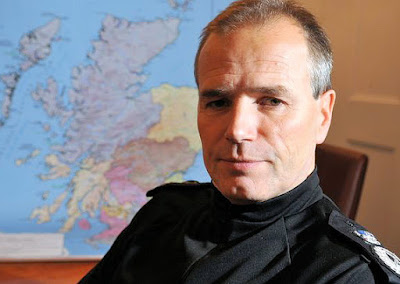
Top cop slapped down for interfering with sheriff. CHIEF CONSTABLE Sir Stephen House – in charge of Scotland’s single Police service Police Scotland  has been ‘slapped down’ by a senior judicial figure amid allegations he attempted to interfere with the role of Scottish Sheriffs.

Chief Constable House demanded a meeting with Scotland’s Sheriff Principal Brian Lockhart to voice his anger at comments made by Sheriff Robert H Dickson - who suggested a cover-up culture may exist within Scotland’s single Police Force.

However, after an angry exchange of letters between the two, Sheriff Principal Lockhart refused to meet with the top cop – and then went on to accuse Chief Constable House of failing to “recognise the role of the judiciary”.

The spat between Scotland’s most senior Police Officer and a senior judge was reported by 'The National' newspaper earlier today.

The row erupted after a case at in December at Airdrie Sheriff Court, which prompted Sheriff Robert H Dickson to jail PC David Carmichael for seven months after he was convicted of lying to protect a colleague who was drunk driving.

The row between Scotland’s top cop and members of the judiciary erupted after a case at in December at Airdrie Sheriff Court - which prompted Sheriff Robert H Dickson to jail PC David Carmichael for seven months after he was convicted of lying to protect a colleague who was drunk driving.

In his sentencing, Sheriff Dickson said the evidence “suggests that there may be a perceived culture that police officers are willing to prevent the arrest and prosecution of a colleague”.

He added: “If that culture exists, then every superior officer and anybody involved in the training of the police must ensure that it is stamped out forthwith.”

Chief Constable Sir House – angered at the comments of the sheriff -  demanded a meeting to discuss the case with Sheriff Dickson’s boss – Sheriff Principal Brian Lockhart, but was rebuffed.

In letters, House criticises Dickson for raising concerns about Police Scotland’s integrity in public and says he should have raised them directly with the police or through the Sheriff Principal.

But Sheriff Principal Lockhart wrote back to say: “Sheriff Dickson was entitled to draw from the facts before him that this cover-up may not have been a one-off incident”.

Sheriff Principal Lockhart added there is “ample evidence” to support Sheriff Dickson’s claims: “These were carefully phrased expressions of concern, justified by the evidence in the case before him.”

The sheriff said Dickson had every right to make the remarks, in order that “public confidence in the judicial system is not further damaged. To suggest otherwise fails to recognise the role of the judiciary”

He continues: “The integrity of the police force is not merely a matter of concern to senior police officers but to us all.”

The case related to in incident in 2010, when PC David Carmichael and fellow officer, probationer PC Justyna Niedzwiecka responded to a call about a drunk driver in Coatbridge, who turned out to be PC Daryl McKillion.

Instead of breathalysing the drunk policeman, Carmichael radioed in to control to say that nobody had answered the door.

Niedzwiecka reported the matter to a senior officer.

The call about McKillion had come from an off-duty detective who had seen the PC buy a bottle of whisky and get into a car.

McKillion, who was suffering from severe depression, took his life three weeks later.

Professor James Chalmers, Regius Professor of Law at the University of Glasgow, said House was attacking the messenger.

Chalmers said: “It may only be a problem of perception, but that’s still a real problem which he has a responsibility to do something about. The problem seems to be one of perception within the force rather than more generally, so there’s no room for the argument that the sheriff was making the problem worse by speaking out publicly.

“On the plus side, it’s good to see the independence of the judiciary defended so robustly, which is particularly important now that we have a single police force”.

Former policeman and Scottish Parliament Justice committee member John Finnie MSP defended Sir Stephen: “It is important there is a frank exchange of views. The independence of the judiciary must be guarded in any liberal democracy. I well understand the chief constable’s spirited defence, because the overwhelming majority of police officers act with integrity.

“In this case the standards were dropped and I don’t think the chief’s comments were at all unreasonable.”

A spokesperson for Police Scotland said: “The correspondence clearly sets out the chief constable’s rejection of the claim that such practice may have been widespread and his personal condemnation of any officer who wilfully neglects their duty and that all members of Police Scotland are expected to maintain the organisation’s highest professional standards.

“It also clearly sets out the respect for the independent role of the judiciary but does express concern that the original comments by Sheriff Dickson could have been misconstrued”.

Amid calls for a statement on the matter from Lord Justice Clerk Lord Carloway – who is currently acting Lord President – the Judicial Office refused to give any further comment.

Police Scotland was created by the Scottish Government in early 2013 after local policing across Scotland was scrapped in favour of a more easily ‘controlled’ and now highly politicised policing service steered by PR driven headlines to assist Scottish Ministers increasingly dodgy claims regarding crime statistics.

The current make up of the force – which has been subject to budget cuts, loss of key staff & has rumblings of low morale among  officers - has recently hit the headlines over alleged bullying within it’s ranks, the dodgy crime statistics, alleged targets for certain types of crimes, and support for questionable changes in the law backed by headline grabbing politicians and dodgy Crown Office prosecutors out to fiddle their own conviction rates.