Wednesday, March 11, 2009

Scots legal firm Brodies & Dean of Faculty threaten Parliament over asbestos claims legislation

Legislation designed to allow sufferers of medical illness related to asbestos exposure is to be challenged by the insurers, who have taken on legal representation in the form of Edinburgh legal firm Brodies LLP, and Richard Keen QC, the Dean of the Faculty of Advocates

Peter Cherbi’s “A Diary of Injustice in Scotland” reports the insurers idea is a judicial review against Parliament’s law making powers on this legislation :
Insurance firms with links to Scottish Government threaten legal challenge against Holyrood on asbestos claims reforms


richard keen qcDean of Faculty Richard Keen QC to fight asbestos claims law. Insurance firms and lawyers who have strong financial relationships with the Government and the Scottish Parliament, have teamed up in an attempt to defeat through the courts, the Damages (Asbestos-Related Conditions) (Scotland) Bill, expected to be passed this week at Holyrood, which will allow victims of asbestos related illnesses to claim compensation from insurers for suffering such conditions as lung scars, which are an indication of exposure to asbestos.

The Edinburgh legal firm of Brodies has been called in by several insurance companies, identified in the Sunday Herald newspaper as AXA, Norwich Union, RSA and Zurich, to mount a judicial review legal challenge to the Damages (Asbestos-Related Conditions) (Scotland) Bill, which goes through Parliament this week. The insurers legal position is that the legislation proposed will allow people to claim compensation who suffer from ailments associated with asbestos exposure, which the insurers currently don't classify as harmful.

Richard Keen as you all know, appeared in the media only a few weeks ago demanding that class actions be allowed in Scotland against banks, however I take it that class actions for the victims of asbestos claims are not included in his thinking at the time.

I wrote a previous article on the Parliamentary hearings, which saw lawyers representing the legal profession attempt to argue that ‘pleural plaques’, a condition which indicates exposure to asbestos, was “good for you”, here : Insurance lawyers argue against laws to help asbestos victims asserting part of their suffering 'is a good thing'
Law Society of ScotlandLaw Society’s insurers threaten Parliament. It is of note that two of those Insurers - Royal Sun Alliance (RSA) and Norwich Union are backers of the Law Society of Scotland's infamously corrupt Master Insurance Policy, which insures every member of the Scots legal profession including the dean of faculty himself, all other advocates, and even the legal firm of Brodies, who themselves have been caught up in claims made by clients against their negligence cover.

You can read more about the Law Society’s Master Insurance Policy here : The Master Insurance Policy, Marsh UK & corrupt practices by insurers of the Scots legal profession

A legal insider who was approached for comment said "It is true that all advocates are part of the Master Policy, although it is generally left to individual advocates to arrange their own Indemnity Insurance cover, albeit through the same firm. It is fair to say the dean of faculty is probably insured by the same insurers now challenging the asbestos claims legislation".

On being asked for his thoughts on revelations the same insurers deal with Government, he said : "It is my understanding that Marsh also arrange insurance cover for many public institutions, including Government. This insurance cover will also be underwritten by many of the same insurance firms who are affected in the asbestos damages bill now before Holyrood."

ScottishGovernmentScots Govt pays millions to insurers now threatening legal action. The Master Policy, run by Marsh UK, a subsidiary of the US Insurance giant Marsh, which itself has been caught up in insurance fixing scandals, amazingly shares among its clients, the current SNP controlled Scottish Government, which pays out millions of pounds of public money in Professional Indemnity Insurance cover for all Government Departments, many public bodies & quangos, and also the Justice Department's 'goliath' Government Legal Service for Scotland, staffed by 175 seriously well paid lawyers who under Justice Secretary Kenny MacAskill, also get their huge insurance subscriptions paid as expenses perks by the taxpayer.

You can read more about the Government Legal Service for Scotland (GLSS) and exactly what contribution they make to us here : Scottish Government's £10m in-house lawyers make their mark against legal reforms & public access to justice

scotparliScottish Parliament also has links to insurers. Even the Scottish Parliament itself is not immune from associations with the insurers who are now challenging the legislation to help asbestos victims. The 13 lawyers assigned to the Scottish Parliament from the GLSS are also themselves insured by the same insurers who are threatening legal action against Holyrood, and several departments of the Scottish Parliament also allegedly rely on insurance services provided by Marsh UK and the RSA for their own indemnity insurance !

An official from a consumer organisation today who declined to be named said : "One could speculate a great deal on whether such involvement at all levels of government by a single insurance firm, or cartel of insurers, may give rise to the conclusion by some there is an inherent conflict of interest going on, which may lead to ineffective or badly worded legislation being passed, or a general lack of will on the part of politicians to do the right thing for consumers, on the basis they don't want to upset their services provided by the Insurance community."

So, we have a situation where the same insurers who are now threatening legal action against Parliament to prevent asbestos sufferers receiving compensation, are at the same time, receiving millions of pounds in taxpayers money from Government, the Parliament, and many public authorities in Scotland, to ensure protection against financial claims for wrongdoing or negligence in public office. Is that right ? Is this an acceptable state of affairs ?

Is it ethical to pay millions of pounds of taxpayers money to the same insurers who are fighting proposals of reforms in the legislative process which are designed to make life better for those who are suffering fatal illness ?

Let us remind ourselves of the arguments put forward by the insurance companies lawyers in Parliament against asbestos sufferers :

Scots lawyers argue ‘asbestos related illnesses are good for you’ :


From the Sunday Herald :

Insurance giants to challenge new asbestos legislation

Firms will fight move to allow Scottish workers to claim £50m in damages

By Tom Gordon, Scottish Political Editor

BRITAIN'S BIGGEST insurers are planning an unprecedented legal challenge to a new law which would allow Scots workers to sue for asbestos exposure.

Four firms are preparing to seek a judicial review of the legislation, which is expected to pass its final stage at Holyrood on Wednesday with over-whelming cross-party support.

The law is designed to give workers the right to seek compensation for scars on the lung known as pleural plaques, which indicate exposure to asbestos, but which are themselves harmless.

It is understood the Edinburgh law firm Brodies is co-ordinating the judicial review on behalf of AXA, Norwich Union, RSA and Zurich.

The lawyers have already engaged two of Scotland's most formidable advocates to attempt to overturn the law at the Court of Session. Leading will be Richard Keen QC, dean of the Faculty of Advocates, and he will be assisted by Jane Munro.

If successful, the challenge would humiliate the government and dash the hopes of thousands of people negligently exposed to asbestos.

While the average payout would be around £8000 per person, legal costs would be twice as much again, and ministers estimate the total cost to private companies will top £50 million.

Frank Maguire of Thompsons Solicitors, which represents many Scots asbestos victims, said the court would be loath to reverse the will of parliament, especially as it was a clarification of the existing law.

He said: "We have researched all the angles and we are pretty confident that this will be overcome. We believe this judicial review will be defeated."

A spokesman for justice secretary Kenny MacAskill said: "We are entirely confident that this bill is within the legislative powers of the Scottish parliament. There is a moral imperative here that the SNP government in Scotland is acting on, even if Westminster is not. The House of Lords judgment means that people diagnosed with pleural plaques would have to live with the worry of possible future ill health for the rest of their lives, with no recourse to claim damages."

The judicial review will not surprise the Scottish government. During a consultation last year, insurance firms warned the proposed legislation was "wholly wrong", would open the flood-gates to similar dubious damage claims, and ought to be dropped. Some warned of potential legal challenges.

One of the main complaints against the legislation was that it would allow people to sue for a condition that causes them no physical harm: pleural plaques are symptomless, and do not develop into fatal mesothelioma. Allowing people to claim damages for something that hasn't damaged them is perverse and up-ends centuries of case law, critics argued.

But advocates of compensation said people who discover they have plaques suffer psychological stress.

In October 2007, after more than 20 years of people being able to claim compensation for plaques, the House of Lords ruled plaques were too trivial to merit damages. The Westminster government has so far accepted the ruling, but in Scotland asbestos victims persuaded the Scottish government to legislate to restore the "status quo ante", and let workers pursue damages for the condition once more. Wednesday's third-stage vote will see the culmination of that two-year campaign.

Last week, ministers were forced to issue a revised financial memorandum to the Damages (Asbestos-Related Conditions) (Scotland) Bill, after realising it had underestimated the likely cost of compensation.

Settling the backlog against private firms is expected to cost £11.8m to £20m, followed by annual costs of £3.7m-£7m.

Councils also face bills of around £850,000 to settle existing cases, and annual bills of around £500,000.

The Ministry of Defence, which runs the Rosyth Naval Dockyard, and the UK Department for Business, which inherited liability for defunct shipyards, face total costs of around £7m, a bill the UK government could choose to hand back to Edinburgh.

Christine O'Neill, of Brodies, added: "We have been instructed by a number of insurers to look at a challenge."

Monday, March 09, 2009

Law Society of Scotland demands Home Reports be abandoned

The Law Society has its feathers ruffled over Home Reports .. calling for a review of the system with a view to abandoning Home Reports, due to member legal firms being a tad upset over the lost business …

Alex Neil, Communities Minister however, said Home Reports are here to stay … (phew – Ed)

The Law Society’s release :

Society calls for full review of Home Reports

The Law Society of Scotland is calling for the Scottish Government to examine whether Home Reports should be suspended or even abandoned as part of an interim review following their introduction in December 2008.

Ross MacKay, of the Law Society's Conveyancing Committee, said: "The Society has consistently backed proposals for property buyers to have more and better information about their prospective purchases but voiced strong concerns about the inclusion of a compulsory single survey in Home Report packs, which are intended to help to improve housing stock in Scotland as well as better inform housebuyers.

"Now that Home Reports are a reality, we think the best way forward is to ensure that the new system is properly reviewed, and that the review can distinguish the effects from the recession from the effects of introducing the Home Report as far as possible. We are currently pressing the government to widen the scope of its interim review, which is intended to consider minor changes to the regulations, to include the options of suspending or abandoning Home Reports or at least the compulsory single survey.

"Practitioners are working to ensure they protect the interests of clients, whether buying or selling, in these difficult times.

"We are also asking conveyancing solicitors for feedback on their experience of Home Reports so far - is it a useful marketing tool or is it burdensome and discouraging sellers' entry to the market? We’d like our members to provide any figures for the number of reports that have been requested and follow up sales.

The Society's conveyancing committee has also had discussions with the Scottish Law Agents Society and supports their plan to monitor the new system and will be approaching the Solicitor Property Centres for input."

Saturday, March 07, 2009

MacAskill's Justice Dept demands Legal Complaints Commission whistleblowers be punished as leak inquiry confirmed

Serious problems over at the Scottish Legal Complaints Commission are revealed by Peter Cherbi’s “A Diary of Injustice in Scotland” law blog, where it seems whistleblowers at the SLCC are about to get some of the Jack Bauer treatment from Kenny MacAskill …

Witch-hunt at Legal Complaints Commission 'ends at MacAskill's doorstep' as Justice officials forced to confirm leaks inquiry

SLCC squareSLCC once again under fire. Officials of the Scottish Government's Justice Department have been forced to admit a series of interventions with the Scottish Legal Complaints Commission, over leaks to the media which depict the quango which handles consumer complaints against solicitors as more interested in protecting the legal profession than investigating actual complaints.

Culture of fear at SLCC Feb 2009Diary of Injustice reveals SLCC’s secret leaks inquiry. As I revealed earlier last month, a witch hunt at the Scottish Legal Complaints Commission began after the Justice Department ordered an investigation into leaks which began in August 2008, one of which gave details on non Law Society staff at the SLCC who were being subjected to an attempt by the Law Society and Scottish Government to 'drive them out of the Commission, ensuring total control of the 'independent' SLCC by the legal profession itself.

You can read last month’s report on the witch-hunt at the Scottish Legal Complaints Commission here : 'Culture of fear' grips Scottish Legal Complaints Commission as Justice Department witch-hunt threatens whistleblower staff over leaks to media

You can read my earlier report on the leaks as they began at the SLCC here : Law Society target ‘outsider staff’ for exit at Complaints Commission as lawyers undermine attempts at independent regulation

ScottishGovernmentScottish Government initially denied any involvement. The Scottish Government was asked to explain why it had ordered an investigation at the SLCC, however officials initially sought to play down and deny, several times, that any such investigation, or even discussions between the SLCC and Justice Department took place. A Justice Department official would only admit : "Staffing is a matter for the SLCC. If they have concerns about security of their information then it is a matter for Eileen Masterman and her team."

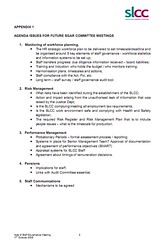
SLCC Staff Governance meeting 17 October 2008 - Justice Dept & Risk Management Leaked SLCC papers show Justice Department ordered investigation. However, after initial denials from the Justice Department, a further leaked document quoted an SLCC meeting where mentions of “Action and impact arising from the unauthorised leak of information that was raised by the Justice Dept.” exposed the Government's account of matters as completely false. Justice Department officials were then hurriedly forced to admit they had directly intervened with the SLCC and demanded immediate action to curb any information reaching the public. Officials sought to justify their attempt to clamp down on dissent at the quango by claiming that when the leaks be some of the staff under suspicion were still employed by Scottish Ministers.

A Justice Department official sought to play down the leaks investigation and protect the Justice Secretary from involvement, claiming : "I had a very brief discussion with Jane Irvine in her capacity as Scottish Legal Services Ombudsman last summer when it seemed from your website and an approach that you made to her that you were receiving information about the Ombudsman’s staff."

The official went on "These members of staff were at that time employed by Scottish Ministers so it was appropriate that I should be made aware of any concerns. Jane and I discussed whether or not we thought there had been a breach in security and we concluded that there had not been. We agreed that it was unlikely the information was coming from the Ombudsman’s office because it was completely inaccurate and we therefore decided to take no further action.That is why there are no minutes or notes"

However, the Justice Department official had no explanation to offer for how the entire episode came to light in leaked documents from the SLCC (more yet to be published) which reported a meeting where the Justice Department raised the leaks issue and demanded action.

A Justice Department official on being handed a copy of one of the leaked documents said : "I have no idea why the matter was raised at a meeting of the SLCC in October. I was not at the meeting."

However, an insider at the SLCC countered "That is pure rubbish from the Government's point of view. We were all warned to shut up after these discussions between Jane Irvine and the Government. The fact of the matter is there has been a lot of inequality between members of staff at the SLCC and the Law Society want everyone out who isn't under their thumb."

"Law Society staff who transferred over were being paid higher salaries and were to be considered for more senior positions. Whoever denies that is a liar and they know it, and even though you reported it there is still an undercurrent of mistrust between Law Society staff and non Law Society staff."

"What I said last year to you stands, the present Scottish Government are simply allowing the Law Society to dictate terms to the SLCC and we are not able to perform our role as was intended under the previous administration which created the SLCC in the first place."

MacAskill tight lippedJustice Secretary Kenny MacAskill must have known his department intervened with SLCC. A senior source within the Government said however, he doubted the Justice Department’s explanation on the matter and pointed to the leaks of documents, and reports of bitter infighting within the Commission as a direct challenge to the reliability of the Government’s explanations.

He said “I doubt this was left to an official to clear up, considering there is a great deal of interest in your reporting of the matter and criticisms of regulation of the legal profession”.

“I understand the Cabinet Secretary for Justice knows all about what took place and probably wants to shut the whole discussion on leaks down because ultimately the quango is his responsibility and the people there are at his appointment.These reports of problems at the Commission are making life very difficult for those who want to keep control of regulating lawyers for themselves.”

“Clearly responsibility for this rests with Kenny MacAskill himself no matter who tries to throw themselves into the path of the oncoming train and the Law Society has to be stopped from gaining full control of the Commission if the public are to be properly protected”

The insider went on to refer to claims in the Justice Department’s statement there were “no minutes or notes” of the Government’s intervention with the SLCC on the leaks issue.

He said : “It is preposterous to claim there are no minutes or notes of such a matter given the importance of it and implications for the SLCC and the Justice Department and why did they even put such a thing in their statement. I regret to say I sense this issue is being covered up deliberately to protect people here in Government, at the SLCC and probably at the Law Society.”

Jane IrvineSLCC Chairman Jane Irvine. The Commission’s Chairman, Jane Irvine was asked for comment on the situation, but refused. This does seem to leave the obvious impression the Commission is indeed in crisis, amid staffing problems, threats of resignation by its own members unless they get increased financial perks & insurance protection, and the intense layer of secrecy which the Commission has been operating under, seeking to blank out most Freedom of Information requests specifically to law journalists while releasing the same information to elements of the legal profession.

A brief history of leaked reports relating to the Scottish Legal Complaints Commission :

The story that started the ball rolling on leaks at the SLCC : Law Society target ‘outsider staff’ for exit at Complaints Commission as lawyers undermine attempts at independent regulation

Scottish Legal Complaints CommissionSLCC members demanded more perks or would resign. You can read an earlier article where the Commission members threatened their resignation over lack of perks and insurance cover, here : Legal Complaints Commission in crisis amid funds shortage & resignation threats over lack of insurance protection. The resignation threats came even though the SLCC had received a whopping £2 million of public money, and yet more was being paid in by the Scottish Government for demanded perks, as I reported here : MacAskill silent on taxpayers £2million 'write off' to lawyers quango as Complaints boss reveals Law Society defaulted on levies

I also reported that insiders to the Commission don’t even believe the SLCC is up to the job because of too much interference from the legal profession and a lack of will at the Scottish Government to protect it’s intended role, which you can read here : Insiders attack MacAskill's Legal Complaints Commission as 'a front' while millions go on quango which refuses to investigate crooked lawyers

Lets also not forget the SLCC seems to be so mired in problems it has to rely on a veil of secrecy to continue its operations, as I reported here : FOI disclosures censored to law journalists as MacAskill’s legal complaints commission prefers secrecy to public accountability

MacAskill demands 'whistleblower hunt' at Scottish Legal Complaints Commission

Problems over at the Scottish Legal Complaints Commission continue to be reported by Peter Cherbi’s “A Diary of Injustice in Scotland”, where it seems some kind of witch-hunt is on for whistleblowers who spilled the beans on the less than inspiring SLCC’s performance as the single gateway for complaints against the legal profession.

In fact come to think of it, the SLCC doesn’t seem to be doing much at all for the nearly £5million pounds pumped into it … (scroungers – Ed)

Witch-hunt at Legal Complaints Commission 'ends at MacAskill's doorstep' as Justice officials forced to confirm leaks inquiry

SLCC squareSLCC once again under fire. Officials of the Scottish Government's Justice Department have been forced to admit a series of interventions with the Scottish Legal Complaints Commission, over leaks to the media which depict the quango which handles consumer complaints against solicitors as more interested in protecting the legal profession than investigating actual complaints.

Culture of fear at SLCC Feb 2009Diary of Injustice reveals SLCC’s secret leaks inquiry. As I revealed earlier last month, a witch hunt at the Scottish Legal Complaints Commission began after the Justice Department ordered an investigation into leaks which began in August 2008, one of which gave details on non Law Society staff at the SLCC who were being subjected to an attempt by the Law Society and Scottish Government to 'drive them out of the Commission, ensuring total control of the 'independent' SLCC by the legal profession itself.

You can read last month’s report on the witch-hunt at the Scottish Legal Complaints Commission here : 'Culture of fear' grips Scottish Legal Complaints Commission as Justice Department witch-hunt threatens whistleblower staff over leaks to media

You can read my earlier report on the leaks as they began at the SLCC here : Law Society target ‘outsider staff’ for exit at Complaints Commission as lawyers undermine attempts at independent regulation

ScottishGovernmentScottish Government initially denied any involvement. The Scottish Government was asked to explain why it had ordered an investigation at the SLCC, however officials initially sought to play down and deny, several times, that any such investigation, or even discussions between the SLCC and Justice Department took place. A Justice Department official would only admit : "Staffing is a matter for the SLCC. If they have concerns about security of their information then it is a matter for Eileen Masterman and her team."

SLCC Staff Governance meeting 17 October 2008 - Justice Dept & Risk Management Leaked SLCC papers show Justice Department ordered investigation. However, after initial denials from the Justice Department, a further leaked document quoted an SLCC meeting where mentions of “Action and impact arising from the unauthorised leak of information that was raised by the Justice Dept.” exposed the Government's account of matters as completely false. Justice Department officials were then hurriedly forced to admit they had directly intervened with the SLCC and demanded immediate action to curb any information reaching the public. Officials sought to justify their attempt to clamp down on dissent at the quango by claiming that when the leaks be some of the staff under suspicion were still employed by Scottish Ministers.

A Justice Department official sought to play down the leaks investigation and protect the Justice Secretary from involvement, claiming : "I had a very brief discussion with Jane Irvine in her capacity as Scottish Legal Services Ombudsman last summer when it seemed from your website and an approach that you made to her that you were receiving information about the Ombudsman’s staff."

The official went on "These members of staff were at that time employed by Scottish Ministers so it was appropriate that I should be made aware of any concerns. Jane and I discussed whether or not we thought there had been a breach in security and we concluded that there had not been. We agreed that it was unlikely the information was coming from the Ombudsman’s office because it was completely inaccurate and we therefore decided to take no further action.That is why there are no minutes or notes"

However, the Justice Department official had no explanation to offer for how the entire episode came to light in leaked documents from the SLCC (more yet to be published) which reported a meeting where the Justice Department raised the leaks issue and demanded action.

A Justice Department official on being handed a copy of one of the leaked documents said : "I have no idea why the matter was raised at a meeting of the SLCC in October. I was not at the meeting."

However, an insider at the SLCC countered "That is pure rubbish from the Government's point of view. We were all warned to shut up after these discussions between Jane Irvine and the Government. The fact of the matter is there has been a lot of inequality between members of staff at the SLCC and the Law Society want everyone out who isn't under their thumb."

"Law Society staff who transferred over were being paid higher salaries and were to be considered for more senior positions. Whoever denies that is a liar and they know it, and even though you reported it there is still an undercurrent of mistrust between Law Society staff and non Law Society staff."

"What I said last year to you stands, the present Scottish Government are simply allowing the Law Society to dictate terms to the SLCC and we are not able to perform our role as was intended under the previous administration which created the SLCC in the first place."

MacAskill tight lippedJustice Secretary Kenny MacAskill must have known his department intervened with SLCC. A senior source within the Government said however, he doubted the Justice Department’s explanation on the matter and pointed to the leaks of documents, and reports of bitter infighting within the Commission as a direct challenge to the reliability of the Government’s explanations.

He said “I doubt this was left to an official to clear up, considering there is a great deal of interest in your reporting of the matter and criticisms of regulation of the legal profession”.

“I understand the Cabinet Secretary for Justice knows all about what took place and probably wants to shut the whole discussion on leaks down because ultimately the quango is his responsibility and the people there are at his appointment.These reports of problems at the Commission are making life very difficult for those who want to keep control of regulating lawyers for themselves.”

“Clearly responsibility for this rests with Kenny MacAskill himself no matter who tries to throw themselves into the path of the oncoming train and the Law Society has to be stopped from gaining full control of the Commission if the public are to be properly protected”

The insider went on to refer to claims in the Justice Department’s statement there were “no minutes or notes” of the Government’s intervention with the SLCC on the leaks issue.

He said : “It is preposterous to claim there are no minutes or notes of such a matter given the importance of it and implications for the SLCC and the Justice Department and why did they even put such a thing in their statement. I regret to say I sense this issue is being covered up deliberately to protect people here in Government, at the SLCC and probably at the Law Society.”

Jane IrvineSLCC Chairman Jane Irvine. The Commission’s Chairman, Jane Irvine was asked for comment on the situation, but refused. This does seem to leave the obvious impression the Commission is indeed in crisis, amid staffing problems, threats of resignation by its own members unless they get increased financial perks & insurance protection, and the intense layer of secrecy which the Commission has been operating under, seeking to blank out most Freedom of Information requests specifically to law journalists while releasing the same information to elements of the legal profession.

A brief history of leaked reports relating to the Scottish Legal Complaints Commission :

The story that started the ball rolling on leaks at the SLCC : Law Society target ‘outsider staff’ for exit at Complaints Commission as lawyers undermine attempts at independent regulation

Scottish Legal Complaints CommissionSLCC members demanded more perks or would resign. You can read an earlier article where the Commission members threatened their resignation over lack of perks and insurance cover, here : Legal Complaints Commission in crisis amid funds shortage & resignation threats over lack of insurance protection. The resignation threats came even though the SLCC had received a whopping £2 million of public money, and yet more was being paid in by the Scottish Government for demanded perks, as I reported here : MacAskill silent on taxpayers £2million 'write off' to lawyers quango as Complaints boss reveals Law Society defaulted on levies

I also reported that insiders to the Commission don’t even believe the SLCC is up to the job because of too much interference from the legal profession and a lack of will at the Scottish Government to protect it’s intended role, which you can read here : Insiders attack MacAskill's Legal Complaints Commission as 'a front' while millions go on quango which refuses to investigate crooked lawyers

Lets also not forget the SLCC seems to be so mired in problems it has to rely on a veil of secrecy to continue its operations, as I reported here : FOI disclosures censored to law journalists as MacAskill’s legal complaints commission prefers secrecy to public accountability

Wednesday, March 04, 2009

Law Society of Scotland is ‘World’s Worst Regulator’

The Law Society of Scotland, as we all know, isn’t the world’s best regulator .. hence all the trouble over the years it has caused those among the profession who keep their nose clean, by also keeping the bad apples in the bunch.

Peter Cherbi’s “A Diary of Injustice in Scotland” law blog goes a little further into the Law Society’s performance, and finds its actually one of the world’s worst regulators, with the same faces still at the Law Society despite all the scandals over the years ... (which would be like keeping Sir Fred Goodwin on at the RBS after its collapse, wouldn't it ? - Ed) …

Toxic levels of complaints, poor standards of service & soaring fraud by solicitors makes Law Society of Scotland 'World's worst regulator'

The 4m Crooked Lawyer (John McCabe) - Daily Record 1991Crooked lawyers give Scotland a bad name. While the attention of most remains focussed on the crisis in the banking system, the problems which have caused the collapse of our great financial institutions are nothing new to Scotland's legal sector. Year in year out, clients have been losing millions of pounds of their money to , ambitions, greedy, and downright crooked lawyers over the past couple of decades, and the regulator responsible, the Law Society of Scotland, has done little or nothing about it.

Tangled Web of deceit that ensared 4million - Scotlsman 28 November 1991A crooked lawyer’s tangled web of deceit. During 1991, one of the most famous cases of fraud by the Scots legal profession occurred with revelations that John McCabe, a solicitor working at the now defunct Edinburgh firm of Scott Moncrieff & Dove Lockhart, operated a multi million pound fraud scam against clients & banks, which ultimately was discovered after he became careless and so entrenched in deceit & debt, there was simply no place left to run (although he did try running to Uruguay). While clients stood ruined, and banks took huge losses, the Law Society of Scotland could only watch on as the press of the day mauled both the legal profession and the poor standards of regulation which allowed McCabe to get away with what he did, and ultimately, McCabe was jailed for 10 years for his crimes.

Just imagine for a minute, if every one of the 10,000 lawyers in Scotland stole £4million from their clients. What would be done about it ? .. well nothing much, as long as the Law Society has anything to do with regulating lawyers …

Lawyers left to make good the cost of colleague's dishonesty - Scotsman 1991Law Society Chief Kenneth Pritchard failed on reforms. Amid the recriminations of the McCabe case, and the costs of compensating his victims, the Law Society's Kenneth Pritchard (now a Sheriff), promised reforms to ensure no repetition, and that standards would rise in Scotland's legal profession to ensure public confidence remained in solicitors.

Kenneth Pritchard : “The aim of the new rules … is not to help the legal profession shrug off an obligation to meet losses, but to reduce the amount the Guarantee Fund might have to repay. "It should become much more difficult for solicitors to defraud clients. “There is not a reluctance among solicitors to pay this money. there is an acceptance that we must do so to maintain the good name and standing of the profession.". What good name ?

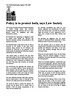
Policy is to protect both says Law SocietyLaw Society Chief Pritchard performs a u-turn & orders legal firm to drop 'crooked lawyers' case. However, three years on in 1994, the same Law Society Chief, Kenneth Pritchard who had promised reforms to prevent crooked lawyers hurting their clients, was revealed to have personally intervened in a case of litigation against a firm of crooked lawyers, ordering the clients solicitors to withdraw from acting, letting the crooked lawyers off the hook in a policy of protection for crooked lawyers.

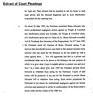
Extract of Court PleadingsCourt documents revealed Law Chief's duplicity. Kenneth Pritchard wrote to legal firm Skene Edwards advising them to withdraw from acting in the case, and that letter was subsequently discussed in the Scottish Parliament debate chamber by Cabinet Secretary for Business John Swinney.

You can read more about how the Law Society of Scotland and Kenneth Pritchard did nothing to stem the rising tide of crooked lawyers, and actually closed ranks with crooked lawyers to protect them from punishment while denying clients access to justice, here : Law Society intervention in claims 'commonplace' as ex Chief admits Master Policy protects solicitors against clients

After the exploits of McCabe, the Law Society of Scotland professed to have 'cleaned up Scotland's legal profession, but much worse was to come as the following demonstrates.

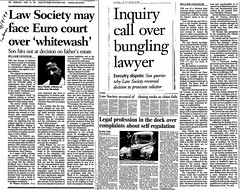
Scotsman coverage of some of the stories relating to Andrew PenmanBorders lawyer Andrew Penman became Scotland's most famous crooked lawyer. From 1994 to the present day, my own battle with the Law Society of Scotland ended up in the press, showing yet again the Law Society of Scotland would simply close ranks with crooked lawyers to protect them from client complaints & financial claims for dishonesty & fraud. Indeed, the Law Society went out of its way in a determined effort to prevent me from obtaining legal representation and access to the courts to pursue Penman and his legal firm Stormonth Darling solicitors, for the untold damage it did to my family. Nothing then had changed - there were still plenty of crooked lawyers in business, and the Law Society of Scotland still covered up for crooked lawyers no matter what.

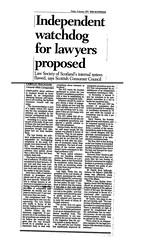
Scotsman 8 January 1999 Independent watchdog for lawyers proposedProposals since 1999 to bring independent regulation to lawyers were blocked by Law Society. The legacy of Andrew Penman, and the cover up by the Law Society of his actions was felt by all solicitors just as in the McCabe case, and assisted with the drive to bring about independent regulation of lawyers and end the closed shop operated by the Law Society of Scotland that allowed thousands of complaints to be binned while investigations were whitewashed.

REVEALED - Top Lawyer at the centre of 12 negligence claims2006, and still plenty crooked lawyers in Scotland. Things are now so bad in Scotland that many solicitors & legal firms have 'toxic levels of client complaints & claims' for poor legal service, rendering the use of Scots solicitors a dangerous game of Russian roulette for consumers, where selecting the worst of a bad bunch can see you end up financially ruined and your lives destroyed by a greedy lawyer out to take as much as possible, safe in the knowledge his regulator, the Law Society of Scotland, will do nothing to help members of the public.

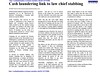
Cash Link to Law Chief StabbingLawyers staged mafia hit on one of their own. Indeed the corruption of Scotland's legal profession became so entrenched, the Law Society's own Chief Accountant, Leslie Cumming, was subject to a mafia hit, staged by crooked lawyers in an attempt it has since been claimed to put off investigations into crooked lawyers .. and while the then Law Society Chief Douglas Mill was busy blaming clients for the attack on Cumming, it became clear to all the motives for the attack came from within the ranks of Scotland's solicitors, who had become so evil they would consider and use murder hits to escape justice for their vast network of corruption against clients.

EXCLUSIVE Lawyer sued for 1million 2007, and even more crooked lawyers. The media coverage of countless scandals within the Scots legal establishment, and the Law Society’s seeming ability to whitewash any crooked lawyer, no matter the crimes they had committed, ultimately brought about the creation of legislation passed in 2007 to 'improve' regulation of the legal profession, however the 'independent' Scottish legal Complaints Commission which was created as a result of the LPLA (Scotland) Act 2007 has since been co-opted by the Law Society, and is mired in many scandals itself, as the legal profession fights back to retain its crooked regulatory powers over crooked lawyers.

Let us finally take a look at some of the people who have perpetuated this disgraceful state of affairs the Scots legal services market finds itself in :

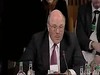
Douglas Mill at the Scottish ParliamentDouglas Mill, ex-Chief Exec. of the Law Society. Douglas Mill, recently famed on television for supporting Sir Fred Goodwin who brought RBS to its knees, made no bones about it, he had no time for clients who complained against crooked lawyers, and saw it as his mission to interfere in complaints & financial claims against crooked lawyers. Mill horrendously hounded clients who dared make a complaint against a solicitor, and personally saw to it that attempts at legal action against solicitors failed at every turn, even demanding legal aid be refused to anyone seeking to take a lawyer to court.

Philip Yelland - Director of Regulation - Law Society of ScotlandPhilip Yelland, Head of Client Relations. During all this time, and all these scandals, one man has been the key to ‘Client Relations’ at the Law Society of Scotland, Mr Philip Yelland, who has presided over scandal after scandal, where curiously many of the crooked lawyers got off the hook, or investigations were simply whitewashed, while the Law Society saw to it members of the public were denied access to justice and a solicitor to try and pursue the thousands of McCabes and Penmans for the damage they did to many clients.

Michael Clancy - Director of Law Reform - Law Society of ScotlandMichael Clancy, Director of Law Reform. Despite the hundreds of ‘crooked lawyer’ scandals in the last two decades, and all the promises of reform from the Law Society itself, nothing has been done to help thousands of people with outstanding cases against crooked lawyers, and some at the Law Society such as Michael Clancy, have come down hard against any proposals to bring in Parliament or new legislation to help clean up the legal profession’s sins of the past.

You can read my own proposals, in effect. a “Truth & Reconciliation” proposal for the Law Society’s sins of the past here : The polluter pays - Why cleaning up lawyers sins of the past would be good for the public & legal profession alike

We are now at a point where no matter the scale of corruption in Scotland’s legal services market, nothing will bring the reforms and consumer protection that all Scots and consumers of legal services in this country should have. The feeling now by many is that when someone goes to a lawyer, the odds are they are going to get ripped off, and with lawyers experiencing a marked downturn in legal business, levels of fraud against clients through faked up legal fees and menacing demands for expenses on work not carried out are sharply rising.

If we are to have good regulation of legal services in Scotland, the Law Society of Scotland and those associated with it, presently or formerly, cannot be allowed anywhere near such a body, as the crop of scandals at the Scottish Legal Complaints Commission show very clearly.

As long as we have a Justice Secretary who says he will protect lawyers from much needed reforms, the Scots public will always take second place to the criminal element of society that walks around with a Law Society of Scotland membership badge, professing to offer the best in legal services when in reality they offer levels of toxicity to consumers that Chemistry could never hope to define.

Sunday, March 01, 2009

Dundas & Wilson to make 50 staff redundant as recession bites away at legal business in Scotland

Dundas & Wilson, one of Scotland’s larger law firms, plans to shed 50 jobs as the credit crunch and crumbling business in the legal sector bites.

Since there’s not much incentive for anyone to use legal services in Scotland these days, things can only get worse in the legal sector unless standards of service and more competitive fees for legal work come to be implemented …

The Scotsman reports :

Scotland's biggest law firm to shed jobs, from junior staff to partners

Published Date: 28 February 2009
By Jane Bradley and Christopher Mackie

PARTNERS at Dundas & Wilson are to lose their jobs as part of a swathe of cutbacks at Scotland's biggest law firm.

The practice is to axe up to 50 jobs across its three offices as work dries up amid the economic downturn.

Dundas & Wilson (D&W), which has its head office in Edinburgh and two other bases in Glasgow and London, added that it had already asked some of its 35 graduate trainees due to start in 2009 to defer their positions for 12 months.

The firm's managing partner, Donald Shaw, said the cuts would be spread proportionally throughout its three offices – which have a combined headcount of 669 staff – and would be evenly split between lawyers and back office staff.

It is understood that a "small number" of partners are among those set to lose their jobs.

Edinburgh, where 308 of the D&W staff are based, is likely to see around 23 job losses, while Glasgow and London, which employ 168 and 193 workers respectively, will lose around 14 staff each.

Corporate law has been particularly hard hit in the downturn, Mr Shaw said, because of the lack of mergers and acquisitions activity in a climate of tough bank lending criteria. He added that the firm's real estate division was also badly affected.

He said: "We have not taken this decision lightly but unfortunately we must act to rebalance our capacity with our predicted levels of future business. This is a reflection of market conditions. The economy is not looking like it is improving and we need to accept that.

"There are a small number of partners affected; these cuts are coming across the whole business."

He added: "Almost every area (of the business] has been hit, except restructuring services and litigation."

However, Mr Shaw said the firm may be better off than many of its competitors, due to its top-end client base of blue-chip companies, many of which are continuing to do deals. It is understood that the entire corporate transaction market is down 60 per cent on last year.

A total of nine trainees due to start in September have agreed to defer their places for a year.

Mr Shaw said: "They need to have training, and if we think workflows are down, it is not a good time for them to learn. Clients are not very happy at this crucial time to have very junior lawyers working on their cases."

In the 12 months to the end of April 2008, D&W reported 23 per cent growth in annual revenues to £74.8 million.

Mr Shaw added: "We had a very strong year last year but in the current climate, it is very difficult. It is more what is going to happen than what is happening now."

He refused to comment on how steep the drop in turnover would be for the year to the end of April 2009.

The company said that a 30-day consultation process was under way involving the staff who would be affected by the cuts.

Last week, international legal firm DLA Piper announced it was to shed up to 20 jobs in its Glasgow and Edinburgh offices as part of a UK-wide redundancy programme.

That news came just days after Morton Fraser said it would make "single figure" job cuts in its private client business. Both cited current market conditions as the reason for the losses.

Earlier this month, the London "magic circle" firm Allen & Overy cut 47 partners as it announced a total of 247 redundancies as part of a £44 million restructuring programme.

MacAskill fails to select successor to HMIC’s Paddy Tomkins as Police Chiefs demand action

Scotland’s Justice Secretary Kenny MacAskill cant get anything right these days .. and that includes appointing a successor to Her Majesty's Inspectorate of Constabulary (HMIC), where Paddy Tomkins, former Chief Constable of Lothian & Borders Police, will exit his position in April.

The Scotsman reports :

Stop delaying on watchdog, police chiefs tell MacAskill

Published Date: 28 February 2009
By Michael Howie

SCOTLAND'S police chiefs have raised deep concerns with Kenny MacAskill, the justice minister, over delays in his appointing a new chief inspector of constabulary.

Paddy Tomkins relinquishes the post in April, but no replacement is being sought; ministers want to consider the future role and shape of Her Majesty's Inspectorate of Constabulary (HMIC) before appointing a new head.

However, The Scotsman has learned that chief constables and police board conveners are seriously concerned at the delay, fearing it could harm efforts to improve the police service.

They have written a strongly worded letter to the cabinet secretary urging him to find a suitable replacement soon.

The matter was discussed at a meeting between the Association of Chief Police Officers in Scotland and a forum of police board conveners last week.

One of the chief inspector's main roles is to provide professional advice to help ensure police boards pick the right candidates for senior officer posts.

The chief inspector's advice is usually followed by police boards, and in turn the justice minister, who rubber-stamps the move.

Councillor Iain Whyte, convener of the Lothian and Borders Joint Police Board, said: "We are going through an appointment process for an assistant chief constable and we will be able to count on Mr Tomkins' advice.

"But it must be very concerning for other forces that may have vacancies coming up."

The HMIC's assistant chief inspector, Bill Skelly, is expected to assume Mr Tomkins's duties while the Scottish Government decides on a successor.

But concerns have been raised over Mr Skelly's relative lack of experience within the watchdog. The former Lothian and Borders assistant chief constable was seconded to the inspectorate in December 2008.

Mr Tomkins, former chief constable of Lothian and Borders, announced in November 2008 that he was leaving the post to "seek new challenges".

He was appointed in 2006 for a three-year term on an annual salary of £173,000.

The letter to Mr MacAskill warns that failure to replace Mr Tomkins with someone who has sufficient experience would damage the HMIC's credibility.

A Scottish Government spokeswoman said: "The assistant chief inspector is in post. All the necessary duties of HMICS will be carried out.

"The Independent Review of Policing, which was carried out by Mr Tomkins, makes a number of recommendations that would influence the future role of the inspectorate.

"We will be discussing these issues with stakeholders before making decisions about appointing a new chief inspector."

Kenny MacAskill’s 'ministerial aide' Nigel Don moves house to get £688 a month mortgage perk from Parliament

Justice Secretary Kenny MacAskill’s parliamentary liaison officer – Nigel Don MSP, has like a few others in the Scottish Parliament decided to milk the system and get the taxpayer to pay his mortgage.

Mr Don is a member of Holyrood’s Petitions Committee and the Justice Committee … rewards perhaps for ‘gumming up’ the opposition or any potential petitions his boss doesn’t quite like ?

The Sunday Herald reports :

Ministerial aide moves house ... and bills taxpayers £688 a month for capital flat

A Ministerial aide has admitted “coordinating” £765,000 in property deals to claim a controversial mortgage allowance that was about to be scrapped, reveal Paul Hutcheon and Tom Gordon.

A MINISTERIAL aide has admitted "coordinating" £765,000 in property deals to claim a controversial mortgage allowance that was about to be scrapped. Nationalist MSP Nigel Don was unable to claim mortgage interest on a flat in Edinburgh as he lived in Dundee - which was too close to Holyrood for the subsidy.

But the SNP politician sold his family home of 19 years, bought a house in Aberdeen and then used his new found eligibility for the taxpayer-funded perk to buy a property in the capital.

The deals were completed a month before an independent review of MSP allowances backed the abolition of the mortgage scheme last year.

Don told the Sunday Herald that his property move were a necessary part of a plan to boost the SNP's profile in marginal seats - with Dundee already represented by the SNP, the Nationalists wanted him to cover Aberdeen.

The MSP, who earns £55,381 a year, also described his publicly-funded mortage perk as "one of the compensations" of the job.

The revelations further discredit the Edinburgh Accommodation Allowance (EAA), which allows MSPs outwith commuting distance of the capital to charge the public for mortgage interest on a property in Edinburgh. The scheme is to be abolished in 2011.

The Sunday Herald can reveal that Don, elected to serve the North East in 2007, only became eligible for mortgage interest after a flurry of property deals.

He and his wife lived in Dundee's west end between 1989 and 2008.

Documents from Registers of Scotland show that Don, an aide to Justice Secretary Kenny Macaskill, made himself eligible for the allowance after selling his family home for £290,000 in January 2008.

Within the space of three weeks, he bought a £310,000 property in Aberdeen - which is within the radius of support for mortgage interest - and purchased a £165,000 flat in Edinburgh.

He then started to bill the public for the mortgage costs on his capital flat on St Clair Road.

The Justice Committee member's transactions were completed a month before an an independent review backed abolition of the mortage scheme.

MSPs have since voted to scrap the system in 2011 and no new entrants will be allowed to enter the scheme.

Don, who claimed £3281.85 in hotel costs before he became eligible for mortgage costs, can now draw on an £11,900 allowance to cover interest payments.

The Parliament's expenses database shows that in February last year, the month before the scheme was flagged up for abolition, Don started to claim £688 a month in mortgage costs.

In the same month, the former Dundee councillor billed the taxpayer £5089 in other costs associated with his move to Edinburgh.

He claimed £1057 for conveyancing, £1499 in legal fees, £329 in removables, as well as £223 in surveyors' costs.

As an MSP for the North East, Don is elected to represent nine constituencies in a region that runs from Dundee to Fraserburgh.

However, in an interview with the Sunday Herald, Don said he moved to Aberdeen to focus on the three constituencies that do not have an SNP base.

He said: "There are nine constituencies in the north east region, and the SNP has constituency members in six of them. The three which we don't are West Aberdeenshire, Aberdeen Central and Aberdeen South. At a practical level, my job is to cover those kinds of areas.

"Those are the areas where the party is expecting me to do the work, because the party already has cover in the other constituencies."

Asked whether he was aware that his move to Aberdeen would make him eligible for the mortgage perk, he said: "There's no doubt at all that, having established that if we were moving to Aberdeen, we would be eligible for some kind of accommodation allowance in Edinburgh, yes. Plainly we were aware of that. And as you say, the two were coordinated."

On whether he thought claiming mortgage interest was a sweetener for moving to Aberdeen, he said: "I would describe it as one of the compensations."

His property shake-up follows LibDem MSP Jamie Stone also signing up to the mortgage interest scheme at the 11th hour.

Stone stayed in a bed-and-breakfast in Edinburgh until early 2008, when he bought a £180,000 New Town flat weeks before the independent report was published.

Don's use of the allowances scheme emerged last week after the publication of Holyrood expenses, which the Sunday Herald can reveal also laid bare the practice of MSPs doling out public money to friends and colleagues.

A spokesman for the Taxpayers' Alliance said: "It is shocking to that any MSP could think it was acceptable to take advantage of taxpayers' generosity in this way. It also seems a remarkable coincidence that this gentleman should move so close to the publication of the review."

PAUL HUTCHEON'S FULL INTERVIEW WITH NIGEL DON

PAUL HUTCHEON (PH): "Some cynincs might say your property dealings were made to make yourself eligible for mortgage interest."

NIGEL DON (ND): "If you wanted to take that line, it would be very difficult for me to tell me you were wrong, but you are wrong. What you will realise, Paul, is that the North-East region stretches from Dundee to Fraserburgh. I was elected, much to my surprise, from my Dundee home in the very western tip of that area. It is an area far too big to cover from where I lived. What my wife and I did was to move up to Aberdeen, quite simply, to be able to do the job.

"I think you will also recognise the practical politics of that. There are nine constituencies in the north east region, and the SNP has constituency members in six of them. The three which we don't are West Aberdeenshire, Aberdeen Central and Aberdeen South. At a practical level, my job is to cover those kinds of areas."

PH: "So by moving to Aberdeen you were setting up a political base?"

ND: "Those are the areas where the party is expecting me to do the work, because the party already has cover in the other constituencies."

PH: "Were you aware that by moving to Aberdeen you were making yourself eligible for mortgage interest support?"

ND: "There's no doubt at all that, having established that if we were moving to Aberdeen, we would would be eligible for some kind of accommodation allowance in Edinburgh, yes. Plainly we were aware of that. And as you say, the two were coordinated."

PH: "Was claiming mortgage interest a sweetener for moving to Aberdeen?"

ND: "I would describe it as one of the compensations, Paul...There was no way I could operate from Dundee."

PH: "What would have prevented you from moving from Dundee to Aberdeen, but continuing to claim hotel expenses in Edinburgh, rather than mortgage interest?"

ND: "There would have been nothing physically to prevent me from doing so. Working out of a hotel for long is desperately difficult...it's not a very good way of doing a job. Secondly, by the time you have been there for a while, it quickly adds up to same sort of bills."

PH: "Your property dealings were completed weeks before the Langlands report backed the abolition of the mortgage interest scheme. Is this just a coincidence?"

ND: "I was just getting on with what had to be done. I was working within the rules of the time."

PH: "What did you mean when you said claiming mortgage interest was a 'compensation'?"

ND: "You suggested it was a benefit, and I downgraded it to a compensation."

PH: "Is it not fair to say that, if Labour had held Dundee West, then you would have continued to live where you were, as there would not have been an SNP base there?"

ND: "I think that's a perfectly fair view of what might have been. It's a perfectly rational view."