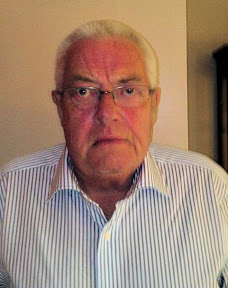
EVERY so often a case of long term litigation comes along which demonstrates a clear bias in Scotland’s justice system where hearing after hearing & ruling after ruling show a pattern forming in favour of vested interests. One such case, which began in 1996, is that of Arakin Ltd, a construction company based in the West of Scotland who were sued by an Edinburgh law firm, Tods Murray for what can only be described as an enormous sum, allegedly due in fees to Arakin. The history of Arakin Ltd’s dispute with Tods Murray online and the opening page summarises the salient points clearly and concisely. It can be found at Tods Murray v Arakin
Fighting his corner against the might, and many would say, undue influence of a law firm with links to politicians & senior figures in the Scots legal establishment, Andrew McNamara, owner of the now sequestrated Arakin Ltd, was made a “Vexatious Litigant” by the courts in what some legal observers have described “as an attempt to prevent a valid pursuit of justice via the courts against the vested interests of a law firm.”
Now, after SIXTEEN YEARS, the case is about to be heard again, by way of an appeal against a judgement issued by Lord Woolman earlier this year, who perhaps unsurprisingly, found in favour of the law firm.
Lord Woolman has recently featured in reports on Scottish Law Reporter where, coincidentally or not, additional cases heard by the same judge involving party litigants against establishment figures have taken years to be heard, and have seen every opportunity been afforded to vested interests while the rights of party litigants have been trampled.
Clearly, questions must now be asked as to why Scotland’s courts are consistently protective of the vested interests of the legal profession & establishment figures, and instead of branding members of the public as “Vexatious Litigants” just to curtail someone’s access to justice, efforts must be made to ensure justice is applied fairly to all, rather than the now expected one sided manner handed down in Scotland accompanied by lengthy opinions overtly hostile to party litigants shunned by court personalities who would rather keep their friends in legal & financial circles happy & in the money.
Janette McNamara, wife of Andrew McNamara has now spoken of how Scotland’s justice system has treated her family. Mrs McNamara writes today in Scottish Law Reporter :
By Janette McNamara,
YOU can make a dispute as complicated as you wish, but often it’s quite simple.
Look back at the accounts, the invoices and the sums paid, and it becomes a simple matter of arithmetic. Even when the sums of money are very large, the process of addition and subtraction is the same.
Can anyone believe that my husband, Andrew, and I are still in litigation with a firm of solicitors who represented us badly and overcharged us grossly, and that the courts are assisting them in denying us both justice and peace in our retirement?
It goes back to the 1980s, but began in earnest in 1996. I’m 70 in six months time and we should have enjoyed a few happy years by this time. But these people have stolen my 50s and my 60s. I don’t want to lose my 70s as well.
In 1996, our lawyers, Tods Murray, sued us for £204,000 knowing full well we didn’t owe them that sum. In many ways, it might have been easier to pay and to try to forget them, but we knew it wasn’t right so we fought back.
In 2004, they finally admitted in court before a Lord Ordinary that at most, one invoice for £8,000 remained unpaid at the time of their writ.
You might expect that the case would have caved in for Tods Murray. They had frozen a six-figure sum for years, causing our company, Arakin Ltd, severe difficulties. We had to sell a heritable property and could not make the pension payments the revenue allowed us to make each year as a result, so the effect of this will be with us forever.
But somehow, whatever Tods Murray had done, the courts, and certain judges, appeared intent on ignoring their faults and helping them to crucify us.
They had refused to render VAT invoices to us, despite our repeated requests. HM Revenue and Customs has confirmed as recently as this month (May 2012) that lawyers have no exemption from the VAT rules. Any service that attracts VAT must be billed within a short period of time by way of a VAT invoice.
Again, they admitted in writing, via their representatives, Simpson & Marwick, that they had not wished to render a VAT invoice as this would have attracted VAT. Could a member of any other profession have made such an admission in the middle of litigation without being condemned and reported to the tax authorities?
Tods Murray also admitted knowing we intended to have their accounts taxed when they demanded £204,000. The rules could not be clearer. A lawyer cannot sue a client before taxation. Yet they sued us and were allowed to do so.
An account forwarded to Rand Associates for independent audit revealed more than £70,000 of errors, later confirmed in the Auditor’s report to the court.
Tods Murray admitted that they were paid £70,817.87 in excess of the sums rendered on invoice in their Answers to our Notice to Admit lodged immediately prior to proof.
Simpson & Marwick’s letter of 9/9/99 to Arakin’s solicitor at that time states that no further invoices were rendered because they would have attracted VAT. But it also states that when the action was raised, £8,000 of fees from one invoice were outstanding from one partner’s accounts.
This was obviously wiped out by the £70,817.87 admitted as having been overpaid on invoices relating to the other partner.
About £62,000 was paid over and above all invoices rendered, so we owed them nothing at all, and they broke the rules by not allowing invoices to go to through taxation before suing us.
So why exactly, after 16 years, with my husband having just turned 70, are they still keeping our lives on hold? And why did Lord Woolman, in finding against us in his judgment published in February this year, seem to think that the true financial picture and all the rules relating to invoices and VAT were irrelevant?
Why was my husband branded a vexatious litigant when justifiably vexed would better reflect our situation?
Come July, when our appeal is heard, I pray we’ll receive all the answers, that we’ll finally obtain a just resolution and that we’ll be allowed to walk away with our heads high and with this farcical long-running drama finally consigned to the past.
In fighting on, we are taking a massive risk. A further defeat will land us with substantial legal fees from the other side. Our loss will be counted in six figures, not five. We are not fools. It is not pride or blind optimism that keeps us fighting. It is the knowledge that we have been honest and that we have been right all along, and the belief that in the end, when all is laid bare, justice must prevail.
One final thought, our Government is leading this country on the road to independence. We don’t know yet what the result of the referendum will be, but the Government machinery will be fully behind the push for constitutional change. Scotland’s legal system is already weakened by the small pool from which our advocates and judges are plucked. Heaven help us if the route to the Supreme Court in London, and even recourse to Europe, were blocked or made more difficult.
The case of Tods Murray v Arakin and Mr McNamara’s position as a “Vexatious Litigant” featured in the Sunday Herald :
 A-courting we will go ...
David Leask 10 June 2012 Sunday Herald
THEY are the eight Scots no-one wants to see in court.
Edward Cairns, Derek Cooney, Arun Gupta, Myles Fitzpatrick, James Bell, Martin Frost, Andrew McNamara and a Glasgow man who can not be named for legal reasons no longer have the same rights as the rest of the population to justice.
The have been ruled to be "vexatious litigants" – time-wasters who have abused the legal system and are widely seen by lawyers as obsessives and cranks. However, they have their fans as well and some view them as heroes taking on a corrupt legal system.
Their official status as vexatious litigants means they can now only take a case to civil trial if one of the country's most senior judges gives them permission; without that they are banned from court.
The Lord Advocate, Frank Mulholland, is planning to put a ninth person on the banned list.
Even human rights lawyers admit there is a time when litigants stretch their right to justice beyond any reason.
Advocate Niall McCluskey said: "There is a right of access to justice. But it is not an absolute right. I don't think the court system should ever be a vehicle for people to try and present all sorts of actions and causes which are outside society's pragmatic scope.
"Putting someone on the vexatious litigant's list is an extreme measure. You can see there are very few people on the list so the courts are clearly only using the measure as a last resort.
"In a lot of these cases the litigation is just out of proportion. Many of us have had some grievance, say a parking ticket we didn't think we deserved. But most of us just pay the fine and get on with our lives.
"If you respond with a legal action that says more about you than it does about the legal system."
Another human rights advocate, Scott Blair, stresses vexatious litigants fall in to many categories, including those suffering from a condition now described as "litigious paranoia".
Others, he said, may simply be badly advised – or represent themselves, when a little bit of legal knowledge is worse than none at all.
But Blair also reckons one of the biggest problems of those who clog Scotland's overloaded court system with vexatious lawsuits is that they believe the law can fix everything. It can't.
"They may well have a grievance but it might not be a grievance that law can provide a remedy for."
So who are Scotland's eight officially "vexatious litigants"? And why do they keep suing?
THE MAN WHO SUED 18 TIMES
HE was, he says, accused of killing his wife and plotting a Dunblane-style massacre at a Glasgow primary school. So he sued. A lot. Since 2007 the single father has filed 18 civil actions against teachers, social workers and fellow parents, including those he alleges told "malicious lies" about him.
Legally, we can only call him AB. But every court clerk in Glasgow knows his real name. Because AB is one of the most prolific and persistent litigants in the country.
So prolific, indeed, that earlier this year he was formally listed as a vexatious litigant – a VL – by one of the nation's most senior judges, Lady Paton, at the request of the Lord Advocate.
He can still sue – but only if one of Scotland's most serious judges thinks he has a case. And that is exactly what he intends to do – to overturn his status as a vexatious litigant.
"I am not at war with the legal system," he said last night. "But I am going to fight the ruling that named me as a VL.
"I believe Lady Paton's judgment is grossly one-sided and partial to the Scottish Government's cause."
His problems date back to 2006 and run-ins with his children's head teacher at their Glasgow school.
Worse – as the husband of an estranged foreign wife whom he reported missing – he claims he was besieged by innuendo and gossip over her disappearance.
Word, he says, went around that he killed the mother of his children. Then, he alleges, social workers accused him of preparing a Dunblane-style massacre at the school.
AB's dispute with the school was serious. He believed his children's head teacher had a vendetta against him.
In fact, it was the headteacher who first took legal action, securing an interim interdict that prevented him from approaching her.
"I was the person that was sued initially," he said yesterday.
"Everything I have done since has been to defend my reputation in the community as well as the reputation of my family.
"I can't have people in the community circulating these defamatory comments – comments that are the product of sheer malice.
"It is not acceptable that small-minded individuals go about just making stories up about an innocent man. It's immoral and it's legally wrong."
The father was eventually to find himself in the dock, in 2008, charged with breach of the peace for sending a teacher a threatening letter – saying she would go to hell for making up lies about him. He was also charged with alarming her by approaching her.
He was convicted but the Scottish Criminal Case Review Commission – the body best known for casting doubts on the convictions of the Lockerbie bomber – came to the conclusion he might have been the victim of a miscarriage of justice. His conviction was held up on appeal.
"But now the father is going to the European Court of Human Rights to contest the breach of the peace, even though it only resulted in a £350 fine and a non-harassment order.
Last night he made it clear he would be willing to go all the way to Strasbourg to have his name removed from the list of those viewed as "vexatious litigants". He is already trying to pursue a human-rights appeal.
Lady Paton, in her judgment, said AB "responded to situations which he perceived to be unsatisfactory or objectionable by raising a multiplicity of writs, often without reasonable grounds, using extravagant, hostile and unnecessarily wordy and repetitive language."
She added: "The litigations instituted by him have proved time-consuming, costly and upsetting for many individuals and public service departments."
The case that's gone on for so long everyone has forgotten what it's about
ANDY McNamara doesn't like lawyers. Although they have helped his golf. "I can drive a ball 630 metres just thinking about them," the one-time multi-millionaire jokes from his Arran garden. "They are dreadful people."
McNamara (pictured left) is no stranger to the courts. The 70-year-old has been in constant litigation since the 1980s.
Since 1996 he has been defending a case by a law firm that used to represent him – and leading his own counterclaims.
Subjects of his legal wrath include Henry McLeish, whom McNamara argued should answer for the decisions of sheriffs the then First Minister "employed".
That, and other actions, led to him being one of only eight men in Scotland listed as a "vexatious litigant", dramatically restricting his access to the courts.
Next month, McNamara will see what could be his final showdown in the case.
Few lawyers have missed the matter of Tods Murray, a major firm of solicitors, against Arakin Ltd, a Glasgow firm of contractors owned by McNamara, rumbling through the courts. However, few can remember what it is all about.
Legal insiders compare Tods Murray v Arakin Ltd to Jarndyce v Jarndyce, the fictional decades-long dispute featured in Charles Dickens's Bleak House.
Tods Murray v Arakin was raised in 1996, when the law firm sued Arakin for what it said were outstanding fees for legal services in another dispute. The firm froze Arakin's accounts but when McNamara refused to pay, it sued.
McNamara has had some legal success. Auditors slashed the disputed bill, which included photocopying fees that worked out at £4 a sheet.
But at the Court of Session earlier this year Lord Woolman ordered Arakin to pay nearly £90,000 and rebuked McNamara for making legal allegations.
Next month, McNamara will appeal that decision, risking hundreds of thousands of pounds in legal fees.
No-ome from Tods Murray, which has always maintained the bill was fair, was available late last week to comment.
The row has cost McNamara dearly, physically and financially. "My health has suffered. I should have retired a decade ago and here I am, still working."
His firm has gone from employing 120 staff to a "skeleton" that now only employs two of his grandsons. Unusually, the company has officially been in liquidation for eight years.
McNamara added: "The reason I was declared a vexatious litigant was quite simply because I did not know court procedure. Which is hardly surprising because I am an electrician to trade."
So would he fight a legal bill again?
"Certainly not. But we have gone so far now, we are not going to let them go."
His wife, Janette, added: "We are taking a massive risk. A further defeat will land us with substantial legal fees. Our loss will be counted in six figures, not five. We're not fools. It is not pride or blind optimism that keeps us fighting. It is the knowledge that we have been honest and right, and the belief that justice must prevail."
They've sued a chief constable, a First Minister and local authorities ...
Edward Cairns
Cairns, of Glasgow, has written so many complaints about the police that they have now been given official permission from their watchdog to ignore him.
His court actions include trying, and failing, to sue the chief constable of Strathclyde for £4m.
Cairns has been battling authorities since he accused ex-colleagues of fraud in 1993. Police investigated but fiscals decided there insufficient evidence to prosecute.
Martin Frost
In a quarter of a century Frost was involved in more than 500 litigations, only a tenth of them in Scotland but one of them against former First Minister Henry McLeish. His cases have been heard in England, Europe, the US and Canada. The serial litigator also helped others, including Andrew McNamara (above). That didn't impress Scotland's senior judges, who restricted his access to justice in 2006. Now more campaigner than litigator, Frost runs a website warning, among other things, of the dangers of "Legal Abuse Syndrome", when people are driven to psychiatric and emotional problems by the justice system.
Derek Cooney
Cooney has been in many legal battles. In one he lost his council house in Dumfries and Galloway. In another, he challenged Glasgow's housing stock transfer.
He once managed to get sheriff officers to turn up at the offices of Glasgow Housing Association to demand court expenses of £34. They had to pay.
Remarkably, many of his actions took place after judges decided that, despite his long-standing status as a vexatious litigant, he could sue.
James Bell
It started as a row over an estate. It ended with Bell expressing in court "distrust of the entire judicial system". Bell, from Ayrshire, was a serial "party litigant" (someone who represents himself/herself in court). He was declared a vexatious litigant in 2001, but argued this breached the European Convention on Human Rights. Judges disagreed.
MYLES FITZPATRICK
His medical records, says Fitzpatrick, were shredded in 1998 because he demanded access to them. He has been campaigning and raising actions ever since. Last year he was listed as a vexatious litigant.
ARUN GUPTA
Gupta's run-ins with the courts are understood to have begun when he suffered sequestration (bankruptcy) proceedings in the early 1990s.