Showing posts with label Independence Referendum. Show all posts

Monday, August 05, 2013

Law Society of Scotland demands policy say in indyref “or else Union will stay as we see it”

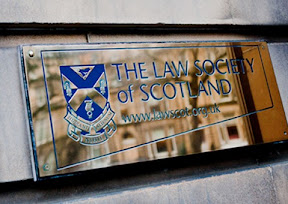
Unionists R’ Us - because its more profitable, says Law Society THAT crafty, old, and well known unionist institution, the Law Society of Scotland has set out what it sees as key questions for debate on Scotland's constitutional future. The questions, thinly disguised as a debate (something the Law Society is not good at, unless it is controlling it and any outcome), has set out a series of key questions on Scotland's constitutional future HERE in a discussion paper published today, Monday 5 August

The paper 'Scotland's Constitutional Future, views, opinions and questions' (or, Scotland as the Law Society wants it – Ed) aims to inform and add value to the current discussion on independence and constitutional reform.

It focuses on a number of critical areas including;

Scotland's membership of the European Union - including a call on both the Scottish and UK Governments to publish all Law Officers' legal advice on an independent Scotland's membership of the EU and other international organisations.

The impact of independence on the economy - including questions around currency, Scotland's share of assets and liabilities as well as taxation, financial regulation and consumer protection.

Judicial and parliamentary restructuring - including questions on whether an independent Scotland should have a written constitution and whether the current model and structure of the Scottish Parliament would work for an independent Scotland.

The Society's paper provides a detailed analysis of the potential impact of independence on specific areas of both devolved and reserved areas of law.

The paper also raises important questions about Scotland's future if the electorate choose to remain part of the United Kingdom, particularly around the process and timetable for agreeing possible further devolution of powers from Westminster to Holyrood.

Bruce Beveridge, President of the Law Society of Scotland, issued lengthy comments beginning with : "In just over a year we will each be asked to decide if Scotland should become an independent country. It is the biggest question for our nation in over 300 years but everyone, whether for or against independence, wants the same result - for people in Scotland to live in peace and prosperity.

"However there are many questions to be answered before September 2014, answers which would allow all of us to make a more informed decision about our future - from how our parliament should be structured, the currency we would use, what level of tax we would pay to cross border treaties and our relationship with other countries in Europe and around the globe.

"Membership of the European Union continues to be a vexed question. We think people should have more information about an independent Scotland's future membership of the EU and, while acknowledging the right of government not to disclose legal advice received, we think both the Scottish and UK Governments should publish the Law Officer legal advice they have been given to help provide clarity for voters."

The paper also raises the issue of whether the UK Government would support an independent Scotland's application to join the EU in the event of a 'yes' vote and asks what the Scottish Government would propose during a transition period, particularly if the negotiations for entry to the EU are not concluded in the time between a 'yes' vote and 'independence day'.

Separate from the issue of EU membership, the paper also raises questions around a written constitution for Scotland, whether the current Scottish Parliament would need reformed to take account of its new responsibilities and the possible powers of a Scottish Supreme Court.

Beveridge, again plying the Unionist agenda, said: "Any new constitution for Scotland would have to be by consent of the people and respect the principle of separation of powers between government and the judiciary to ensure stability. We are keen to see more detailed proposals about our parliament and government in the event of independence. For example, would there be a qualified majority for certain types of legislation or would we see the introduction of a second chamber at the Scottish Parliament to ensure a system of checks and balances?

"Among those we spoke to there was a clear preference to retain the existing court structure of the High Court of Judiciary, Court of Session and Sheriff Court. In addition, the Scottish Government has indicated there would also be a Supreme Court of Scotland. However there has been no definition of a Supreme Court's powers, how its independence would be guaranteed or whether the court would be able to strike down legislation - all things we believe we should know before we go to the polls."

The paper also presents questions for those who argue for Scotland remaining within the UK but with further powers devolved from Westminster to Holyrood.

Beveridge again, firmly on the Unionist side, said, "There will be many who want Scotland to remain part of the UK but are still keen to know if a 'no' vote means retaining the status quo or if there will be opportunity for change.  The pro-union parties should be providing information at this stage about the potential for further devolution of powers from Westminster and how the parties would form a consensus to allow these to be delivered. We want to know more about what other powers could be devolved to Scotland, in the areas of fiscal policy, welfare and constitutional rights, and the timescale for delivery."

Beveridge laughably added : "The Law Society is very firmly a non-partisan organisation so will not take a view either for or against independence - that is for people in Scotland to decide - but we want to contribute to the debate and to provide a platform for discussion outwith the political arena to help ensure a better understanding of the implications of either a 'yes' or 'no' vote.

"Such a debate has inevitably generated impassioned views - which will only intensify as we approach September 2014 - and it is essential that there is clarity on these and many other issues before we are asked to make our decision on Scotland's future. "I hope our paper helps inform the debate and stimulate further discussion on what becoming an independent state would involve as well as examine what it would mean to remain part of the UK as we move towards this historic vote.

Thursday, January 10, 2013

The camera never lies, yet inquiry & SNP spin campaign clears First Minister Salmond of TV lying over ‘legal advice’ for independent Scotland’s chances of remaining in EU

Alex_Salmond

First Minister Alex Salmond claimed legal advice had been sought during tv interview. PROVING the worthlessness and indeed, damage to reality by party political media campaigns & a so called “independent inquiry” undertaken by persons appointed by those accused and under investigation, Scotland’s struggling First Minister Alex Salmond has yet again been cleard of a complaint lodged under the mysterious “Ministerial Code”, this time Mr Salmond being cleared of claiming on television he had legal advice to the effect that an independent Scotland could remain in the European Union, even though Mr Salmond actually said those very words in a BBC television interview with Andrew Neil.

You decide - First Minister Alex Salmond claimed he had legal advice an independent Scotland will remain in the EU

The full report on the ‘investigation’ into Mr Salmond can be viewed online HERE The Scottish Government’s version of the timeline of the events is available HERE

Predictably, the Scottish Government’s media machine has issued a long tirade (reprinted below) with quotes from the First Minister, congratulating himself upon his apparent exoneration from misinforming & misleading the public on the EU legal advice claims.

It is rumoured the entire PR driven incident along with the enquiry has cost the taxpayer around £50,000 to come up with an intense media campaign, supportive political appearances, snide media comments & speeches, supportive online media forum comments and a report to clear Mr Salmond of a a habit which the First Minister and the SNP will be remembered for in 2012, the year Scots finally found out the Nationalists are like all other political parties, and no different from the ones they castigate.

Political observers will also recall 2012 for being the year in which Mr Salmond was accused of being an “instinctive liar” by Scottish Labour, the party who along with the Scottish Conservatives & Liberal Democrats have made instinctive lying in public life a national sport, now joined in earnest by the SNP.

A political insider commented on the fiasco : “Clearly the European Union can do without another nationalistic leader who's Government clears him of lying on television, even when the camera suggests he did exactly that”

Scottish Govt Press Release : FM cleared by ministerial code report

The First Minister acted fully in accordance with the Scottish Ministerial Code in relation to the debate on the existence or content of legal advice on an independent Scotland’s continued membership of the European Union, an independent report has concluded.

The First Minister appointed Sir David Bell KCB – an independent adviser to the Scottish Government on the Ministerial Code – to conduct the investigation following a complaint by Catherine Stihler MEP.

The report, which has been published today, says: “I have not found you, or the Scottish Government, to have breached the Ministerial Code in respect of any complaints made by Ms Stihler. I have though recommended that the Scottish Government considers revising those parts of the code relating to legal advice.”

Sir David examined five separate grounds of complaint from Ms Stihler – and in each case he found that the First Minister and the Scottish Government had acted fully in accordance with the Ministerial Code.

The report also concludes that “the Edinburgh Agreement was the appropriate moment to seek specific legal advice from the Law Officers … it was only when the details of the referendum process became clear that you were in a position to seek such advice.”

Sir David also recommends that the Scottish Government considers whether the part of the Ministerial Code relating to legal advice could be redrafted in a clearer and more accessible form – a recommendation which the Government accepts.

First Minister Alex Salmond said: “I would like to thank Sir David for his very thorough and detailed report, the findings of which clearly demonstrate that there was no breach of the Ministerial Code on this matter.”

“I welcome the report which demonstrates that I and the rest of the Scottish Government acted entirely in accordance with the Scottish Ministerial Code. I also welcome his conclusion that the signing of the Edinburgh Agreement was the appropriate moment at which to seek specific legal advice on an independent Scotland’s continued membership of the European Union.”

“Sir David also recommends that the Scottish Government considers whether the section of its Ministerial Code relating to legal advice provided to Ministers should be redrafted to make it clearer. That is a recommendation I am happy to accept, and work will now be taken forward by Government officials with that aim in mind.

“This has been the sixth complaint to be referred to the independent panel of advisers I introduced in 2008 to rule on these matters.  I am delighted that each complaint has been dismissed and the advisers concluded my ministers and I have acted entirely properly at all times.”

Tuesday, August 07, 2012

The Quiet Fan : Westminster criticises unusual silence of Lord Advocate Frank Mulholland over independence referendum legalities

Lord Advocate Frank MulhollandLord Advocate Frank Mulholland, unusually silent over legalities of independence referendum. FRANK MULHOLLAND, Scotland’s usually vocal Lord Advocate on all things from illegal fish catches to organised crime (but not on seedy activities of COPFS staff or £1million breach of the peace cases), has been criticised by MPs of the Westminster Parliament for his unusual silence over the legalities of one of the most important issues to face Scots for decades, that of the SNP’s independence referendum and the legislative competency of the Scottish Parliament to deal with the issue.

The Scottish Affairs Committee, who have now called for referendum powers to be transferred to Holyrood for the independence referendum, reported by BBC News HERE, commented with regard to The legislative competence to hold a referendum on separation :

“…The Scottish Government … produced its own paper on 20 January 2012. In it, it argued that the 2010 question had been carefully drafted to meet the constraints of the Scotland Act; but if the UK Government was, as it had indicated, willing to extend devolved powers, then there should be a simpler question:

"Do you agree that Scotland should be an independent country?", apparently acknowledging that this would not be within the Parliament's legislative competence at present. It continued:

An adjustment of legislative competence under Section 30 of the Scotland Act 1998 would enable the Scottish Parliament to legislate for a referendum on the basis set out above. If the UK Government is unwilling to agree to such an adjustment without dictating unacceptable conditions, the Scottish Government will have the option of a referendum on the basis set out in paragraph 1.5. [i.e. a question like their 2010 draft which was designed to be within the limitations of existing legislative competence.][16]

The Committee, who have now called for powers to hold the referendum, said : “The Scottish Government, however, published no legal analysis, and the Lord Advocate, the Rt Hon Frank Mulholland QC—who is a member of the Scottish Government, and as its principal legal adviser will have advised his Ministerial colleagues on what their powers are—has made no contribution to debate on this issue. The Scottish Government nevertheless asserts that a referendum with a question about more devolution, or actually about separation but designed to look as if it were about extending the Scottish Parliament's powers, would be within its legislative competence.

25. We find the silence of the Lord Advocate remarkable. It is well understood that Law Officers do not, save exceptionally, make their advice public, but, on a matter such as this, there is a very strong public interest in understanding the legal basis of the Scottish Government's approach to a process which will determine the future of the country.”

However, as observers to the debate on the independence referendum will by now be well aware, it is not just Lord Advocate Frank Mulholland who has been seemingly gagged by the Scottish Government, who are also fighting a Freedom of Information order to release documentation relating to legal advice issued over the referendum, also reported by BBC News :

Scottish independence: Ministers to appeal EU FOI order

The Scottish government has said it will appeal after being ordered to reveal whether it holds legal advice on the status of an independent Scotland within the EU.

Labour MEP Catherine Stihler made an FoI request last May, asking the Holyrood administration for any legal advice it had received on the issue.

Ministers refused to reveal whether the information was held.

But Scotland's FoI Commissioner ruled its release was in the public interest.

Rosemary Agnew, the country's Freedom of Information Commissioner, said: "In the commissioner's view, the role of [the FoI Act] is important not only in ensuring transparency in information held by public authorities, but also in enabling transparency in information about process."

Ms Agnew said an independent Scotland's position in the EU "could have a bearing on how people vote in the referendum".

She ruled: "In this case, the commissioner considers that it is in the public interest to know the type of information that the ministers were taking into account in developing policy in relation to such a significant issue as independence.

Catherine Stihler Catherine Stihler described it as "a landmark judgement"

The Scottish government cited Section 18 when it refused to reveal whether the information was held. This can mean the information would be exempt from release or the authority considers its release would not be in the public interest.

The Labour Party said that in October 2011, Culture Secretary Fiona Hyslop wrote to Ms Stihler saying that "we consider that to reveal whether or not the information you have requested exists, or is held by the Scottish government, would be contrary to the public interest".

However, following Ms Agnew's ruling, ministers have until 21 August to reveal the information.

A spokesman for the Scottish government said it had been "surprised" by the commissioner's decision.

He added: "It is the longstanding and usual practice of the Scottish government to neither confirm or deny the existence or the content of legal advice.

"The approach we have taken on this issue is consistent with the UK government position in a similar case they dealt with under equivalent legislation. We therefore intend to appeal and contest the decision."

She added: "People have a right to know whether an independent Scotland would be part of the EU and on what terms, but the SNP want to keep it secret.

"By refusing to confirm or deny, Alex Salmond effectively took out a superinjunction against the people of Scotland.

"Now the Information Commissioner has ordered him to own up. She has ruled that approach is in breach of the law, which is a groundbreaking and welcome decision."

A Scottish government spokesman said: "We have received the decision and are considering its terms."

Wednesday, July 04, 2012

Independence referendum vote fears muddle Crown Office claims of ‘ongoing’ criminal investigation into Scottish banking sector

crown officeCrown Office pulls leg, claims it is investigating crooked bankers. SCOTLAND’S Crown Office & Procurator Fiscal Service (COPFS) has been accused of issuing publicity grabbing misleading statements in Press Releases concerning claims it’s prosecutors have been investigating corruption in Scottish banks “for some time”. Yesterday, the Crown Office claimed it’s Serious and Organised Crime Division ‘was leading the little known about investigation into crooked bankers, but officials refused to provide any substantive proof an investigation was actually underway. The claims appear to have provoked hurried meetings within Scottish Government & Police circles. (probably to synchronise their watches – Ed)

It has been reported in Scots Law publication “The Firm” in an article HERE that “former BBC Head of Legal, Alistair Bonnington, has said the “publicity conscious” Crown Office’s claim that it had been investigating Scottish banks for some time was “wholly absurd”. He accused the Crown Office of attempting to deflect criticism of a “disgraceful lack of activity” over the failure to take criminal action against Scottish banks”. A further article in “The Firm” explaining more on the story is HERE

The Crown Office issued a short press release today claiming an investigation into crooked banking practices had been ongoing for some time but the release came only after Mr Bonnington had appeared on BBC criticising the lack of action in Scotland on any investigations into the Scottish banking sector.

The Press Release also warned the media not to publish anything which may ‘prejudice’ any future criminal proceedings, however a legal insider described this warning as “a joke” and alleged “it is an attempt to muzzle the press from digging deeper into the Crown Office’ so-called investigation into banks”

It has also been speculated the Scottish Government had ordered the Crown Office to issue the short Press Release after it became clear several journalists had been enquiring as to the lack of any investigations into banking practices in Scotland and were about to write damning reports alleging political attempts to suppress any criminal financial scandals of the order of those currently doing the rounds in the city of London ahead of ALex Salmond’s much prioritised independence referendum.

A solicitor speaking to Scottish Law Reporter warned the public not to get their hopes up over the Crown Office investigation into the banks.

He said : “More often than not the Crown Office fail to prosecute complex fraud cases as they neither have the experience, intelligence or the will to do so.”

He added : “There will be no appetite at the Crown Office or within the Scottish Government to rock the Scottish Financial establishment with criminal charges, particularly on the run up to an independence referendum where finance and how banks will survive in an independent Scotland are bound to be key factors in swaying the vote.”

Lord Advocate Frank Mulholland Crown confirms investigation into Scottish banking sector

From: Crown Office NEWS RELEASE For Publication 3 July 2012

CROWN OFFICE CONFIRMS INVESTIGATION INTO SCOTTISH BANKING SECTOR

The Crown Office today confirmed that an investigation into the Scottish banking sector is ongoing.

Given the degree of public concern about recently reported issues in the banking sector, the Crown has decided to confirm that an investigation has been underway for some time. Its scope will now be extended as a result of recent developments.

The Serious and Organised Crime Division is leading the investigation.

As the investigation is ongoing, it would not be appropriate to comment further.

Notes to editors:

1. Editors are asked to act responsibly and refrain from publishing or broadcasting material which could be prejudicial to any future criminal proceedings.

2. The Crown Office and Procurator Fiscal Service (COPFS) is Scotland’s sole prosecuting authority. COPFS prosecutes cases in the public interest after the receipt of initial crime investigation reports from police forces in Scotland. COPFS then decide whether to proceed with any action in the case. The Procurator Fiscal will take a proactive role where necessary in directing police enquiries, particularly in the investigation of serious crime. In Scotland, the decision whether to prosecute a case is one for the COPFS alone, not the police.

Monday, May 14, 2012

RIGGING THE BALLOT : Law Society of Scotland hints it wants key role to set questions & voting papers for Scottish Independence Referendum

Would you trust the Law Society of Scotland to set questions on Scottish independence ? THE Law Society of Scotland has given the strongest hint yet, contained in the Society’s response to the Scottish Government’s consultation on the independence referendum that it wants to set the tone of the SNP’s independence referendum by putting itself forward as an “independent body” to rig determine the exact wording of the questions & format of the ballot paper. The Law Society is thought to want its hands on the role after it participated heavily in the Calman Commission on Scottish Devolution, having  attended  oral evidence  sessions  in October  2008  and  February  2009  and  provided  the  Calman  Commission  with  written evidence on five separate occasions from July 2008 to May 2009.

A legal insider speaking to Scottish Law Reporter today said “As bad ideas go, this is one of the worst I’ve heard in awhile. The Law Society are not a very democratic organisation, either to its own members or with regard to the public interest. It is therefore not appropriate the Society be allowed to dictate terms of the independence referendum.”

While no one from the Scottish Government or Law Society would officially confirm the Law Society wanted the key role in the independence referendum, it is believed the Society has sought guidance on taking the place of the Electoral Commission in the referendum in a trade off with Westminster, given concerns expressed by some politicians of the Electoral Commission’s alleged bias for the union as an English based organisation.

The full response from the Law Society of Scotland to the Scottish Government's consultation on independence can be read online here Law Society of Scotland : Our terms for an independence referendum

The Law Society stated in it’s usual gun to the head style of wording that while it will not express a view on political issues, and therefore does not make proposals regarding the actual question to be put, or the design of the ballot paper, it actively engages and seeks to assist in the legislative and public policy decision making processes in furtherance of its responsibility to work in the public interest.

The Law Society omitted to publish any view on whether there should be a second question on the ballot paper, on the alternative of enhanced devolved powers, or "devo max", but says that if there is a second question, it should be clear, and its relationship with the first question, and the legal and political implications of positive or negative votes to each, should be clear and should be explained to voters in advance.

The Law Society also believes it is important that arrangements for a referendum are subject to scrutiny and oversight by an independent body, though whether that should be the Electoral Commission or another scrutiny body (hinting the Law Society itself could do it) is a matter of political judgment.

The Law Society supports initiatives to increase voter turnout, such as possibly holding the poll on a Saturday, and other measures provided there are safeguards against voter fraud or administrative error. And it believes the proposed spending limits are appropriate, "against a background of the need to ensure that referendum campaigns are run in a fair and transparent manner".

Within the Society’s submission, a concern has been expressed that the Government's draft bill precludes the court from entertaining any proceedings for questioning the number of ballot papers counted or votes cast, in that certification by a counting officer is not to be subject to judicial review, a blanket exclusion found in the Scottish and Welsh referendum Act of 1997 but not in more recent legislation.