Showing posts with label Lorna Jack. Show all posts

Thursday, October 01, 2015

Conflict of Interest accusations hit Law Society of Scotland as employee who sat in on decision to refer SNP MP’s struck off solicitor to Crown Office is linked to pro-indy lawyer group

Sheila Kirkwood, a founding member of Lawyers for Yes. AN EMPLOYEE of the Law Society of Scotland who sat on a committee considering the case of a solicitor linked to SNP MP Michelle Thomson’s property dealings - was also a leading pro-independence activist.

And, papers reporting brief details of the meeting feature no declarations of interest by Kirkwood or any other members of the Committee which then decided to refer the matter to prosecutors.

Sheila Kirkwood, secretary of the same Guarantee Fund Sub-Committee which eventually took the decision to refer the matter of Christopher Hales to the Crown Office in July 2015 – four years after the event – has since been identified as a founding member of Lawyers for Yes – a pro-independence group set up ahead of the Scottish independence referendum held last September 2014.

Kirkwood also endorsed Michelle Thomson on her Facebook page.

Within the minute of the meeting in which Kirkwood was present as secretary of the Guarantee Fund Sub-Committee, there is no mention of any declarations of interests by members of the committee - including Kirkwood.

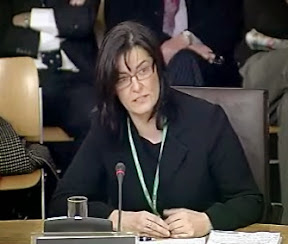
Facing calls to explain a significant & potential conflict of interest, Lorna Jack, Chief Executive of the Law Society of Scotland, said she was “confident there was no conflict of interest”.

Chief Executive of the Law Society of Scotland, Lorna Jack, issued the following statement at a press conference held at 3.15pm, 1 October 2015:

“The Law Society’s number one regulatory priority is to protect the public from any wrong doing by solicitors. As I have previously commented, following a routine inspection of the accounts of law firm Grigor Hales of Gorgie Road, Edinburgh in July 2011, we believed Christopher Hales had not met the required standards of professional conduct.

“We therefore took action to protect the public by suspending Mr Hale’s practising certificate in September 2011. There is a duty on us as a regulator to report suspicious activity quickly to the appropriate authorities. Such reports and timings or information about the report are confidential by law.

“I want to stress that Law Society employee Sheila Kirkwood has not acted unprofessionally or inappropriately at any time. Sheila is a hard-working, dedicated colleague. She had no involvement in taking papers on the Christopher Hales case to the Law Society Guarantee Fund sub-committee and in no way delayed these papers being taken to the committee. Sheila’s role as secretary to the committee is to write the minute.

“The names of Christopher Hales’s clients were not included in any Law Society papers that Sheila handled.  The first time Sheila realised Michelle Thomson was involved in the Christopher Hales case was from recent media reports.

“Sheila is entitled to her personal political views. The Law Society is a non-partisan organisation. However, we do not stop our staff from holding or expressing their own views in their personal lives.  People in Scotland are legally entitled to express their personal opinions.”

“I am confident there was no conflict of interest in relation to Sheila’s role at the Law Society.”

However – Lorna Jack could not explain why the minute of the meeting released by the Law Society (published below) contains no recusal or declaration of interest of those in attendance.

GUARANTEE FUND SUB COMMITTEE:

Minute of Meeting of the Guarantee Fund Society of Scotland held at 26 2 July 2015 at 9.30am

GRIGOR HALES, EDINBURGH - 20732

Date Considered 2 July 2015

Sub-Committee Members Present 6 solicitors; 5 non-solicitors

Papers considered by Sub-Committee None. This matter was the subject of a verbal report.

Background

The Sub Committee reminded itself that it had previously withdrawn the Practising Certificate of Mr Christopher Hales and that he had subsequently been struck off by the Scottish Solicitors Discipline Tribunal (SSDT). Mr Hales had been the sole partner at the firm which had also ceased. The Sub Committee were asked to consider whether comments made by the SSDT justified a referral of the matter by the Law Society of Scotland to the Crown Office.

Sub Committee's Deliberations

It was noted that the SSDT decision states that "Mr Hales must have been aware that there was a possibility that he was facilitating mortgage fraud" and that "it must have been glaringly obvious to the Respondent that something was amiss when cash backs of £27,000 or £28,000 from the seller to the purchaser were involved".

Sub Committee's Decision

The Sub Committee decided that given the statements made by the SSDT following a complaint arising from a Financial Compliance inspection, that the matter should be referred to the Crown Office for investigation.

Delegated Powers..

To refer the above matter to the Crown Office for investigation

The Guardian newspaper reported: The row over the official handling of the case deepened further after the Law Society confirmed that its head of investigations, Ian Messer, had received a detailed report from the Scottish Solicitors’ Discipline Tribunal (SSDT) naming Thomson, her husband Peter and Thomson’s business partner Frank Gilbride in July 2014.

Messer first informally told the Crown Office in December 2014 that Hales had been struck off by the SSDT for suspected mortgage fraud, during a routine quarterly meeting between the two organisations. Crown Office lawyers asked Messer to provide them with detailed case files but failed to get them.

At the next meeting on 28 April 2015 – a week before Thomson was elected as MP for Edinburgh West – the Crown Office asked again for the Hales case files. They were not submitted to the Crown Office until 3 July 2015; six days later, the Crown Office alerted fraud officers at Police Scotland, who launched a formal investigation.

Those fresh details emerged when the Law Society’s chief executive, Lorna Jack, took the unusual step of arranging a hurried press conference to defend her organisation’s handling of the affair, and the conduct of Sheila Kirkwood, who is secretary to the society guarantee fund sub-committee which handled the Hales case but had delayed handing the papers over to the Crown Office.

It emerged that Kirkwood was, with her husband and fellow solicitor Paul Kirkwood, a founder of the pro-independence campaign Lawyers for Yes, and as an active nationalist had attended dinners for Thomson’s pro-independence campaign Business for Scotland. Kirkwood had also “liked” Thomson on her Facebook page.

Jack insisted that Kirkwood had had no direct say over the Law Society’s handling of the case against Hales, but she admitted that no independent investigation had yet taken place into whether Kirkwood was aware that Thomson was linked to Hales’s property dealings.

Jack said she had taken Kirkwood at her word that she first became aware of that link when Thomson was named in the media earlier in September.

“I want to stress that Law Society employee Sheila Kirkwood has not acted unprofessionally or inappropriately at any time,” Jack said. “Shelia is a hard-working, dedicated colleague. [I] am confident there was no conflict of interest in relation to Sheila’s role at the Law Society.”

Although it took until July 2015 before the Crown Office and police were handed the case files against Hales, Jack confirmed that the Law Society first became alerted to Hales’s mortgage dealings with Thomson in July 2011 during a routine inspection of his firm’s books.

He was suspended in September 2011 “to protect the public”, she said. “The Law Society’s No 1 regulatory priority is to protect the public from any wrongdoing by solicitors,” she added.

Jack implied too that the Law Society would also have alerted the police to any suspicions because of its legal duties under the Proceeds of Crime Act, but she repeatedly refused to elaborate on whether and when that had been done with the Hales case.

“Under the Proceeds of Crime Act, there is a duty on us as a regulator to report suspicious activity quickly to the appropriate authorities. Such reports and timings or information about the report are confidential by law,” she said.

The “Guarantee Fund” of the Law Society of Scotland is possibly one of the murkiest self protection mechanisms operated by the legal profession’s in-house self regulator.

The Guarantee Fund is tasked with paying out compensation to victims of corrupt or rogue solicitors.

However, the Guarantee Fund has racked up numerous accusations of obstructive tactics and deliberate falsification of facts to prevent financially ruined clients securing full compensation for their losses to rogue Scottish solicitors.

Claims against the Guarantee Fund are known to be in the millions of pounds annually.

Shockingly, the percentage of compensation eventually secured as a payment from the fund where some cases can take 5-10 years to be heard - can be as little as 5% to 10% of a client’s total financial losses to rogue solicitors.

The ‘aims’ and functions of the Guarantee Fund sub-Committee as claimed by the Law Society of Scotland, but rarely fulfilled in reality, are:

  • oversee the fulfilment of the statutory obligations of the Law Society of Scotland regarding the Guarantee Fund and financial compliance
  • ensure that risks to the Guarantee Fund are managed to an agreed and acceptable level
  • ensure that Guarantee Fund operations are in accordance with stated Guarantee Fund policy
  • protect the Guarantee Fund, the profession and the public interest by dealing properly and promptly with significant cases of non-compliance with accepted financial compliance standards (eg accounts rules/money laundering regulations)
  • influence strategic developments regarding financial compliance and the Guarantee Fund to ensure that processes remain up to date and fit for purpose
  • enable effective communications with the profession, public and other stakeholders  regarding financial compliance standards and Guarantee Fund claims
  • benefit the Guarantee Find/financial compliance processes by acting as a source of expertise on relevant working practices and issues within the legal profession
  • monitor financial compliance activity (planning, progress, quality & approach)
  • review outputs from financial compliance activity (including the conducting of interviews) and where appropriate (eg as a result of breaches in accounts rules or money laundering regulations), refer matters of professional conduct to the Scottish Legal Complaints Commission and Complaints Investigation Team for investigation or recommend other actions (eg interventions, judicial factories etc) in accordance with the scheme of delegation
  • monitor the consistency and quality of Guarantee Fund claims and intimations processing
  • decide upon Guarantee Fund claims (as detailed in the delegated powers) or refer to the Professional Conduct Committee, as appropriate.
  • consider and approve strategic policy matters related to financial compliance and Guarantee Fund matters
  • consider the continuing adequacy of accounts rules and other guidance to protect the Guarantee Fund, the profession and the public, monitor the development of new or amended rules and recommend these for approval.
  • review financial compliance activity to inform and influence the profession, public and other stakeholders about relevant financial standards, compliance requirements and claims issues
  • monitor Guarantee Fund risk management procedures and approve
  • key policies related to insurance arrangements, financial reserve levels, investment decisions and firms which pose a risk to the fund
  • monitor the financial position of the Guarantee Fund and recommend approval of the annual budget and annual subscriptions to the Council
  • be made aware of operational developments in the workings of the financial compliance and Guarantee Fund functions

Friday, July 31, 2015

GENDER INEQUALITY: Scots legal profession in the dock over unfair pay as Law Society research reveals 42% difference in salaries between male & female lawyers

Women in Scots legal world paid less than male solicitors. WOMEN in Scotland's legal profession are being paid significantly less than their male counterparts, with the sector lagging behind other occupations in tackling the pay gap.

Research published by the Law Society of Scotland shows that today marks the point at which some female solicitors begin effectively working for free in comparison to their male colleagues as a result of the disparities.

The findings, published as a think tank warned of a general widening pay gap north of the border, show that the average salary for women in the legal profession is 42 per cent lower than for men, with females earning an average of £32,650 less.

The extent to which salaries of female solicitors lag behind male counterparts – in what has been for years viewed as a boys club world of Scots law firms, must now be tackled head on and a parity must be reached on salaries between equally hard working female solicitors and their male colleagues.

Commenting on the research published by the Law Society, a senior lawyer agreed there was a gender pay gap between male & female solicitors.

He said: “The matter of gender inequality on salaries and – equally importantly - partnership status within law firms must now be addressed to bring the legal profession in line with what we preach to others.”

However, the lawyer said transparency on gender pay must also apply to the institutions of the profession itself – naming the Law Society of Scotland as one example.

Commenting on the position of the Law Society, the senior lawyer said: “Given the Law Society has published this research I am sure the profession and equally the public would like to know how the gender inequality gap affects women working within the Law Society of Scotland as an institution.”

He continued: “Today must also mark the point where the Law Society of Scotland publish the full salaries and expenses of their department directors and senior staff including current Chief Executive Lorna Jack.”

Citing an example of the Law Society’s English Chief Executive, he said: “The £400,000 salary of former Law Society of England & Wales Chief Exeutive Des Hudson was published without difficulty while we as a profession and the public remain in the dark about hefty salaries at the Law Society of Scotland and, I am told, lavish air travel and hotel expenses claims.”

It is rumoured salaries an expenses claims of senior Law Society of Scotland staff and directors have significantly increased over the past decade, with little accountability or transparency.

The solicitor membership who pay annual subscriptions are given little say on Law Society of Scotland salaries and expenses claims – unlike public bodies which have to publish salary scales and hand over detailed information on expenses when requested to do so.

The Law Society’s news release on the gender pay gap in the legal profession:

Tackling the gender pay gap - 42% difference between male and female solicitors 31 July 2015

For some female solicitors, Friday, 31 July marks the point after which they are effectively working for free until the end of the year.

Law Society of Scotland research shows a 42 percent gender pay gap among its members. The figure has been reached through comparing average full time and full time equivalent (for part time/flexible hours employees) salaries for women and men at all career stages.

Janet Hood, convener of the Law Society of Scotland’s Equality and Diversity committee, said: “A 42 percent gender pay gap reflects very badly on what is otherwise a modern and forward thinking profession – with some female solicitors effectively working for free for five months of the year.

“There are many and nuanced reasons why the gender pay gap exists, and the legal profession is certainly not alone – figures from November 2014 show that the overall UK gap was 9.4%. However we have seen little change in the past decade compared to other professions such as accountancy or dentistry so it is a major concern that such a substantial gap persists 45 years after the UK Equal Pay Act and after a decade of Law Society equality research and promoting good practice within the legal profession.

“Quite simply it is not something we can afford to ignore, for either ethical or business reasons.

“Women now represent half the legal profession in Scotland and there should be no limit set on their talent and ambition.

“Employers have legal responsibilities in relation to equality as well as any commercial considerations. They need to be aware of the extent of the gender pay gap within their own organisations and take action to ensure that they meet their obligations and, importantly, work to retain talented individuals who can help their businesses thrive now and in the future.

“Many government and other organisations sourcing legal services also include equality criteria as part of their tendering processes. If law firms are not taking steps to ensure that they are meeting these, they could be adversely affected.”

The Law Society published equality standards, which are currently voluntary, earlier this year. The 10 standards set out that employers should publish an annual statement about the composition of organisational roles, reporting on gender as a minimum, and for organisations with more than 150 staff, publish pay gap figures for full-time and part-time staff at each level of seniority. The Society has also published an equal pay toolkit to help firms do this. 

Ms Hood added: “We introduced the 10 equality standards and the equality toolkit following strong support from the profession for a more prescriptive set of standards to complement our other equality guides. With so many women now entering the solicitors’ profession, it is essential that we continue in our efforts to reduce the gender pay gap and to monitor this generation of solicitors as they progress in their careers.

“I hope that publishing the gender pay gap figures and making them a discussion point will help empower people to ask questions and stimulate further change – and that in another decade we will not see such a significant pay gap between male and female solicitors.”

The research by the Law Society of Scotland has shown that the average gender pay gap within Scotland’s legal profession at specific stages ranges from 2% to 38% and affects solicitors working in private practice law firms and those working in house for other organisations. The findings have shown that in the earlier stages of solicitors’ careers, there is very little difference between male and female solicitors’ earnings. However from age 36 onwards, women generally appear to be paid lower salaries than men of the same age, with women are more prevalent in the salary bands up to £65,000 and men more prevalent in salary bands over £65,000.

The research findings have also shown that women tend to remain associates or assistants rather than be promoted to partner level. While the findings suggest that there is very little direct discrimination in terms of women being paid less for directly equivalent roles and experience, there appears to be an issue around assumptions made about women, with the report indicating that women earn less than their male counterparts whether or not they have children.

In the later stages of a solicitor’s career, the research indicates that there is less of a gap at 32% for solicitors who have been qualified for 21-30 years, and 21% for those qualified 31+ years.  However, this is in large part due to lower male earnings in these age groups, rather than increased pay for women

The research has indicated that career breaks longer than six months are a significant barrier to career progression. Many respondents also considered that part-time working was detrimental to a person’s career, for both males and females, even in firms that were supportive and accommodating of flexible working arrangements.

Some findings have been more encouraging. In comparison to the 2005 Women in the Legal Profession in Scotland report, there appears to have been a move towards childcare responsibilities being viewed as a joint responsibility rather than solely a mother’s responsibility. Women are still largely expected to take time off when a child is sick, although the gap here has also narrowed slightly.

The Law Society plans to publish a series of guides later this year for solicitors returning to work following a period of maternity, paternity or adoption leave and is currently seeking views from solicitors on their return to work experiences.

The Law Society of Scotland has over 11,000 practising solicitor members. As part of its work on equality and diversity within the legal profession the Law Society launched equality standards in February 2015. The UK Government also passed legislation in 2015 that requires larger employers across all sectors to publish gender pay gap figures.

The full equality and diversity research findings are available on the Law Society of Scotland website:

Profile of the profession

We have now launched the findings of the Profile of the Profession. We would like to thank each and every one of the 3,449 solicitors in Scotland who took time to respond to this research. We are very grateful for your time, and this has helped us ensure a statistically meaningful set of results can be published.

We are now moving to the next stage of the project, which involves confidential focus groups and phone interviews to explore some themes from the research in more detail.  For information and the opportunity to volunteer to be involved, please click here.

You can access the full research report and we'd encourage you to look at the executive summary at the start as well as chapters that may hold detail of particular interest.

Slides from launch event are also available.

We also launched updated guidance to help firms tackle some of the issues the research covered. These can be found online by clicking the links below:

Free online leaning has also been made available around some key equality issues. For example, there is an online learning package onbullying and harassment, for firms and for individuals, and have online learning to support making your firm or services to be more accessible to disabled people.

Finally, we're also keen to support solicitors understand these issues. We're delighted to attend or support the preparation of in-house CPD in larger firms and in-house employers. Likewise, we'd be delighted to visit faculties or local CPD groups, or recommend speakers on this topic. You are also welcome to discuss issues with us in private.

For further details on any of the above, please contact diversity@lawscot.org.uk

This page will also give you details of:
  1. Why did we do the research?

  2. Who are the researchers and what is the level of confidentiality?

1. Why did we do the research?

This work will update our previous diversity research and quantify how the profile of our members has changed over the last six years. The research also seeks to collect valuable information on current working patterns across the profession and explore views and experiences of a range of equality-related issues. This is a vital project, and helps us respond to government and stakeholders who challenge the profession, as well as help tackle issues our members face. To best serve our members we also need to understand you, who you are, how you prefer to work, and importantly, be able to identify any equality or discrimination issues so that we can address these quickly and effectively.

Previous research led to work to combat bullying, a challenge to improve equal pay, and changes to policy for those entering the profession. Ensuring a large response is critical to guaranteeing the data truly represents our members.

The project was developed by our Equality and Diversity Committee and had been approved by our Board and Council as part of our Equality and Diversity Strategy.

2. Who are the researchers and what is the level of confidentiality?

The survey is anonymous and being administered by an independent research consultancy, MVA Consultancy, who adhere to the Market Research Society's Code of Conduct, and will ensure that your participation and responses are treated confidentially.

The Society will only be provided with a statistical summary and an anonymous report.  Although some of the questions may seem rather personal or sensitive in nature, we need this information both to meet our legal commitments under the equalities legislation and to monitor diversity within the profession.

3. How to find out about findings from previous studies?

All our previous work in this field is available to solicitors and the public from our website.

Our main statistical research includes:

Women in the Profession

In 2005 we examined issues around gender, equal pay and career progression in the profession.

Profile of the Profession

In 2006 we broadened our focus, looking at a wider range of areas, covering all of what are now called the 'protected characteristics'. This research also looked at perceptions around equality in the profession and in the incidence of discrimination and harassment.

Robust Foundations - Changes in Law Society Membership

In 2010 we updated our data on 'protected characteristics' by working with the Judicial Appointments Board for Scotland on research they were doing and sharing the anonymous data. This gave us a second data set. Our new research will give us three reference points, allowing us for the first time to truly comment on emerging trends (rather than providing 'snap shot' data).

Two other pieces of research, both qualitative, have also been carried out in this field:

Preventing Bullying and Harassment - 2011

This drew on the statistical data from previous research on bullying, and used interviews and focus groups to assemble typical 'case studies' of the issues faced by lawyers and then developed materials for tackling these.

The experiences of ethnic minority background solicitors in Scotland

This work also followed previous statistical findings which suggested that despite increasing numbers of solicitors coming from an ethnic minority background, they were significantly less likely to be equity partners than their white colleagues. Interviews explored the issues around this.

Working patterns in the legal profession

Equal pay toolkit – Ensuring fairness, closing the pay gap  The table below shows the average annual salary for each year qualified. It represents full time or full time equivalent earnings (part time actual earnings are calculated on a pro-rata basis to give the full time equivalent). 

Thursday, April 03, 2014

FREQUENT FLYER: Law Society Chief Exec Lorna Jack gets £7K a year publicly funded Highlands & Islands Airports board position from Scottish Government

THE Scottish Government has announced the appointment of Lorna Jack, chief executive of the Law Society of Scotland as one of two new non-executive directors appointed to the board of Highlands and Islands Airports Ltd. Ms Jack already commands several other paid positions, including of course a significant salary in her position at the Law Society of Scotland.

Although Law Society of Scotland officials prefer not to emphasise the salaries of their officials in media releases, the CEO’s office is thought to be worth several hundred thousand pounds, comparing similarly to the salary of it’s English equivalent, at around £400K a year.

The publicly owned HIAL operates 11 airports, including Dundee, Inverness, Barra, Stornoway and Islay.

Ms Jack, who joined the Society in January 2009, replacing the controversial Douglas Mill, has held a number of senior posts including President Americas for Scottish Development International, the Scottish Government’s trade and investment arm, and chief executive of Scottish Enterprise Forth Valley.

A chartered accountant by profession, Jack is also a trustee and treasurer of the McConnell International Foundation which was started by ex First Minister now Lord Jack McConnell.

The appointments, which run from 1 March 2014 to 28 February 2017, are part-time and attract a remuneration of £6,987 per annum for a time commitment of two days per month.

Bruce Beveridge, President of the Law Society of Scotland, commented: “I am delighted that Lorna has been appointed to this position, which will allow her to contribute her considerable business skills and experience to supporting HIAL’s work in some of the more remote parts of Scotland.Lorna will take up this role in addition to her responsibilities at the Society. In recognition of the support she has received from her colleagues, Lorna has arranged for her remuneration to be paid to the Society.Along with everyone at the Society, I wish her well in this new and exciting position.”

The other appointment is James McLaughlin, previously HR director for the Nuclear Decommissioning Authority.

Friday, March 13, 2009

Law Society calls MacAskill for review of rights of audience in Scotland

The Law Society of Scotland as we all know, doesn’t do anything which is not in its own benefit … and

The governing body of the legal profession which doesn’t even allow members a vote in what goes on at its Edinburgh headquarters, has now decided after the recent argument between the Society & the Faculty of Advocates over the regulation of solicitor advocates, that the best way forward is to call for a review of rights of audience, with the intention the Society carries out the review itself …

The Law Society release :

LAW SOCIETY COMMENTS ON CALL FOR REVIEW OF RIGHTS OF AUDIENCE IN SCOTLAND’S HIGH COURTS

Lorna Jack, chief executive of the Law Society, said:

“Following on from Lord Justice Clerk, Lord Gill’s call for a review, the Lord President Lord Hamilton had written to Kenny MacAskill, Cabinet Secretary for Justice, to add his support for a review and we are in favour of this. We believe that after almost 20 years it is time for an independent, comprehensive review of rights of audience in the higher courts.

“Qualified solicitor advocates were given rights of audience in the High Courts and Court of Session in 1990, with the first appearing in the higher courts in 1993, giving clients an extended choice of well trained, experienced and regulated legal professionals to represent them.

“The Society is the regulatory body for all solicitors. This includes solicitor advocates. All of our members are expected to adhere to the professional standards set out in law and the Society’s rules. The Society has a rigorous regulatory system in place to ensure that the public interest is protected and high standards are maintained.

“Solicitor advocates must also comply with Supreme Court Rules. These rules were first approved by the Lord President Lord Hope in 1992 and then in 2002 by Lord Roger when they were reissued.

“To date the Society has never had to prosecute a member for professional misconduct arising from them acting as a solicitor advocate.

“Any complaints about solicitor advocates should be made to the Scottish Legal Complaints Commission (SLCC). The SLCC would deal with any service complaints while issues of conduct would be passed by them to the Society.

Lorna Jack added: “We would welcome a wide ranging review and the opportunity for ongoing discussion of the various issues with the government and the Faculty. We are currently in a time of significant change and this is an important issue for the future of the legal profession.”

ENDS

FOR FURTHER INFORMATION: Please contact Val McEwan or Suzy Powell at the Society on 0131 226 8884 or 0131 476 8115. valeriemcewan@lawscot.org.uk / suzypowell@lawscot.org.uk